


Sarcoma and bone cancers are rare, but they can affect people across different age groups. The early signs may look like common pain, swelling or a harmless lump, which is why many people may ignore them in the beginning. This makes Sarcoma Awareness and Bone Cancer Awareness important for timely diagnosis and treatment.
Every July is observed as Sarcoma and Bone Cancer Awareness Month to improve understanding about sarcomas, bone cancers, early symptoms, diagnosis, treatment options and patient support. The month also encourages people to seek medical advice for persistent pain, swelling or a growing lump instead of dismissing them as routine discomfort.
In this article, you will understand sarcoma, bone cancer symptoms, risk factors, diagnosis, treatment options and when you should consult a cancer specialist.
What is Sarcoma & Bone Cancer Awareness Month?
Sarcoma & Bone Cancer Awareness Month is observed every year in July. It is dedicated to spreading awareness about sarcomas, a rare group of cancers that may begin in the bones or soft tissues of the body.
Sarcomas can develop in different tissues, including:
- Bone
- Muscle
- Fat
- Cartilage
- Blood vessels
- Endons
- Nerves
Deep soft tissues around joints
The purpose of the month is to help people recognise warning signs earlier, encourage timely diagnosis, support patients and families, and promote better access to specialist-led cancer care.
Sarcoma & Bone Cancer Awareness Month focuses on:
- Helping people recognise unusual lumps or persistent bone pain
- Encouraging timely medical consultation
- Spreading awareness about rare cancers
- Supporting patients and families during treatment
- Improving understanding of diagnosis and treatment options
- Highlighting the importance of specialist-led cancer care
The message is simple: rare cancers may be uncommon, but their symptoms should not be ignored.
When is Sarcoma & Bone Cancer Awareness Month Observed?
Sarcoma & Bone Cancer Awareness Month is observed throughout July every year. During this month, healthcare organisations, cancer specialists, patient groups and awareness bodies work to educate people about sarcoma and bone cancer.
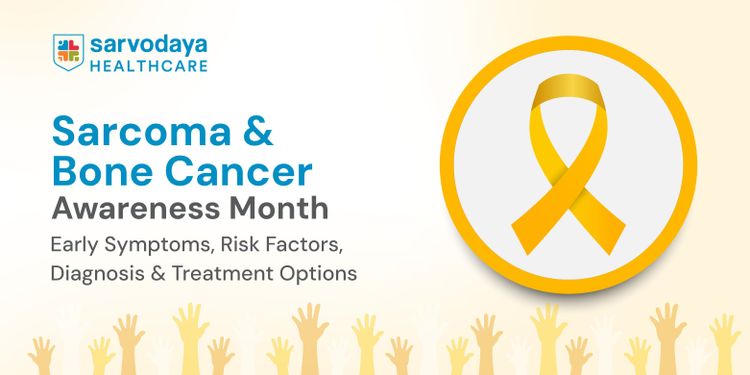
The month is also represented by a yellow ribbon, which is used globally to show support for people affected by sarcoma and bone cancer. Awareness activities may include educational campaigns, patient stories, expert discussions, screening guidance, fundraising initiatives and social media awareness drives.
In 2026, Sarcoma & Bone Cancer Awareness Month continues to focus on early awareness, timely diagnosis, access to treatment and emotional support for patients and caregivers.
Sarcoma Awareness Month 2026 Theme and Focus
The broader focus of Sarcoma Awareness Month 2026 is to improve recognition, early diagnosis, specialist treatment and patient support. Some global patient advocacy groups have also highlighted the message “You are not alone,” reminding patients and families that cancer care is not only about treatment but also about support, guidance and reassurance throughout the journey.
Previous awareness campaigns have focused on messages such as “KNOW. ACT. ADVOCATE,” which reflects the need to know the symptoms, act on warning signs and advocate for better care and research.
For 2026, the key awareness focus can be understood as:
- Knowing the early symptoms of sarcoma and bone cancer
- Acting early when pain, swelling or lumps persist
- Seeking diagnosis from the right specialist team
- Supporting patients emotionally during treatment
- Creating awareness about rare cancers that are often overlooked
This focus is important because sarcoma and bone cancer symptoms can be mistaken for injury, infection, sports strain or ordinary swelling. Awareness helps people understand when a symptom needs further evaluation.
History of Sarcoma Awareness Month
Sarcoma Awareness Month began as a global effort to bring attention to a rare and often under-recognised group of cancers. It was first observed in July 2008 after sarcoma advocates and medical professionals recognised the need for a dedicated awareness month.
Since then, July has been used every year to educate people about sarcoma, honour patients and survivors, remember those affected by the disease, and encourage continued research into better diagnosis and treatment options.
The history of this awareness month is important because sarcoma has often received less attention than more common cancers such as breast, lung or liver cancer. However, delayed diagnosis can affect treatment planning and outcomes. This is why awareness, early evaluation and access to expert cancer care remain central to the campaign.
What is Sarcoma?
Sarcoma is a rare type of cancer that begins in the bones or soft tissues of the body. Unlike many common cancers that start in organs, sarcomas arise from connective or supportive tissues.
There are two broad types of sarcoma:
Soft Tissue Sarcoma
Soft tissue sarcoma begins in tissues such as muscle, fat, blood vessels, nerves, tendons or deep tissue around joints. It may appear as a painless lump in the arm, leg, abdomen or any other part of the body.
Bone Sarcoma
Bone sarcoma begins in the bone itself. Common types include osteosarcoma, Ewing sarcoma and chondrosarcoma. These cancers may cause persistent bone pain, swelling, tenderness or difficulty moving the affected area.
Understanding these differences is important because Sarcoma diagnosis and treatment depend on the type, location, stage and behaviour of the tumour.
Why Awareness Matters in Sarcoma and Bone Cancer
Sarcoma and bone cancers may not cause obvious symptoms in the early stages. A growing lump may be painless. Bone pain may be mistaken for injury, weakness, sports strain or age-related discomfort.
Awareness matters because early evaluation can help doctors plan treatment better. When sarcoma or bone cancer is diagnosed at an earlier stage, treatment may be more effective and function-preserving options may be possible in selected cases.
People should not panic over every pain or swelling, but they should also not ignore symptoms that are persistent, unexplained or worsening.
Common Bone Cancer Symptoms
Bone cancer symptoms can vary depending on the type of cancer, location of the tumour and stage of disease. In early stages, symptoms may be mild or mistaken for common musculoskeletal problems.
Common symptoms may include:
- Persistent bone pain
- Pain that worsens at night or during activity
- Swelling near the affected bone or joint
- Tenderness around the painful area
- A visible or felt lump
- Difficulty moving a nearby joint
- Limping, if the leg or hip is affected
- Unexplained fracture after minor injury
- Tiredness or weakness
- Unexplained weight loss
Bone pain that continues for weeks, keeps returning or becomes worse at night should not be ignored. It may not always be cancer, but it needs proper medical evaluation.
Early Symptoms of Soft Tissue Sarcoma
Soft tissue sarcoma may develop in the arms, legs, abdomen, chest wall or deeper tissues of the body. In many cases, it begins as a lump that may not hurt initially.
Possible symptoms include:
- A new lump anywhere in the body
- A lump that is increasing in size
- Swelling without a clear reason
- Pain or pressure if the tumour presses on nerves or muscles
- Abdominal pain or fullness
- Vomiting or blood in stool in rare abdominal cases
- Difficulty breathing if the tumour affects the chest area
A painless lump can still be serious. Any lump that is growing, deep-seated, firm or larger than expected should be shown to a doctor.
Bone Cancer Risk Factors
A risk factor does not mean a person will definitely develop cancer. It only means the chance may be higher. Many people with risk factors never develop cancer, and some patients diagnosed with bone cancer may not have any obvious risk factor.
Common Bone cancer risk factors may include:
- Previous radiation exposure
- Certain inherited genetic conditions
- Family history of specific cancer syndromes
- Paget’s disease of bone in older adults
- Previous history of certain childhood cancers
- Bone marrow transplantation in selected cases
- Age, depending on the type of bone cancer
Some bone cancers are more common in children, teenagers and young adults, while others may occur more often in older people. This is why symptoms should be assessed based on age, medical history and clinical examination.
What Causes Sarcoma?
The exact cause of most sarcomas is not clearly known. In many patients, sarcoma develops without a single identifiable reason.
However, some factors may increase risk, such as:
- Certain inherited cancer syndromes
- Previous radiation therapy
- Long-term swelling of a limb, known as lymphoedema
- Exposure to certain chemicals in rare cases
- Family history of sarcoma or related cancers
- Certain bone disorders
This is why Sarcoma Awareness is not only about knowing causes. It is also about recognising symptoms early and seeking specialist advice when something does not feel normal.
How is Bone Cancer Diagnosed?
Bone cancer diagnosis usually begins with a detailed clinical evaluation. The doctor may ask about symptoms, duration of pain, swelling, injury history, family history and previous medical treatment.
Tests may include:
- X-ray of the affected bone
- MRI to assess tumour size and local spread
- CT scan for detailed imaging
- PET-CT or bone scan in selected cases
- Blood tests to assess overall health
- Biopsy to confirm the diagnosis
- Histopathology and molecular tests when required
Biopsy is one of the most important steps in diagnosis. It helps confirm whether the tumour is cancerous and identifies the exact type. In suspected bone or soft tissue sarcoma, biopsy should ideally be planned by an experienced specialist team so that future surgery is not affected.
Sarcoma Diagnosis and Treatment
Sarcoma diagnosis and treatment require a multidisciplinary approach. This means different specialists work together to decide the best treatment plan for the patient.
The team may include:
- Orthopaedic oncologist
- Surgical oncologist
- Medical oncologist
- Radiation oncologist
- Radiologist
- Pathologist
- Physiotherapist and rehabilitation team
The treatment plan depends on the type of sarcoma, stage, tumour grade, size, location and whether it has spread.
Treatment Options for Sarcoma and Bone Cancer
Treatment for sarcoma and bone cancer is personalised. Not every patient needs the same treatment, and the sequence of treatment may also differ.
Common treatment options include:
Surgery
Surgery is often an important part of Bone tumour treatment. The aim is to remove the tumour completely while preserving as much function as possible. In many cases, limb-sparing surgery may be possible, depending on tumour size, location and spread.
Chemotherapy
Chemotherapy may be used in certain bone cancers such as osteosarcoma and Ewing sarcoma. It may be given before surgery to shrink the tumour or after surgery to reduce the risk of recurrence.
Radiation Therapy
Radiation therapy may be used in selected sarcomas, especially when surgery is difficult, margins are close, or the tumour type responds well to radiation.
Targeted Therapy
Targeted medicines may be used in selected sarcomas based on tumour type and molecular features. These medicines work on specific cancer pathways.
Immunotherapy
Immunotherapy may be considered in selected advanced cancers, depending on tumour biology and specialist recommendation.
Rehabilitation and Supportive Care
Rehabilitation helps patients regain strength, mobility and confidence after treatment. Pain management, nutrition, emotional support and physiotherapy are also important parts of cancer care.
The goal of Sarcoma treatment and Soft tissue sarcoma treatment is not only to treat the tumour but also to preserve function, reduce recurrence risk and support quality of life.
When Should You Consult an Oncologist?
You should consult an oncologist or orthopaedic oncology specialist if you have persistent bone pain, a growing lump or unexplained swelling.
See a doctor if you notice:
- Bone pain lasting more than a few weeks
- Pain that worsens at night
- Swelling near a bone or joint
- A lump that is growing
- A deep or firm lump in the arm, leg or abdomen
- Limping or difficulty walking
- A fracture after minor injury
- Unexplained weight loss or tiredness
- Pain not improving with usual treatment
Early consultation does not mean you have cancer. It simply means the symptom needs proper evaluation. A timely check-up is better than letting uncertainty sit there like an unpaid bill.
Sarcoma and Bone Cancer Care at Sarvodaya Hospital
Sarcoma and bone cancers require timely diagnosis, accurate staging and specialist-led treatment planning. At Sarvodaya Hospital, patients with persistent bone pain, swelling, suspected bone tumours or soft tissue lumps receive comprehensive evaluation and coordinated cancer care.
The Oncology Department at Sarvodaya Hospital brings together medical oncology, surgical oncology, radiation oncology, radiology, pathology and rehabilitation support to help patients receive personalised care based on their diagnosis, stage and overall health.
What Sarvodaya offers:
- Evaluation of persistent bone pain, swelling, lumps and suspected tumours
- Imaging support for bone and soft tissue lesions
- Biopsy planning and diagnosis support for suspected sarcoma or bone cancer
- Accurate staging to understand tumour size, location and spread
- Multidisciplinary tumour board discussion for complex cancer cases
- Specialist-led bone tumour treatment and surgical planning where required
- Medical oncology support for chemotherapy, targeted therapy, immunotherapy and other systemic treatments
- Radiation oncology support with precise and customised radiotherapy for selected cases
- Surgical oncology support, including advanced surgical planning for suitable tumours
- Access to advanced cancer care technologies, including robotic surgery support where clinically suitable
- Rehabilitation, pain management and follow-up care after treatment
- Long-term monitoring to detect recurrence and support recovery
For patients seeking Bone Cancer Treatment at Sarvodaya Hospital, the focus is on accurate diagnosis, personalised treatment planning and coordinated care at every stage. The Orthopaedic Oncology Centre supports patients who need specialist evaluation for bone tumours, soft tissue sarcomas and musculoskeletal cancers.
If you are looking for a Cancer treatment hospital, Cancer Hospital in Faridabad, Cancer Hospital in Greater Noida West, Best Oncologist in Faridabad or Best Cancer Specialist in Greater Noida West , Sarvodaya Hospital offers access to experienced oncology specialists and comprehensive cancer care services under one roof.