


Oral cancer is one of the most common cancers in India. Common in a way that what makes up only 5% of cancer cases worldwide, in India, that number escalates to 40%, and the numbers are still rising. This increase is not so difficult to understand. In Western countries, tobacco intake is mostly through smoking (affects the lungs), but in India, tobacco is not only smoked but also chewed, kept inside the mouth for long periods, or sometimes also consumed with other products like betel quid or areca nut.
The intake method matters because the mouth tissues stay in direct contact with these harmful substances continuously and for a very long time. In the later stage, this repeated exposure damages the cells of the lips, tongue, cheeks, gums, floor of the mouth, and throat.
The second cause of increasing numbers is that many early signs look like normal mouth problems in the beginning. It could be a mouth ulcer that does not heal, a white or red patch, a burning feeling or a small lump. If these signs don't get early medical attention, they become severe.
In this blog, you will get a comprehensive understanding of oral cancer, symptoms of oral cancer, early signs to notice, diagnosis, treatment, and prevention tips.
What is Oral Cancer?
Oral cancer is cancer that develops in any part of the mouth or nearby areas, such as the lips, tongue, gums, inner cheeks, floor of the mouth, roof of the mouth, tonsil area, or throat region. In the early stage, it may not always cause severe pain, which is why many people mistake it for a normal mouth ulcer, infection, or dental problem.
So, when to seek medical help? A simple rule is to consult a doctor if any ulcer, patch, swelling, bleeding, or pain in the mouth does not improve within two weeks.
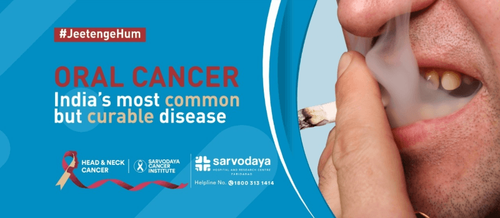
Read More- Oral Cancer - Indias Most Common But Curable Disease
Why Is Oral Cancer So Common in India?
India is one of the largest consumers of smokeless tobacco worldwide. Since these smokeless tobaccos are made from cancer-causing substances, their prolonged use results in oral cancer.
Common oral cancer causes in India include:
- Placing tobacco directly against the cheek and gums for long periods
- Chewing areca nut mixed with betel leaf, even without it, is classified as harmful
- Highly affordable markets make it very accessible to teenagers and young adults
- In rural areas, hand-rolled tobacco wrapped in tendu leaves is very common
- Combining tobacco with other addictive substances like alcohol multiplies the effect
- Human Papillomavirus (HPV) — a common sexually transmitted disease
- Prolonged sun exposure damages not only the skin but also the mouth, leaving the lips highly vulnerable to cancer
- Ignoring persistent ulcers, patches, or any tissue change
Oral cancer is not only common in India, but its high prevalence is severely affecting young people. People not only consume smokeless tobacco, but the fact that they combine it with other addictive substances like alcohol or areca nut, is a severe cause of tobacco and oral cancer risk.
Symptoms and Early Signs of Oral Cancer
Early signs of oral cancer start silently and painlessly, often looking like everyday mouth problems. By simply reflecting on these early signs, oral cancer can be preventable.
Watch out for these symptoms of oral cancer early signs:
- A normal-looking mouth ulcer that lasts longer than 2-3 weeks
- Thick and chalky white or bright, velvety red patches inside the mouth
- Strange discolouration on your tongue, gums, or the inside of your cheek
- A small lump inside your cheek or under your tongue (painless in the beginning)
- Burning sensation whenever you eat spicy, salty, or acidic foods
- Tingling sensation or numbness in a specific part of your lip, tongue, or chin
- A constant feeling that something is stuck at the back of your throat
- Difficulty swallowing saliva or moving the jaw
- One or more of your teeth start to feel loose
These signs do not always mean cancer. However, they need evaluation if they continue, increase, or keep coming back.
How Is Oral Cancer Diagnosed?
Proper oral cancer treatment and diagnosis in India usually begins with a clinical examination.
A doctor may advise:
- Oral cavity examination
- Neck examination to check for swelling or lymph nodes
- Biopsy from the suspicious area
- Imaging tests like CT scan, MRI, or PET-CT, if required
- Blood tests and fitness evaluation before treatment
- Cancer staging to understand the extent of the disease
A biopsy is often the most important test because it confirms whether the noticed sign is cancerous or not. After the diagnosis is confirmed, doctors plan for the treatment depending on the site, stage, size of the cancer, spread, age, general health, and functional needs of the patient.
Treatment Options for Oral Cancer
Oral cancer treatment is not the same for every patient. For early-stage oral cancer, treatment may be simpler and more focused. For advanced cancer, a combination of treatments may be required.
Depending on the diagnosis, treatment may include:
- Surgery to remove the cancer
- Radiation therapy
- Chemotherapy
- Targeted therapy
- Immunotherapy in selected cases
- Reconstructive surgery, if required
- Speech and swallowing rehabilitation
- Nutrition support
- Regular follow-up after treatment
The sooner the signs are detected, the easier the treatment and planning become.
Oral Cancer Prevention Tips for India
Many oral cancer risk factors can be reduced with the right treatment. In India, preventing oral cancer requires a massive shift in lifestyle, addictive habits, and a commitment to consult if any of the signs stay for a long time.
Follow these oral cancer prevention tips in India:
- Immediately stop tobacco in all forms to reduce cellular damage on its own
- Avoid areca nut or betel nut, even if they do not contain tobacco
- Never consume alcohol and tobacco together
- Consult a specialist for any persistent mouth ulcer, a rough spot, or a sore throat
- Visit the doctor for any sharp teeth, broken teeth, or ill-fitting dentures
- Use lip protection if you have long sun exposure
Among all these tips, the one must-do step is to stop tobacco and areca nut use. Stopping these cancerous substances early can save you from future damage.
Sarvodaya’s Approach to Oral Cancer Care
Sarvodaya Hospital’s oral cancer treatment includes diagnosis through clinical examination, biopsy, and imaging, along with treatment options such as surgery, radiation, chemotherapy, and targeted therapy, depending on the patient’s stage and condition.
Sarvodaya’s oral cancer care includes:
- Clinical examination by experienced cancer specialists
- Biopsy and imaging support for accurate diagnosis
- Staging to understand the spread of cancer
- Surgical Oncology consultation for operable oral cancers
- Radiation Oncology and Medical Oncology support when required
- Personalised treatment planning based on cancer stage and patient condition
- Rehabilitation support for speech, swallowing, nutrition, and recovery
If you have a non-healing mouth ulcer, a patch, a lump, reduced mouth opening, or any oral change that is not improving, timely consultation can help you take the right next step.