
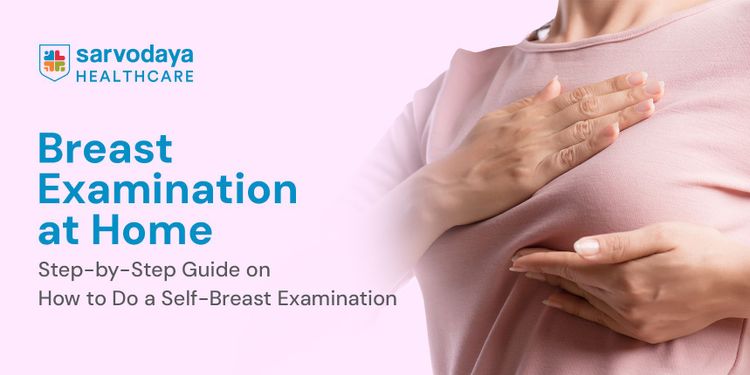


Breast self-exam is a simple habit that helps you understand what is normal for your body. When you know how your breasts usually look and feel, you are able to notice any new or unusual change.
Many women report that self-examination was what led them to the detection of breast cancer. This could include a new lump, swelling, nipple inversion, discharge, or any sudden change in shape. It is important to know that not all signs mean cancer, but they can become the reason you consult a specialist on time.
Do you know that breast cancer has a very high survival rate when detected early? According to the American Cancer Society, the 5-year relative survival rate for localised breast cancer is more than 99%.
As Dr Naveen Sanchety, Director of Surgical Oncology at Sarvodaya Hospital, says:
“Your body gives you signs; don’t ignore them. Check, notice, and act early, because timely care saves lives.”
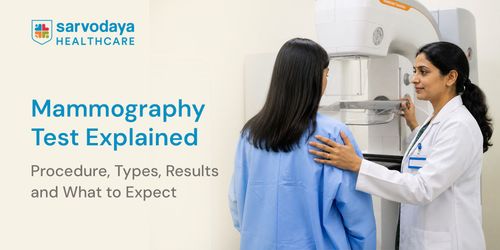
However, you must not consider self-examination as your only screening tool. Screening tests like mammograms, clinical breast examination, ultrasound, MRI, or other doctor-advised tests can detect changes that may not be felt or seen during self-examination.
In this blog, we will provide you with a step-by-step guide on how to do a breast exam at home.
What is Breast Self-Examination?
Breast self-examination is a way to check your breasts for any visible or felt changes. It includes looking at the breasts and gently feeling them to understand what is normal for your body.
The main purpose of breast self-examination is breast self-awareness. When you are familiar with how your breasts usually look and feel, it becomes easier to notice a new lump, swelling, skin change, nipple change, discharge, or any difference that was not present before.
Any new or unusual change should be discussed with a doctor. It does not always mean cancer, but it should not be ignored.
Breast self-examination is a useful awareness practice, but it is not a replacement for mammograms, clinical breast examination, or any screening advised by your doctor. It is important to understand that breast self-exam is a way to improve breast awareness using both eyes and hands, but even those changes should be discussed with a healthcare professional.
Read More: What is Breast Cancer? Symptoms, Causes, Types, Stages & Treatment Explained
When Should You Do a Breast Self-Exam?
Doctors recommend a breast self-exam once every month.
If you have regular periods, self-examination should be done a few days after your period ends. This is because breast tissue can feel swollen, heavy, painful, or slightly lumpy before or during periods due to hormonal changes.
If you have irregular periods or have reached menopause, choose one fixed day every month. There is nothing medically special about that date; it simply helps you maintain consistency.
How to Perform a Self-Breast Exam?
You can check your breasts in different positions, as each one helps you notice changes in a slightly different way:
- In front of a mirror: To look for visible changes in breast shape, skin, nipple position, swelling, or dimpling.
- While standing: To feel the breast tissue, often during a shower, as wet skin allows the fingers to move more smoothly.
- While lying down: To feel the breast tissue more evenly, as it spreads out when you lie flat.
These are only the common ways to check your breasts. In the next section, let’s understand the breast self-examination steps in detail.
Breast Check at Home: Step-by-Step Self-Exam Guide
Before you begin, remember the basic method:
- Use the flat pads of your three middle fingers to check the breast.
- Move your fingers slowly in small circular motions.
- Cover the entire breast area.
- Start with light pressure, then use medium pressure, and finally firm pressure.
- This helps you feel different layers of breast tissue.
- The aim is not to diagnose a condition at home, but to notice anything new, unusual, or different from your normal breast pattern.
This breast check at home step by step can be done in the following ways:
Step 1: Look for Visible Changes
Stand in front of a mirror and observe both breasts carefully. Remember, both breasts do not have to look exactly the same. A slight difference in size or shape can be normal.
Check for:
- Any new change in breast size or shape
- Swelling in one breast or one area
- Skin dimpling, pulling, or puckering
- Redness, rash, or skin thickening
- Any new change in nipple position
- Nipple turning inward, especially if it was not like this earlier
For a better check:
- Look once with your arms relaxed by your sides.
- Look again with both arms raised.
- This may make some skin, nipple, or shape changes easier to notice.
Step 2: Check the Breasts While Standing
A standing breast exam is often done during a shower because the fingers can move more smoothly over the skin. This may make it easier to notice a new lump, thickened area, or change in texture.
While checking:
- Use the flat pads of your three middle fingers, not the fingertips.
- Move your fingers slowly in small circles.
- Cover the full breast area, from the collarbone to below the breast.
- Check from the centre of the chest to the underarm area.
- Use light, medium, and firm pressure.
- Check around the nipple and areola.
- Repeat the same method on the other breast.
Step 3: Check the Breasts While Lying Down
Lying down helps the breast tissue spread more evenly over the chest. This can make it easier to feel the deeper areas of the breast.
While checking:
- Lie down and place one arm behind your head.
- Use the opposite hand to check that breast.
- Move your fingers slowly in small circular movements.
- Cover the entire breast, including the outer side and underarm area.
- Notice any new lump, thickening, pain, or change in texture.
- Repeat the same steps on the other side.
Do not rush the process. A breast self-exam guide is only useful when you check calmly, cover the full breast area, and compare any change with what is normal for you.
Read More-Debunking 10 Myths About Breast Cancer
What Changes Should You Watch For During a Breast Self-Exam?
During a monthly breast self-examination, the aim is not to diagnose breast cancer at home. The aim is to notice any new change that was not present earlier.
Watch out for these breast cancer self-check symptoms:
- A new lump or thickening in the breast or underarm area
- Swelling in one part of the breast
- Skin dimpling, puckering, or pulling
- Redness, rash, soreness, or unusual warmth over the breast
- Nipple turning inward, especially if this is a new change
- Unusual nipple discharge, especially if it is bloody or happens without squeezing
- Sudden change in breast size, shape, or symmetry
- Persistent pain in one specific area
- Any change that feels different from your usual breast pattern
Not all signs mean cancer:
- These signs of breast cancer self-exam do not always mean cancer.
- However, they should not be ignored or left to guesswork.
- If something feels new, unusual, or different from last month, it is better to consult a specialist.
- Early detection of breast cancer at home begins with awareness, but confirmation always needs medical evaluation.
Why Doctor Consultation Is Important For a Breast Self-Exam
A self-exam helps you notice a change. A doctor helps you understand what that change means.
Doctor consultation is important because:
- Not every breast lump is cancer.
- Not every breast cancer can be felt as a lump.
- Some breast changes may need a clinical breast examination.
- Some changes may need imaging tests like mammography, ultrasound, or MRI.
- In some cases, a biopsy may be advised to confirm the diagnosis.
- A specialist can tell whether the change is harmless, needs monitoring, or requires further tests.
So, if you notice a lump, nipple change, skin dimpling, discharge, or any unusual breast change, do not wait for it to settle on its own. Let the right tests guide the next step.
Read More-Everything to Know About Mastectomy Breast Cancer Surgery Guide
Sarvodaya’s Approach to Breast Health
At Sarvodaya Hospital, breast health is managed through a complete and specialist-led approach.
Sarvodaya’s breast health and cancer care support may include:
- Clinical evaluation by experienced specialists
- Mammography and other breast imaging support
- Ultrasound, MRI, or biopsy when advised
- Surgical Oncology consultation for breast lumps or confirmed cancer
- Medical Oncology and Radiation Oncology support when treatment is required
- Personalised treatment planning based on diagnosis, stage, age, health condition, and patient needs
Sarvodaya Hospital’s own breast cancer examination guide also highlights the role of self-checks, clinical examination, imaging tests, and treatment options in breast cancer care.
If you have noticed a new breast change or if you are unsure whether you need screening, consulting a specialist can help you gain clarity. Breast self-exam may be the first step, but expert evaluation helps decide what should be done next.