
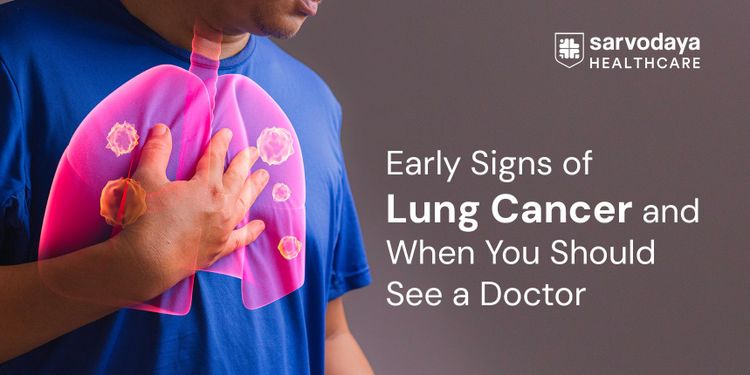


Lung cancer is one of those cancers that may not cause clear symptoms in the beginning. Many early signs look like common lung problems, such as a cough, chest infection, weakness, breathlessness, or chest discomfort. This is one reason why people often delay seeing a doctor.
The difficult part is that these symptoms may not feel alarming at first. A cough may be blamed on pollution, smoking, seasonal infection, allergy, or old breathing problems. Breathlessness may be ignored as tiredness. Chest pain may be mistaken for acidity or muscle strain.
But when these signs continue, keep coming back, or become worse with time, they should not be ignored.
Knowing the early signs of lung cancer in adults can help people understand when a symptom needs medical attention. This does not mean every cough or chest pain is cancer. However, it does mean that persistent or unexplained symptoms should be checked by a doctor.
In this blog, you will understand the symptoms of lung cancer you should not ignore, how symptoms may appear in smokers and non-smokers, diagnosis, treatment options, and when to see a doctor for lung cancer symptoms.
What Is Lung Cancer?
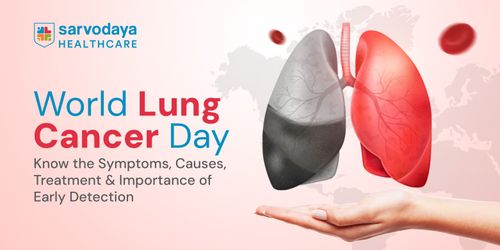
Lung cancer is a cancer that starts in the lungs when abnormal cells begin to grow uncontrollably. Over time, these cells can form a tumour and may affect normal breathing, oxygen supply, and nearby structures in the chest.
Lung cancer may start in one part of the lung and, in some cases, spread to lymph nodes, the other lung, bones, brain, liver, or other parts of the body.
In the early stage, lung cancer may not always cause severe symptoms. This is why many people come to know about it only when they get a chest X-ray, CT scan, or other test done for a persistent cough, chest infection, or breathing difficulty.
Why Are Early Signs of Lung Cancer Often Missed?
The early signs of lung cancer are often missed because they look very similar to everyday health problems. A person may continue treating a cough as a normal infection. Someone with a smoking history may think coughing is “normal”. A non-smoker may not even imagine that lung cancer could be a possibility.
This delay happens because lung cancer symptoms can overlap with:
- Seasonal cough and cold
- Chest infection
- Bronchitis
- Asthma
- COPD
- Allergy
- Acidity-related chest discomfort
- Pollution-related breathing difficulty
- General weakness or stress
The problem begins when the symptom does not improve, keeps coming back, or slowly becomes worse. That is when a proper medical evaluation becomes important.
Early Signs and Symptoms of Lung Cancer
The early detection of lung cancer signs and warning symptoms depends on noticing changes early and not waiting for symptoms to become severe.
Watch out for these early signs:
- A cough that does not go away or keeps getting worse
- Coughing up blood, even if it is a small amount
- Chest pain that increases while coughing, breathing deeply, or laughing
- Shortness of breath during daily activities
- A hoarse or changed voice that continues
- Wheezing or noisy breathing without a clear reason
- Repeated chest infections, bronchitis, or pneumonia
- Unexplained tiredness or weakness
- Loss of appetite or unexplained weight loss
- Shoulder, back, or upper chest pain that does not improve
- Swelling in the neck or above the collarbone
These symptoms do not always mean lung cancer. However, they should be checked if they are persistent, unexplained, or increasing with time.
A Cough That Does Not Go Away
A persistent cough is one of the most common symptoms people notice. In many cases, a cough may happen because of infection, pollution, allergy, smoking, or asthma. But if a cough lasts for more than a few weeks, changes in pattern, or becomes worse, it should not be ignored.
A cough needs medical attention if:
- It continues for more than 2–3 weeks
- It becomes deeper or more frequent
- It comes with chest pain or breathlessness
- It produces blood or rust-coloured mucus
- It keeps returning even after treatment
For smokers, a change in the usual cough is especially important. If the cough sounds different, becomes more intense, or is associated with blood, weight loss, or breathlessness, it should be evaluated.
Coughing Up Blood
Coughing up blood is one symptom that should always be taken seriously. It may appear as fresh blood, streaks of blood in mucus, or rust-coloured phlegm.
This does not always mean lung cancer. It may also happen due to infection, tuberculosis, bronchitis, or other lung conditions. But because it can be linked to serious disease, it should be checked promptly.
Even a small amount of blood in cough should not be ignored, especially if it happens more than once or comes with chest pain, fever, weight loss, or breathlessness.
Breathlessness or Shortness of Breath
Breathlessness can happen for many reasons. It may be related to asthma, heart disease, anaemia, poor fitness, infection, or lung problems. However, new or worsening breathlessness should be evaluated.
You should pay attention if:
- You feel breathless while doing simple activities
- Climbing stairs becomes difficult suddenly
- You feel short of breath even while resting
- Breathlessness comes with chest pain or cough
- You feel wheezing or tightness in the chest
In lung cancer, breathlessness may occur when a tumour affects the airways, when fluid collects around the lung, or when the lungs are not able to function normally.
Chest Pain, Shoulder Pain, or Back Pain
Chest pain is another symptom that people often explain away as acidity, gas, muscle strain, or stress. Sometimes that may be true. But chest pain that continues, worsens while breathing deeply or coughing, or comes with other symptoms should be checked.
Some people may also feel pain in the shoulder, upper back, ribs, or arm. This can happen when the disease affects nearby tissues, nerves, or the chest wall.
Pain needs medical attention if it is persistent, unexplained, worsening, or associated with cough, breathlessness, fever, weight loss, or coughing up blood.
Hoarseness or Voice Change
A hoarse voice can happen after a throat infection, excessive talking, acidity, or allergy. Usually, it improves with time. But if the voice change continues without a clear reason, it should be evaluated.
In some lung cancer cases, a tumour may press on or affect nerves that control the voice. This can lead to persistent hoarseness or a noticeable change in voice.
If your voice remains hoarse for more than two weeks, especially with cough, chest pain, breathlessness, or weight loss, it is better to consult a doctor.
Read More - Robotic Cancer Surgery: Revolutionising Cancer Treatment with Enhanced Precision
Repeated Chest Infections
Recurring chest infections should not be taken lightly, especially in adults. If someone keeps getting bronchitis, pneumonia, fever, cough, or chest congestion again and again, the cause should be investigated.
In some cases, a tumour can block part of the airway and make infections more likely in the same area of the lung.
You should consult a doctor if:
- Chest infections keep coming back
- Symptoms improve for a few days and return again
- Fever and cough continue despite treatment
- Breathlessness increases after infection
- Chest X-ray shows repeated changes in the same area
Repeated infections do not always mean cancer, but they should not be ignored.
Lung Cancer Symptoms in Smokers and Non-Smokers
Smoking is one of the biggest risk factors for lung cancer. However, lung cancer can also happen in people who have never smoked. This is why awareness should not be limited only to smokers.
The common lung cancer symptoms in smokers and non-smokers may be similar, including persistent cough, breathlessness, chest pain, coughing up blood, fatigue, voice change, and unexplained weight loss.
In smokers, a long-term cough is often ignored because it feels like part of daily life. This can delay diagnosis.
In non-smokers, symptoms may be ignored because the person does not consider lung cancer as a possibility. This can also delay consultation.
Whether you smoke or not, any persistent lung-related symptom should be checked if it does not improve.
Who Is at Higher Risk of Lung Cancer?
Anyone can develop lung cancer, but some people have a higher risk than others.
- Risk factors may include:
- Smoking or past smoking history
- Second-hand smoke exposure
- Long-term exposure to air pollution
- Exposure to asbestos, silica, diesel fumes, or industrial chemicals
- Family history of lung cancer
- Previous radiation therapy to the chest
- History of chronic lung disease
- Increasing age
Having risk factors does not mean a person will definitely get lung cancer. But it does mean symptoms should be taken more seriously and checked earlier.
Read More - Live Beyond Cancer: Finding A 'New Normal' Life After Cancer Treatment
When Should You See a Doctor?
Many people wait for symptoms to become severe before consulting a doctor. That is not the right approach for lung symptoms that continue or worsen.
Here is when to see a doctor for lung cancer symptoms:
- A cough lasts more than 2–3 weeks
- You cough up blood, even once
- Breathlessness starts suddenly or keeps worsening
- Chest pain continues or increases while coughing or breathing
- You have repeated chest infections
- Your voice remains hoarse for more than two weeks
- You lose weight without trying
- You feel unexplained tiredness along with cough or breathlessness
- You are a smoker or a former smoker with a changing cough pattern
- You have persistent symptoms despite treatment
Early consultation does not mean you are assuming the worst. It simply means you are taking the right step before the problem becomes more serious.
How Is Lung Cancer Diagnosed?
If a doctor suspects a lung problem, they may advise tests depending on your symptoms, age, risk factors, and examination findings.
Diagnosis may include:
- Physical examination and medical history
- Chest X-ray
- CT scan of the chest
- PET-CT scan, if required
- Sputum test in selected cases
- Bronchoscopy to look inside the airways
- Biopsy from the suspicious area
- Blood tests and fitness evaluation
- Cancer staging to understand whether the disease has spread
A biopsy is usually needed to confirm whether the suspicious area is cancerous. After confirmation, doctors plan treatment based on the type of lung cancer, stage, spread, general health, and treatment goals.
Treatment Options for Lung Cancer
Lung cancer treatment is not the same for every patient. It depends on the type of lung cancer, stage, location, extent of spread, lung function, and the patient's overall health.
Treatment may include:
- Surgery, if the cancer is localised and operable
- Radiation therapy
- Chemotherapy
- Targeted therapy
- Immunotherapy
- Combination treatment in selected cases
- Palliative care for symptom relief and comfort
- Rehabilitation and breathing support
- Regular follow-up after treatment
For early-stage lung cancer, treatment may be more focused. For advanced lung cancer, a combination of treatments may be needed to control the disease, relieve symptoms, and improve quality of life.
The important point is that treatment should begin only after proper diagnosis and staging.
Can Lung Cancer Be Detected Early?
Lung cancer can be detected early in some cases, especially when symptoms are checked on time or when screening is advised for high-risk individuals.
Early detection helps doctors plan treatment before the disease spreads further. This is why persistent symptoms should never be brushed aside.
If you are at high risk because of age, smoking history, family history, or long-term exposure to harmful substances, your doctor may guide you about screening or regular evaluation.
The goal is not to create fear. The goal is to avoid delay.
Read More - Can Cancer Be Prevented? Lifestyle Changes That Can Reduce Your Cancer Risk
Sarvodaya’s Approach to Lung Cancer Care
Sarvodaya Hospital’s lung cancer care includes diagnosis, staging, treatment planning, and supportive care through a coordinated cancer care approach. Experienced specialists evaluate patients, and treatment is planned according to the type of lung cancer, stage, overall health, and individual needs.
Sarvodaya’s lung cancer care includes:
- Clinical evaluation by experienced cancer specialists
- Chest imaging support, including CT scan and PET-CT, when required
- Biopsy and staging support for accurate diagnosis
- Medical Oncology consultation for chemotherapy, targeted therapy, and immunotherapy
- Radiation Oncology support for planned radiation treatment
- Surgical Oncology and thoracic surgery consultation for operable lung cancers
- Tumour board-based discussion for complex cases
- Supportive care for pain, breathing difficulty, nutrition, counselling, and recovery
- Regular follow-up to monitor treatment response and manage side effects
If you have a persistent cough, breathlessness, coughing up blood, chest pain, repeated chest infections, or unexplained weight loss, a timely consultation can help you take the right next step.
Final Thoughts
Lung cancer symptoms can be confusing because they often look like common lung or chest problems. But the body usually gives signals when something is not right. The important thing is to notice symptoms that continue, return, or worsen.
A cough that does not go away, blood in the cough, breathlessness, chest pain, hoarseness, repeated infections, tiredness, or unexplained weight loss should not be ignored.
These symptoms do not always mean cancer. But they do need medical attention.
Early diagnosis can make treatment planning easier and more effective. If you or someone in your family has persistent lung symptoms, consult a doctor instead of waiting for them to settle on their own.