
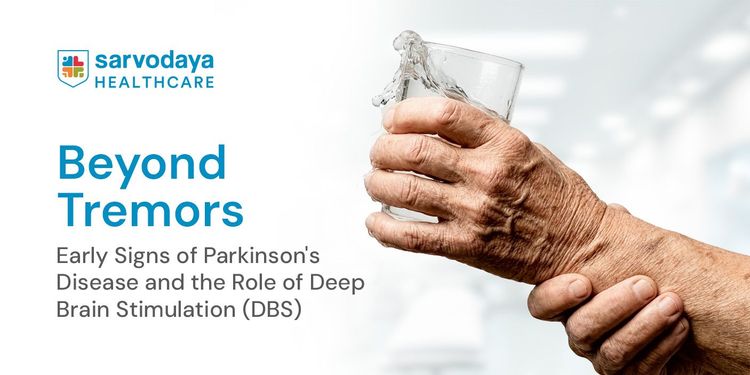


Most people think Parkinson's disease begins with a shaking hand. In reality, that's often not where the story starts.
Parkinson's is a slowly progressive neurological disorder. You don't develop it overnight. In fact, the changes in the brain usually begin years before the disease becomes obvious enough for someone to say, "Something isn't right."
The challenge is that many of its early signs are subtle and easy to dismiss. Constipation may seem like a digestive problem. A reduced sense of smell may be blamed on ageing. Family members may notice that a person has started speaking more softly or appears less expressive, but rarely think of it as a neurological condition. Some people even begin acting out their dreams during sleep, a condition known as REM Sleep Behaviour Disorder, years before movement symptoms appear.
Because these changes develop gradually and resemble what many people associate with growing older, Parkinson's often goes unrecognised until it begins affecting movement more noticeably.
And movement changes aren't limited to tremors either.
The good news is that Parkinson's disease is far more manageable today than it was a few decades ago.
For carefully selected patients at this stage, Deep Brain Stimulation (DBS) has become an established treatment option. Rather than replacing medication, DBS works alongside it to help improve movement control, reduce troublesome symptoms, and allow many patients to regain greater independence in their daily lives.
Understanding when Parkinson's progresses, who may benefit from DBS, and what the treatment can realistically achieve is an important part of making informed decisions. Before exploring DBS, it helps to understand what is actually happening inside the brain and why Parkinson's affects movement in the first place.
What Happens Inside the Brain in Parkinson's Disease?
In Parkinson's disease, the brain gradually loses nerve cells in a midbrain region called the substantia nigra whose sole job is to produce dopamine. Think of dopamine as the fuel that allows movement signals to travel.
The brain can make up for this gradual loss of dopamine for many years, which is why Parkinson's disease often develops quietly. However, when around 60% to 80% of the dopamine-producing nerve cells have been lost, the brain can no longer control movement as smoothly as before. This is when symptoms such as tremors, stiffness, slower movements and balance problems begin to appear.
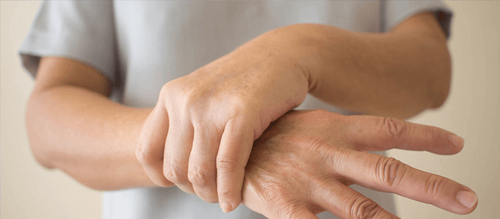
What does Parkinson’s disease look like in daily life? A person may notice that getting up from a chair takes a little longer. Their handwriting becomes smaller. One arm swings less while walking. Their body feels stiff, movements become slower, and maintaining balance is no longer effortless. Tremors may develop, but they are only one part of a much broader condition.
This gradual loss of dopamine is why Parkinson's is considered a progressive neurological disorder. Symptoms usually worsen slowly over many years rather than appearing all at once.
Parkinson's Doesn't Always Begin with Tremors
One of the biggest misconceptions about Parkinson's disease is that it starts with shaking hands.
In reality, many patients experience symptoms long before a tremor develops. Some never have a prominent tremor at all. For others, stiffness or slowness of movement becomes the biggest challenge.
Early Parkinson's disease symptoms may include:
- A reduced sense of smell
- Persistent constipation without another obvious cause
- Acting out dreams during sleep, known as REM Sleep Behaviour Disorder
- Softer or more monotonous speech
- Smaller handwriting than usual
- Reduced facial expressions or less frequent blinking
- Slower walking or reduced arm swing on one side
- Stiffness in the arms, legs or neck
- Difficulty maintaining balance
- Slowness while performing everyday activities
Individually, these symptoms may not seem unusual. Many people simply assume they are part of getting older. However, when several of these changes appear together or gradually become more noticeable, they deserve medical attention.
It is also important to understand that Parkinson's affects people differently. The most common type is idiopathic Parkinson's disease, meaning there is no single identifiable cause. Some patients mainly experience tremors, while others have little or no tremor but significant stiffness, slowness or balance problems.
Although Parkinson's can occur in younger adults, it is more commonly diagnosed in people in their late 50s and 60s and is seen slightly more often in men than women.
How Do Neurologists Recognise Parkinson's Disease?
One question patients often ask is, "If there isn't a blood test for Parkinson's disease, how do doctors diagnose it?"
The answer surprises many people.
Unlike conditions that can be confirmed with a single laboratory test, Parkinson's disease is primarily a clinical diagnosis. This means an experienced neurologist gathers information from your symptoms, medical history and a detailed neurological examination.
A neurologist may observe:
- Whether your face appears less expressive than usual
- How frequently you blink
- The volume and tone of your voice
- Your posture while standing
- Whether one arm swings less while walking
- How easily you turn around
- Whether movements become slower with repeated finger tapping or foot tapping
- Muscle stiffness during examination
- Whether symptoms affect one side of the body more than the other
To support the diagnosis, your doctor may also recommend brain imaging such as an MRI or CT scan. However, these tests are usually performed to rule out other neurological conditions that can produce similar symptoms, rather than to confirm Parkinson's disease itself.
This careful evaluation helps ensure that treatment is based on an accurate diagnosis and that other potentially treatable conditions are not overlooked.
When Medicines Are No Longer Enough
For most patients, medicines remain the first and most effective treatment for Parkinson's disease. They work by increasing or mimicking dopamine activity in the brain, helping movements become smoother and reducing symptoms.
However, Parkinson's is a progressive disease. As it advances, the brain continues to lose dopamine-producing nerve cells, and medicines may no longer provide the same consistent benefit they once did.
Some patients begin experiencing:
- Medicines wearing off before the next scheduled dose
- Longer "off" periods when movement becomes slow or difficult
- Involuntary movements, known as dyskinesia
- Tremors that remain difficult to control
- Fluctuations between good and poor movement throughout the day
This stage can be frustrating. Patients often find themselves planning daily activities around medication schedules, worrying about when symptoms may return.
Over the past three decades, one of the most significant advances in Parkinson's disease treatment has been the development of Deep Brain Stimulation (DBS). For carefully selected patients, it offers another way to improve movement control when medicines alone are no longer providing stable relief.
Understanding Deep Brain Stimulation (DBS)
How Does Deep Brain Stimulation (DBS) Work?
When medicines no longer control Parkinson's symptoms consistently, Deep Brain Stimulation (DBS) may become a treatment option for carefully selected patients. Instead of replacing dopamine or curing Parkinson's disease, DBS uses controlled electrical stimulation to help regulate the brain's movement circuits.
Step 1: Planning the Surgery
The neurology and neurosurgery team first evaluates whether DBS surgery for Parkinson's is the right option. They review the patient's symptoms, response to medication, and use detailed MRI scans to identify the exact area of the brain involved in controlling movement.
Step 2: Placing the Electrodes
Using image-guided technology, the neurosurgeon places hair-thin electrodes into the targeted area of the brain. These electrodes are connected to a small battery-powered device, called a neurostimulator, which is implanted beneath the skin near the chest.
Step 3: Programming the Device
A few weeks after surgery, the neurologist switches on the neurostimulator and adjusts its settings according to the patient's symptoms. The device then delivers gentle electrical impulses that help regulate abnormal brain signals and improve movement.
Step 4: Ongoing Care
One of the biggest advantages of Deep Brain Stimulation for Parkinson's Disease is that the stimulation can be adjusted over time without another brain surgery. As symptoms change, the neurologist can fine-tune the settings and modify medications to help patients maintain the best possible symptom control.
Who Is a Good Candidate for Deep Brain Stimulation (DBS)?
Not everyone living with Parkinson's disease requires DBS, and not everyone will benefit from it equally.
In general, a patient may be considered for DBS treatment for Parkinson's Disease if they:
- Have a confirmed diagnosis of Parkinson's disease
- Continue to respond to Parkinson's medicines but experience troublesome motor fluctuations
- Have dyskinesia that interferes with daily life
- Have tremors that remain difficult to control despite medication
- Are medically fit to undergo surgery
- Have realistic expectations about what DBS can and cannot achieve
A thorough evaluation ensures that advanced Parkinson's treatment is offered to the patients most likely to benefit, helping improve both safety and long-term outcomes.
Benefits of Deep Brain Stimulation (DBS)
Deep Brain Stimulation (DBS) can significantly improve the symptoms that make everyday life difficult. While the results vary from person to person, many patients experience better movement control and greater independence after the procedure.
Some of the key benefits include:
- Better control of tremors that do not respond well to medication
- Reduced stiffness and slowness of movement
- Fewer "off" periods, when medication stops working before the next dose
- Better control of involuntary movements (dyskinesia) caused by long-term medication use
- Improved ability to perform daily activities such as walking, writing, dressing, and eating
- In some patients, a reduction in Parkinson's medication under medical supervision
For many people, the biggest benefit isn't simply reducing symptoms. It's being able to return to activities they had gradually stopped doing because of Parkinson's disease.
What DBS Can and Cannot Do
Although Deep Brain Stimulation for Parkinson's Disease is one of the most effective advanced treatments available today, it's important to understand what it can realistically achieve.
DBS can help:
- Improve tremors, stiffness, slowness of movement, and medication-related movement fluctuations
- Improve mobility and day-to-day functioning
- Enhance quality of life in carefully selected patients
However, DBS cannot:
- Cure Parkinson's disease
- Stop or slow the progression of the disease
- Restore nerve cells that have already been lost
- Improve every symptom associated with Parkinson's, particularly those unrelated to movement
This is why careful patient selection, thorough evaluation, and realistic expectations are essential before planning the procedure.
Life After Deep Brain Stimulation (DBS)
The journey doesn't end with surgery. In many ways, it's just the beginning.
A few weeks after the procedure, the neurologist activates the neurostimulator and begins programming it. Finding the most effective settings is a gradual process and may require several follow-up visits.
As symptoms change over time, the stimulation settings can be adjusted without additional brain surgery. Your neurologist may also review and modify Parkinson's medications to achieve the best balance between symptom control and quality of life.
Many patients also benefit from physiotherapy, occupational therapy, speech therapy, and regular neurological follow-up. Together, these treatments help people maintain mobility, confidence, and independence for as long as possible.
Sarvodaya's Approach to Parkinson's Disease Care
Living with Parkinson's disease can affect far more than movement. It can influence confidence, independence, communication, and everyday routines. At Sarvodaya Hospital, our neurology and neurosurgery teams work together to provide personalised care, helping patients access the right treatment at the right stage of their journey.
Our approach combines clinical expertise with advanced technology to deliver comprehensive care for patients living with Parkinson's disease, including those who may benefit from Deep Brain Stimulation (DBS).
We offer:
- Comprehensive neurological evaluation for the diagnosis and management of Parkinson's disease
- Careful assessment to identify patients who may benefit from Deep Brain Stimulation (DBS)
- Advanced DBS surgery in Faridabad, supported by experienced neurosurgeons and neurologists
- Personalised programming and long-term optimisation of the neurostimulator
- Medication management, rehabilitation, and multidisciplinary follow-up to support long-term outcomes
- Access to advanced neurological care close to home for patients seeking the best DBS treatment in Faridabad and Delhi NCR
Our goal is not only to manage symptoms but to help patients maintain independence, confidence, and a better quality of life through every stage of Parkinson's disease.
If you or a loved one has been living with Parkinson's disease and medicines are no longer providing consistent relief, consult our neurology team to understand whether Deep Brain Stimulation (DBS) could be the right treatment option.