



Our spine handles a lot every day. It supports the body, allows movement and at the same time protects the spinal cord and the nerves that connect the brain with the rest of the body.
Yet we only take care of it when it begins to hurt, which is exactly why the theme for World Spine Day 2026 is Spine Health for Life. The theme gives us the message that spinal health is a lifelong responsibility, and we should keep doing exercises or make some lifestyle changes so that it remains healthy.
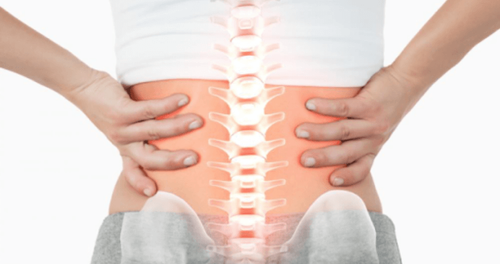
Back pain is extremely common, and most people experience it at some point in life. But not every episode of back pain means that the spine has suffered a serious structural problem. In fact, around 90% of low back pain is classified as non-specific, meaning that no single underlying disease or structural abnormality can be identified as the sole cause.
This is an important distinction because the right response to back pain depends on what is causing it, how long it has lasted and whether there are other symptoms.
A healthy spine is therefore not simply a spine that does not hurt.
Spine health is the ability to keep the spine strong, mobile and capable of supporting the life we want to lead.
What Is World Spine Day and Why Is Spine Health Important?
World Spine Day is observed every year on 16 October to raise awareness about spinal health, spinal disorders and the burden of spinal pain and disability.
Its relevance extends far beyond back pain.
Spinal and musculoskeletal conditions can affect mobility, work, exercise, independence and quality of life. Low back pain alone is the leading cause of disability worldwide and can affect people at any age.
This is why spine health deserves attention even when there is no pain.
The aim is not to make people fearful of every ache in the back. It is to encourage a better understanding of how the spine functions, what puts it at risk, when pain can be managed conservatively, and when medical evaluation becomes important.
The best time to think about spine health is not necessarily when the back starts hurting.
What Is the World Spine Day 2026 Theme and Why Does It Matter?
The theme for World Spine Day 2026 is:
“Spine Health for Life”
The message is straightforward: spinal health should be considered a lifelong responsibility rather than something that receives attention only after pain or injury appears. The campaign encourages regular movement, healthy habits, appropriate ergonomics and timely care across different stages of life.
That idea becomes particularly relevant as lifestyles change.
Long periods of sitting, physical inactivity, poor work ergonomics, smoking, excess body weight and physically demanding work can all contribute to the burden of back problems.
But prevention is not about maintaining a perfectly upright posture every minute of the day.
A healthy spine is not a rigid spine. It is a spine that is supported by movement, strength and the ability to adapt to everyday demands.
Read More - Minimal Access Spinal Technologies (MAST) For Painless Spine Surgery
What Are the Common Causes of Back Pain and Spine Problems?
Back pain can arise from many different structures and conditions.
Common causes include:
- Muscle or ligament strain, often after lifting, sudden movement or physical overexertion
- Slipped or herniated discs, which may irritate or compress nearby nerves
- Degenerative disc disease, involving changes in the discs between the vertebrae
- Spinal stenosis, in which narrowing of the spinal canal or nerve pathways can place pressure on nerves
- Spondylolisthesis, where one vertebra shifts relative to another
- Spinal deformities, including scoliosis and kyphosis
- Spinal fractures, particularly in people with osteoporosis or after significant trauma
- Infections or tumours, which are much less common but clinically important causes
There is also a large group of back-pain cases in which no single structural cause can fully explain the symptoms.
This does not mean the pain is imaginary.
Non-specific back pain is real pain, even when a scan does not reveal one precise lesion responsible for it.
That distinction is important because an abnormal finding on an MRI is not automatically the cause of someone's pain either. Some degenerative changes can occur without causing symptoms.
The clinical problem is therefore not simply to find something abnormal on a scan.
It is to determine whether the finding explains the person's symptoms.
What Are the Warning Signs of a Serious Spine Problem?
Most back pain is not caused by a medical emergency.
But certain symptoms change the situation and should never be ignored.
Seek urgent medical attention when back pain is accompanied by:
- New loss of bladder or bowel control
- Difficulty passing urine
- Numbness around the groin, buttocks or inner thighs
- Severe or progressive weakness in the legs
- Numbness or weakness affecting both legs
- Back pain after significant trauma
- Fever or feeling acutely unwell along with severe back pain
- A history of cancer with new or unexplained back pain
- Rapidly worsening symptoms
These features can sometimes indicate conditions such as spinal cord or nerve compression, infection or fracture and require prompt evaluation.
One particular combination is especially important.
Back pain + bladder or bowel changes + numbness around the saddle area
This can be a warning sign of cauda equina syndrome, a serious condition in which the nerves at the lower end of the spinal canal become severely compressed.
In such situations, waiting for the pain to settle on its own is not appropriate.
The nature of the associated symptoms can matter more than the intensity of the pain itself.
Read More - Spine Surgery - Types, Benefits, Recovery & Risks
How Can Regular Exercise Help Maintain Spine Health?
The spine does not benefit from being protected from movement.
For most people, regular physical activity helps maintain muscle strength, mobility and physical function, while prolonged inactivity can lead to deconditioning.
Exercise also supports the muscles that share the mechanical work of stabilising the spine, including the abdominal, hip and back muscles.
A well-rounded spine-health routine can include:
Aerobic activity
Walking, cycling or other activities that keep the body active.
Strengthening
Exercises that improve the endurance and strength of the core, back and hip muscles.
Mobility and flexibility
Movements that maintain comfortable motion through the hips, spine and surrounding muscles.
Balance and functional movement
Particularly important as people grow older or when previous injury has affected mobility.
The amount and type of exercise should be appropriate to a person's age, fitness, medical conditions and symptoms.
For someone recovering from a spine problem, the goal is generally not to return immediately to maximum activity.
The spine usually responds better to progressive, appropriate movement than to fear of movement.
What Physiotherapy Exercises Can Help With Back Pain?
Physiotherapy is not simply a collection of exercises given to everyone with back pain.
A physiotherapist first considers why the pain is occurring, how movement is affected, what muscles need strengthening, and what activities the person needs to return to.
Depending on the condition, a rehabilitation programme may include:
- Core and trunk strengthening
- Hip and lower-limb strengthening
- Stretching and mobility exercises
- Posture and movement retraining
- Balance and coordination exercises
- Gradual return to functional and work-related activities
Manual therapy and other pain-relief techniques may also be used when appropriate.
The exercises themselves are important, but the progression matters just as much.
Someone with uncomplicated mechanical back pain may require a very different programme from a person recovering from spinal surgery or living with nerve compression.
The best physiotherapy programme is not the one with the most exercises. It is the one that is appropriate to the person's condition and helps restore function safely.
When Is Spine Surgery Recommended for Back Pain?
This is where an important misconception needs to be corrected.
Back pain does not automatically mean spine surgery.
Since most low back pain is non-specific, many patients improve with appropriate non-surgical care, including education, activity, exercise, physiotherapy and other treatments suited to the underlying problem.
Surgery becomes relevant when there is a specific condition for which an operation can reasonably improve the patient's symptoms or protect neurological function.
It may be considered in situations such as:
- Significant nerve compression causing persistent or worsening symptoms
- Spinal stenosis with disabling symptoms
- Certain unstable or displaced spinal injuries
- Severe structural deformities
- Selected disc problems that do not improve with appropriate conservative treatment
- Spinal tumours, infections or other conditions requiring surgical treatment
- Emergency conditions such as cauda equina syndrome
The decision is based on more than the MRI report.
Doctors consider the symptoms, neurological findings, imaging, duration of the problem, response to non-surgical treatment and the person's overall health and functional goals.
This is why two people can have similar-looking scans and still receive different treatment.
A scan can show the anatomy. The treatment decision has to account for the person.
Read More - Spinal Cord Tumors - Symptoms And Causes
What Are Minimally Invasive Spine Surgery Options?
When surgery is required, modern spine care increasingly includes minimally invasive techniques for appropriately selected patients.
These procedures use smaller incisions and specialised instruments to reach the affected part of the spine while aiming to minimise disruption to surrounding tissues.
Depending on the condition, procedures may include:
- Microdiscectomy
- Endoscopic spine surgery
- Minimally invasive decompression
- Minimally invasive spinal fusion
- OLIF and ALIF
- Disc replacement
- Vertebroplasty or kyphoplasty for selected spinal fractures
Minimally invasive does not mean that every spine problem can or should be treated through a small incision.
The surgical approach is chosen according to the condition, anatomy and treatment objective, not simply because a technique is newer.
When Should You Consult a Spine Specialist for Back or Neck Pain?
Many uncomplicated episodes of back pain improve with time and appropriate conservative care.
A specialist consultation becomes more important when pain is:
Persistent
It is not improving as expected or keeps returning.
Progressive
The pain, numbness, weakness or functional limitation is becoming worse.
Neurological
There is tingling, numbness, weakness or pain radiating into the arm or leg.
Functionally limiting
Back or neck symptoms are affecting walking, work, sleep or ordinary activities.
Associated with warning signs
Symptoms such as fever, significant trauma, bladder or bowel changes, saddle numbness or rapidly progressive weakness are present.
The purpose of seeing a spine specialist is not necessarily to determine whether surgery is needed.
Often, the more useful question is:
What is causing the problem, and what is the least invasive treatment that is likely to help?
Spine Care at Sarvodaya Hospital
At Sarvodaya Hospital, Sector 8, Faridabad, spine care is supported through dedicated spine surgery services within the Centre for Neurosciences and Orthopaedics, bringing together spine surgeons, neurosurgeons, neurologists, physiotherapists and rehabilitation specialists for both surgical and non-surgical care.
- Care Across a Wide Range of Spine Conditions: The spine team manages chronic back and neck pain, slipped or herniated discs, sciatica, spinal stenosis, degenerative disc disease, spinal deformities, fractures, spinal tumours, spinal cord injuries and nerve compression.
- Experienced Spine and Neuro Specialists: The team includes specialists in spine surgery, neurosurgery, physiotherapy and minimally invasive spine care, with experience in managing both routine and complex spinal conditions.
- Advanced Imaging and Surgical Planning: Access to high-resolution MRI and CT imaging, along with spinal navigation and advanced treatment-planning systems, supports detailed diagnosis and precision in complex spine procedures.
- Minimally Invasive and Endoscopic Procedures: Surgical options include minimally invasive spine surgery, microdiscectomy, endoscopic procedures, OLIF, ALIF, decompression, spinal fusion and disc replacement for appropriately selected patients.
- Intraoperative Monitoring and Precision Technology: Neuro-monitoring, spinal navigation, advanced imaging and specialised surgical equipment support safety and precision during complex procedures.
- Rehabilitation and Long-Term Recovery: Physiotherapy and rehabilitation are integrated into spine care, with personalised programmes focused on restoring movement, strength, posture and functional independence.
- Multidisciplinary Care Under One Roof: When a spinal condition involves neurological, orthopaedic, trauma or rehabilitation needs, patients can access the relevant specialties and support services within the same multispeciality hospital.