


While growing up, many children’s bones show signs of deformity or take unusual shapes. Some deformities appear in the legs when they are curved, bowed, or angled inward during the early years of growth. It's natural for parents to wonder whether this is a normal part of development or a sign of an underlying bone condition.
The good news is that all bone deformities and conditions in children are treatable. Two such conditions are Bow Legs (genu varum) and Knock Knees (genu valgum), which are often normal developmental stages in young children.
However, in some cases, these conditions may indicate nutritional deficiencies, growth disorders, bone diseases, or other orthopaedic problems that require medical attention.
In this blog, let us understand the difference between bow legs and knock knees, their causes and symptoms, and how they differ from each other.
What Are Bow Legs?
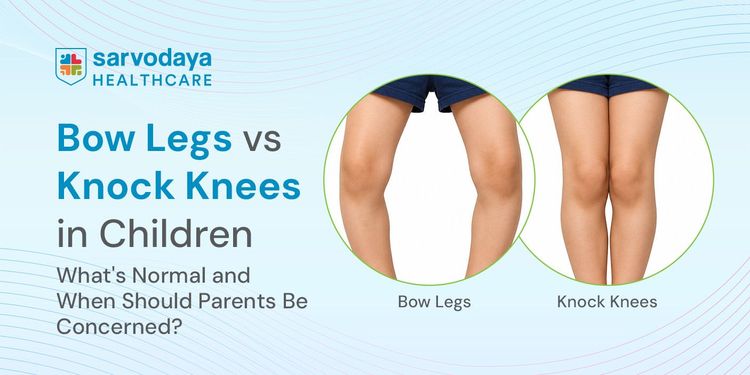
When a child's one leg or both legs are curved outward, away from the centre of their body at the knees, while the ankles remain close together, this condition is called Bow Legs or Genu Varum.
In bow legs, parents notice a gap between the knees when the child stands straight with both ankles together, giving a bow-like appearance.
It is a common condition in infants and toddlers. Babies who are born with bow legs usually grow out of it naturally within two years. When it doesn’t get resolved on its own, medical intervention is required.
Common Characteristics of Bow Legs
- Knees stay apart when ankles touch
- Legs curve outward
- Usually affects both legs equally
- Child walks normally without pain
- Common in infants and toddlers
Causes of Bow Legs
Several reasons can cause bow legs. Physiologic Genu Varum is the most common cause, which happens when the fetus develops in a cramped position in the uterus. The pressure due to this unusual position makes bones develop more rotated than normal, and after birth, this extra rotation leads to bow legs.
Physiologic Genu Varum usually corrects itself as the child’s bones grow from birth to two years. If the legs remain bow-shaped after two years, then the cause could be some other condition.
These include:
- Blount Disease: Abnormal growth of the shin bone causing progressive bowing.
- Rickets: Deficiency of Vitamin D, calcium, or phosphate leading to weak, soft bones.
- Bone Disorders: Genetic conditions affecting bone growth, such as skeletal dysplasia.
- Previous Injury or Fracture: Improper healing can cause leg deformity.
- Bone Infection: Damage to the growth plate may result in bow legs.
- Osteoarthritis (Adults): Wear and tear of the knee joint can lead to bowing over time.
Treatment of Bow Legs in Children
Till two years, the child doesn’t require medical treatment. Consult with an experienced paediatric orthopaedic surgeon for proper, timely monitoring of the condition and to ensure the legs get straight with time.
If the condition doesn't resolve on its own in 24 months, then medical intervention would be required.
The common treatment for Bow Legs in children includes:
- Nutritional Therapy: Vitamin D, calcium, or phosphate supplements for rickets.
- Bracing: May be recommended for young children with early-stage Blount disease.
- Physical Therapy: Helps improve strength, balance, and walking patterns in selected cases.
- Surgery: Guided growth surgery or corrective osteotomy may be needed for severe, progressive, or persistent bow legs, especially in older children or adults.
- Treating the Underlying Condition: Managing bone disorders or arthritis helps prevent further deformity.
What Are Knock Knees?
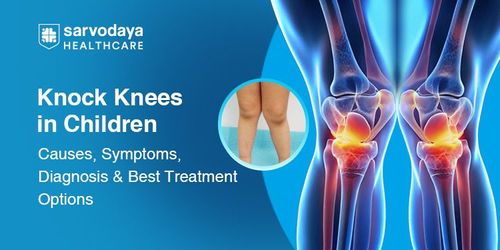
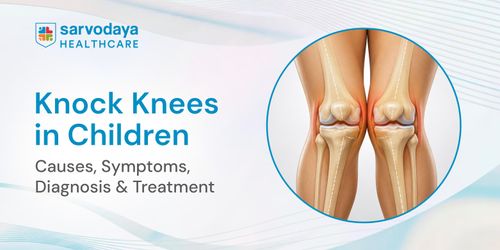
While standing straight, if a child’s legs are angled inwards and the knees touch together with a gap between the ankles, this condition is called Knock Knees or Genu Valgum.
It is yet another common condition in young children, which usually develops in kids between the ages of 3 and 5. Most kids grow out of it naturally with age, but if it causes pain or restricts movement, medical intervention might be required.
While no one’s legs are perfectly straight, in knock knees the knees touch with a noticeable gap between ankles as opposed to the knees and ankles being the same distance apart as in the case of normal legs.
Common Characteristics of Knock Knees
- Knees touch each other
- Ankles remain apart
- Legs angle inward
- Usually symmetrical
- Often appears between ages 2 and 5 years
Causes of Knock Knees
Knock knees generally happen because of natural variation in leg bones, a usual part of the growth process. However, in most cases there isn’t a specific cause.
Sometimes certain health conditions that affect the bones can lead to knock knees.
Some of the other causes include:
- Normal growth and development (common in children aged 2–7 years)
- Genetics (family history)
- Obesity
- Vitamin D deficiency (rickets)
- Bone or growth plate disorders
- Previous injury or fracture near the knee
- Bone infections affecting growth
- Arthritis (more common in adults)
- Rare skeletal or metabolic disorders
Treatment of Knock Knees in Children
In most cases, knock knees don’t require any treatment, as the child might grow out of them with natural development. This happens by the age of 7.
When you notice signs of knock knees in your child, consult with an experienced orthopaedic surgeon for proper evaluation and let them monitor for a few years till the age of 6-7.
If the knock knees are severe and cause pain or restricted movement, treatment may be required, which includes:
- Observation: Mild knock knees due to normal growth usually correct themselves by 7–8 years of age.
- Healthy Weight: Maintaining an ideal weight reduces stress on the knees.
- Balanced Nutrition: Ensure adequate vitamin D and calcium intake for healthy bone development.
- Treat Underlying Conditions: Correct nutritional deficiencies or bone disorders if present.
- Guided Growth Surgery: May be recommended for persistent or severe deformity in growing children.
- Corrective Osteotomy: Performed in older children or adolescents with significant deformity after growth is complete.
- Regular Follow-up: Periodic assessment by a paediatric orthopaedic specialist to monitor progress.
Bow Legs vs Knock Knees: Key Differences
| Feature | Bow Legs | Knock Knees |
|---|---|---|
| Medical Term | Genu Varum | Genu Valgum |
| Knee Position | Knees remain apart | Knees touch |
| Ankle Position | Ankles together | Ankles apart |
| Direction of Legs | Curve outward | Angle inward |
| Common Age | Birth to 2 years | 2–5 years |
| Usually Resolves | Yes | Yes |
Warning Signs Parents Should Never Ignore
While many cases are harmless, parents should seek medical advice if they notice any of the following:
Bow Legs
- Bowing becomes worse over time
- Only one leg is affected
- Child is older than 2 years, and bowing persists
- Significant difference between both legs
- Limping
- Knee pain
- Frequent falls
- Delayed walking
- Family history of bone disorders
Knock Knees
- Severe inward angulation
- One leg more affected than the other
- Persistence after age 8
- Knee pain
- Difficulty running
- Walking problems
- Frequent tripping
- Progressive worsening
Early evaluation helps identify underlying conditions before permanent deformity develops.
How Are These Conditions Diagnosed?
A pediatric orthopaedic specialist performs a detailed evaluation to diagnose. In some cases, no tests are required. Knock Knees and Bow Legs can be confirmed by visual presentation of the legs.
Some of the key information required for diagnosis includes:
Medical History
- Birth history
- Family history
- Developmental milestones
- Nutrition
- Walking pattern
- Previous injuries
Physical Examination
The doctor evaluates:
- Leg alignment
- Hip position
- Knee movement
- Foot alignment
- Limb length
- Walking pattern (gait)
Imaging
If needed, investigations may include:
- Standing X-rays
- Bone alignment measurements
- Growth plate evaluation
Blood Tests
Sometimes recommended to check:
- Vitamin D
- Calcium
- Phosphorus
- Bone metabolism
Can Bow Legs or Knock Knees Affect Walking?
In most normal developmental cases, Bow Legs and knock Knees do not affect walking. Children walk, run, and play without difficulty.
However, severe untreated deformities may lead to:
- Abnormal gait
- Knee pain
- Hip pain
- Foot problems
- Uneven weight distribution
- Early joint wear in adulthood
Early evaluation and treatment by an expert child bone and joint expert significantly reduces these long-term complications.
Can Knock Knees and Bow Legs Be Prevented?
Not all cases of knock knees and bow legs can be prevented because normal growth patterns are genetically programmed.
However, parents can support healthy bone development of the child by:
- Providing adequate Vitamin D
- Ensuring sufficient calcium intake
- Encouraging outdoor play
- Maintaining a healthy weight
- Attending regular pediatric check-ups
- Seeking evaluation if leg alignment worsens
Common Myths About Bow Legs and Knock Knees
Myth 1: My child needs special shoes.
Fact: Special shoes rarely correct these conditions.
Myth 2: Walking early causes permanent bow legs.
Fact: Early walking alone does not usually cause permanent deformity.
Myth 3: Massage can straighten bowed legs.
Fact: Massage has no scientific evidence of correcting bone alignment.
Myth 4: Every child with knock knees needs surgery.
Fact: Most children improve naturally without any operation.
When Should Parents See a Pediatric Orthopaedic Specialist?
Schedule an evaluation with a paediatric orthopaedic specialist if your child:
- Has severe bowing or knock knees
- Develops worsening deformity
- Experiences pain
- Walks with a limp
- Falls frequently
- Has unequal leg alignment
- Is older than expected for natural correction
- Has delayed growth or developmental concerns
Takeaway Message for Parents
Bow legs and knock knees are often a normal part of childhood growth and usually resolve naturally as children grow. They are not a severe deformity and don’t make the child abnormal.
Understanding the typical stages of leg development can help avoid unnecessary worry.
Sarvodaya Hospital brings dedicated, highly experienced paediatric orthopaedic experts who are highly skilled in evaluating, treating and managing all bone and joint conditions of children.
Keep a check on your child’s growth and development, follow healthy lifestyle habits, give them proper nutritious food and consult doctors regularly for timely monitoring.
If you're concerned about your child's leg alignment, consult a pediatric orthopaedic specialist without delay for clarity, reassurance, and the right care plan to support healthy growth and development.