

Most people associate lung cancer with smoking and old age. Smoking does cause around 85% of lung cancer cases worldwide, but that leaves an important question: what about people who have never smoked? They account for an estimated 10–25% of cases globally. Air pollution, second-hand smoke and workplace exposures can also increase risk. Lung cancer does not fit neatly into the picture many people have of the disease.
That misconception can have serious consequences. People may blame a persistent cough on pollution, dismiss breathlessness as a sign of ageing or assume that a non-smoker has little reason to worry. They may wait for symptoms to worsen before seeking medical advice. In India, many patients reach diagnosis after the cancer has already spread. When people overlook symptoms or underestimate their risk, they can lose valuable time.
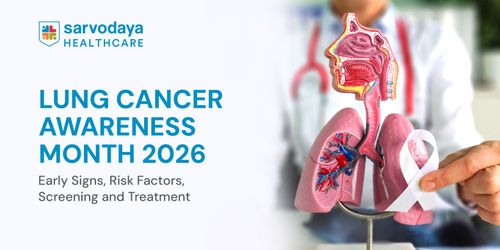
Lung Cancer Awareness Month challenges these assumptions. It encourages people to recognise persistent or changing symptoms, understand that non-smokers can develop lung cancer too, and seek medical evaluation without unnecessary delay. It also brings attention to early detection. Low-dose CT (LDCT), for instance, can screen certain people at high risk before symptoms appear, although doctors do not recommend it routinely for everyone. The aim is not to make people fear every cough. It is to help them recognise when a symptom deserves attention and understand what steps they can take next.
What Is Lung Cancer Awareness Month, and Why Does It Matter?
Lung Cancer Awareness Month raises awareness about lung cancer prevention, early detection, diagnosis, treatment and the experiences of people living with the disease.
One of the biggest misconceptions is that lung cancer is always accompanied by obvious symptoms. In reality, early-stage disease may not cause noticeable changes. When symptoms do appear, they may be mistaken for a common infection, particularly when someone already has a smoker's cough or lives with chronic respiratory problems.
Awareness matters because it can help people recognise when something has changed and seek medical advice instead of repeatedly treating the symptom without investigating its cause.
Three messages are especially important:
- Know the warning signs: A persistent or changing cough, coughing up blood, unexplained weight loss and increasing breathlessness deserve attention.
- Understand your risk: Smoking is the strongest risk factor, but occupational exposures, second-hand smoke and air pollution can also contribute.
- Know when to seek evaluation: Symptoms need diagnostic assessment. Screening, meanwhile, is considered for selected people who have an elevated risk but no symptoms.
The goal is not to create fear around every cough. It is to reduce the chance that a concerning symptom gets dismissed or that a person undergoes an unnecessary test believing it can detect every cancer.
Read More - World Lung Cancer Day 2025: Raising Awareness, Advancing Care and Offering Hope
What Are the Early Warning Signs of Lung Cancer?
The early signs of lung cancer can be subtle. Some people have no noticeable symptoms in the early stages, which is why symptom awareness alone cannot detect every case.
When symptoms occur, pay attention to changes that are persistent, unexplained or getting worse.
- A persistent or changing cough: A new cough that does not settle, a cough that keeps returning, or a noticeable change in an existing smoker's cough needs evaluation.
- Coughing up blood: Even a small amount of blood in the sputum should be assessed promptly.
- Increasing breathlessness or wheezing: New or unexplained breathing difficulty may indicate a lung problem that requires investigation.
- Persistent chest or shoulder pain: Pain that does not settle, particularly when accompanied by respiratory symptoms, should not be ignored.
- Repeated chest infections: Frequent infections or a chest infection that does not improve as expected may require further evaluation.
- Hoarseness that persists: A voice change that does not resolve, particularly alongside other symptoms, deserves attention.
- Unexplained weight loss, loss of appetite or persistent fatigue: These symptoms are not specific to lung cancer, but they warrant evaluation when they have no clear explanation.
Not every person with these symptoms has cancer. Respiratory infections, asthma, tuberculosis and other conditions can produce similar complaints.
However, the fact that a symptom has another possible explanation does not mean it should automatically be dismissed. A doctor considers the duration and progression of symptoms, the patient's medical history, tobacco exposure and examination findings to decide what needs to be investigated.
When should a persistent cough be investigated?
In India, a cough lasting two weeks or longer should be medically assessed, among other reasons to evaluate for tuberculosis. Lung cancer is one of several possible causes a doctor may need to consider, depending on the patient's symptoms and risk factors.
Seek evaluation sooner if the cough is worsening, blood appears in the sputum, breathlessness develops or there is unexplained weight loss or chest pain.
A persistent cough is not a diagnosis of lung cancer. It is a reason to establish what is causing it rather than continuing self-treatment indefinitely.
Read More - Early Signs of Lung Cancer and When You Should See a Doctor
Can People Who Have Never Smoked Develop Lung Cancer?
Yes. Lung cancer can occur in people who have never smoked. Smoking is the leading risk factor, but it is not the only one.
The misconception that lung cancer affects only smokers can create a false sense of security. Someone who has never used tobacco may assume that a persistent cough or unexplained breathing problem cannot be related to cancer. That assumption is not medically sound.
Several factors other than active smoking can contribute to lung cancer risk, although the degree of risk varies with the type and duration of exposure.
These include:
- Second-hand smoke: Repeated exposure to other people's tobacco smoke can increase risk.
- Air pollution: Exposure to outdoor air pollution and fine particulate matter contributes to lung cancer risk.
- Indoor air pollution: Smoke from burning solid fuels, including biomass used for cooking, may increase risk with prolonged exposure.
- Occupational exposure: Substances such as asbestos, silica and diesel exhaust are associated with lung cancer risk in certain work environments.
- Radon exposure: This naturally occurring radioactive gas is a recognised lung carcinogen, although exposure levels vary geographically.
- Personal or family history: Certain previous lung diseases and genetic susceptibility may also influence risk.
These factors do not mean that everyone exposed to pollution or workplace dust will develop lung cancer. They help explain why risk cannot be assessed by smoking history alone.
There is another important distinction: being a non-smoker does not automatically mean you should undergo lung cancer screening. Screening decisions depend on the person's overall risk and the evidence supporting the proposed test. Anyone with concerning symptoms needs diagnostic evaluation regardless of whether they have smoked.
What Are the Main Lung Cancer Risk Factors?
Understanding lung cancer risk factors helps people focus on what can be changed and what deserves a more individual assessment.
| Risk factor | Why it matters |
| Tobacco smoking, including cigarettes and bidis | Tobacco smoke contains cancer-causing substances, and risk rises with greater cumulative exposure. |
| Second-hand smoke | Inhaling other people's tobacco smoke can increase risk even in non-smokers. |
| Outdoor and indoor air pollution | Long-term exposure to certain pollutants contributes to lung cancer risk. |
| Workplace carcinogens | Exposure to asbestos, silica, diesel exhaust and certain other substances may increase risk. |
| Older age | Lung cancer becomes more common as people age. |
| Personal or family history | Previous lung disease or a family history of lung cancer may contribute to an individual's risk. |
Smoking history is usually assessed in terms of cumulative exposure. For cigarette smokers, doctors may use pack-years, calculated by multiplying the average number of packs smoked per day by the number of years smoked. For example, smoking one pack per day for 20 years equals 20 pack-years.
This calculation is one part of risk assessment, not a guarantee that someone will or will not develop cancer. In India, tobacco exposure may also involve bidis, and other environmental or occupational exposures can be relevant.
How can you reduce lung cancer risk?
Some risk factors cannot be changed, but several practical steps can reduce avoidable exposure:
- Avoid smoking and seek professional help to quit if you use tobacco.
- Avoid exposure to second-hand smoke.
- Follow workplace safety measures where dust, fumes or carcinogenic substances are present.
- Reduce indoor smoke exposure and improve ventilation where possible.
- Discuss persistent respiratory symptoms and relevant risk factors with a doctor.
Prevention is important, but it cannot eliminate every case. A person who has never smoked can still develop lung cancer, and a person who quits smoking may continue to have some residual risk. That is why risk reduction and appropriate medical evaluation both matter.
Who Should Discuss Lung Cancer Screening With a Doctor?
This is where an important distinction needs to be made: screening is not the same as investigating symptoms.
Screening looks for disease in people who do not have symptoms. Diagnostic evaluation investigates a symptom or an abnormal finding to establish its cause.
For lung cancer, low-dose computed tomography (low-dose CT or LDCT) is the screening test shown to reduce lung cancer mortality in selected high-risk populations. It uses a lower radiation dose than a conventional diagnostic chest CT scan while producing detailed images of the lungs.
However, low-dose CT is not recommended as a routine screening test for everyone. It can reveal lung nodules or other abnormalities that are not cancer and may lead to repeat imaging, further procedures, anxiety or unnecessary intervention. Radiation exposure and overdiagnosis are also relevant considerations.
What is the position on lung cancer screening in India?
India does not currently have a formal nationwide lung cancer screening programme using LDCT for the general population. Indian expert guidance has discussed risk-based screening for selected high-risk individuals, taking the country's tobacco-use patterns, environmental exposures and healthcare context into account.
Screening criteria used in countries such as the United States are based on their own clinical guidelines and should not automatically be treated as Indian eligibility criteria.
A discussion with a pulmonologist is particularly relevant if you have:
- A substantial history of smoking, including past smoking.
- A history of significant exposure to tobacco smoke or occupational carcinogens.
- Other relevant risk factors that may affect your individual risk.
- Questions about whether the benefits of LDCT screening outweigh its potential harms in your situation.
The doctor can review your age, exposure history, medical conditions and overall suitability for screening. Air pollution exposure alone does not mean everyone needs an annual CT scan.
One further point is important: if you already have a persistent cough, coughing up blood, unexplained weight loss or other concerning symptoms, you need diagnostic evaluation rather than a screening scan alone. A screening test is not a substitute for investigating symptoms.
How Is Lung Cancer Diagnosed?
When symptoms, an examination or imaging raise suspicion of lung cancer, the next step is to determine what the abnormality represents.
An imaging scan can raise suspicion, but it usually cannot confirm lung cancer by itself. Confirmation generally requires examination of cells or tissue, with the choice of procedure depending on where the suspected tumour is located and the patient's condition.
The diagnostic process may involve several steps:
- Medical history and examination: The doctor reviews symptoms, smoking and occupational exposure, previous lung conditions and other relevant medical history.
- Chest imaging: A chest X-ray may be used during initial evaluation, while a CT scan gives more detailed information about the location, size and appearance of a lung abnormality.
- Further imaging when indicated: PET-CT or MRI may be recommended to assess the extent of disease or investigate specific findings.
- Biopsy or tissue sampling: A sample may be obtained through bronchoscopy, endobronchial ultrasound (EBUS), a needle guided by imaging or another appropriate procedure. The method depends on the location of the suspected cancer and the patient's clinical circumstances.
- Pathology and molecular testing: The sample is examined to establish whether cancer is present and identify its type. In appropriate cases, molecular or biomarker testing can identify tumour features that may influence the choice of treatment.
Why does the exact type of lung cancer matter?
Lung cancer is not one uniform disease. Broadly, it includes non-small cell lung cancer, which accounts for most cases, and small cell lung cancer, which behaves differently and is usually treated differently.
Within these categories, tumour characteristics can influence the treatment plan. Some non-small cell lung cancers have specific molecular changes for which targeted medicines may be useful. Certain biomarker results may also help doctors assess whether immunotherapy is an appropriate option.
This is why a confirmed diagnosis involves more than simply finding a mass on a scan. The type of cancer, its stage and relevant tumour biomarkers help determine which treatments are likely to be suitable.
What Treatment Options Are Available for Lung Cancer?
Lung cancer diagnosis and treatment depend on the type of cancer, its stage, molecular features, the patient's overall health and the goals of care.
There is no single treatment that is appropriate for every patient.
| Treatment | When it may be considered |
| Surgery | Often considered for selected early-stage cancers that can be removed safely. |
| Radiation therapy | May be used for localised disease, when surgery is unsuitable, or as part of treatment for more advanced disease. |
| Chemotherapy | May be used alone or in combination with other treatments, depending on the cancer type and stage. |
| Targeted therapy | May be suitable when the tumour has particular molecular changes that can be treated with specific medicines. |
| Immunotherapy | May be appropriate for selected cancers depending on tumour features, stage and clinical factors. |
| Supportive and palliative care | Helps manage breathlessness, pain, fatigue and other symptoms, and supports quality of life alongside cancer treatment when needed. |
Some patients may need a combination of treatments. For example, surgery may be followed by additional treatment depending on the tumour's characteristics and stage. Other patients may receive radiotherapy and systemic medicines without surgery.
Palliative care is also worth understanding correctly. It focuses on relief of symptoms and improving quality of life and can be provided alongside cancer-directed treatment. It does not mean that treatment has stopped.
The most suitable plan is determined after the diagnosis and staging work-up, with the relevant specialists reviewing the available options and explaining their potential benefits and risks.
How Do Pulmonologists and Oncologists Work Together in Lung Cancer Care?
The diagnosis and management of lung cancer often require more than one specialty.
Pulmonologists evaluate respiratory symptoms, assess lung abnormalities and may perform procedures such as bronchoscopy or EBUS to obtain tissue samples or evaluate lymph nodes.
Oncologists help determine the treatment plan after the diagnosis is established. Depending on the case, this may involve medical oncology, surgical oncology, radiation oncology or a combination of these specialties.
Other team members can include radiologists, pathologists, thoracic surgeons, nuclear medicine specialists and supportive-care professionals.
Their roles connect at several points:
- The pulmonologist helps investigate symptoms and obtain diagnostic samples where appropriate.
- The radiologist helps interpret imaging and assess the location and extent of abnormalities.
- The pathologist determines the cancer type and may conduct additional testing on the sample.
- The oncology team uses the diagnosis, stage and biomarker results to plan appropriate treatment.
- The relevant specialists review treatment options together when multidisciplinary discussion is indicated.
This coordination is particularly valuable because the same treatment approach does not suit every lung cancer. A tumour's location, stage, biology and the patient's ability to tolerate treatment all influence the decision.
Lung Cancer Care at Sarvodaya Hospital
At Sarvodaya Hospital, lung cancer care spans the journey from initial evaluation and diagnosis to advanced treatment. The Pulmonology team offers diagnostic services such as bronchoscopy, EBUS-guided procedures and lung biopsy, helping establish the nature of a suspicious lung abnormality when further investigation is needed.
Once the diagnosis is confirmed, patients can access a range of cancer treatments through medical, surgical and radiation oncology. Depending on the cancer's type, stage and molecular characteristics, treatment may include surgery, radiotherapy, chemotherapy, targeted therapy or immunotherapy. The Pulmonology and Oncology teams work together to guide investigations and plan treatment according to each patient's needs.
Patients seeking a lung cancer specialist in Faridabad can consult the relevant team at Sarvodaya Hospital. Those looking for an oncologist in Greater Noida or an oncologist in Mathura can check the available specialists and lung cancer services at Sarvodaya Hospital, Greater Noida West, and Sarvodaya Hospital, Mathura, depending on their nearby location.