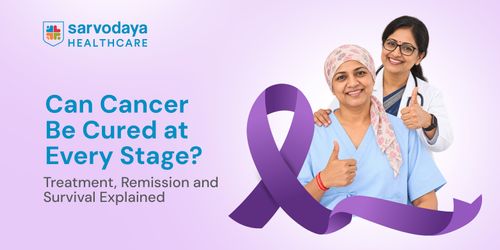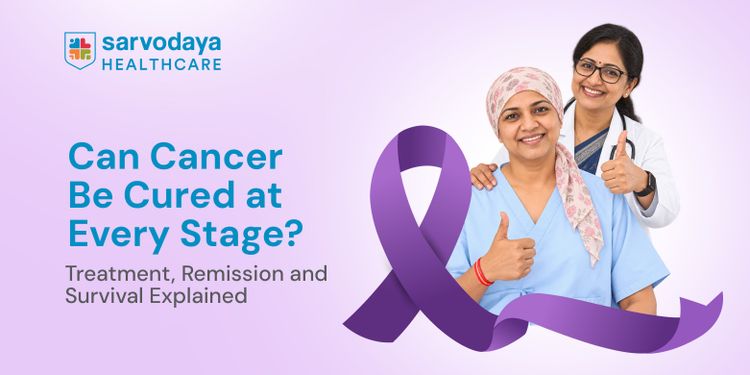


When you are diagnosed with cancer, there is a tough question that arises: is cancer curable? There is no one right or wrong answer, as it will vary depending on the type, stage and response to treatment.
There are many cancers that are treatable, especially if they are diagnosed early. Others can be controlled for several years.
In this blog, we answer a common question: can cancer be cured? We explain how doctors assess cancer stages, select treatments and discuss remission and survival.
What a Cancer Cure Really Means
A cure is when cancer is gone and does not come back. Doctors may not say 'cured', as there can be hidden cells.
Some blood cancers can be cured with medicines. Surgery or radiotherapy may also be enough to treat certain localised tumours. The cancer cure rate varies from one disease to another. Even when two people have the same type of cancer, one may respond better to treatment than the other.
Understanding Cancer Stages
Staging indicates the extent of cancer. Scans, biopsies and sometimes surgical findings are used by doctors. Most cancers of the solid organs are staged between 0 and 4 (some blood cancers are not).
Each stage has a general meaning explained below:
- Stage 0: Abnormal cells have not invaded nearby tissue, often called carcinoma in situ.
- Stage 1: Cancer is usually small and confined to the organ where it began.
- Stage 2: The tumour may be larger or involve nearby tissue or lymph nodes.
- Stage 3: Cancer has spread further into nearby tissues or lymph nodes but not to distant organs.
- Stage 4: The cancer has spread beyond its original location and affected other organs, which may include the lungs, liver or bones.
- Doctors May Also Use TNM: T describes the tumour, N nearby lymph nodes and M distant spread. Tumour behaviour and laboratory results also matter.
How the Stage Affects Cancer Treatment
Early stage cancer treatment may be used to try and cure the disease, either by surgery or radiotherapy. Treatment administered after the initial treatment to reduce the risk of recurrence is known as adjuvant treatment.
Medicines given before surgery to shrink a tumour are called neoadjuvant treatment. For advanced cancer, doctors may combine different treatments to slow the disease and relieve symptoms.
Understanding Stage 4 Cancer Treatment
Stage 4 means the cancer has spread beyond its original location to other parts of the body. For instance, breast cancer that reaches the liver is still classified as breast cancer, not liver cancer.
Chemotherapy, immunotherapy, targeted drugs or hormone therapy could be used in stage 4 cancer treatment. Surgery and radiotherapy may relieve pain or treat particular areas. Many advanced cancers cannot be cured, but treatment can sometimes control the disease for years. In some cases, a cure may still be possible.
Palliative care can be used with active treatment, reducing pain and side effects and helping with everyday life.
Main Types of Cancer Treatment
Treatment is based on the results of the biopsy, stage and molecular testing and general health. Some patients require a single therapy; others will require multiple therapies.
The primary cancer treatment options are:
- Surgery: Is the removal of a tumour and, if necessary, the surrounding lymph nodes. It is effective for cancers that are only in one place.
- Radiotherapy: Targets cancer cells with radiation. It can be used on its own, before or after surgery, or to help alleviate symptoms.
- Chemotherapy: involves the use of drugs that kill fast-growing cancer cells or block the growth of cancer cells. Since these medicines travel through the bloodstream, they can reach cancer cells in different areas of the body.
- Immunotherapy: Helps the immune system recognise and attack cancer cells. However, not every type of cancer responds to this approach.
- Targeted Therapy: Targets specific proteins or changes that help cancer cells grow. Testing might be required to ascertain its effectiveness.
- Hormone Therapy: Interferes with hormones that stimulate the development of certain forms of breast and prostate cancer.
- Stem Cell Transplantation: Replaces blood-forming cells that have been destroyed by intensive treatment for certain types of blood cancer.
The benefits and risks of these types of cancer treatment vary. Treatment may be changed as the disease progresses. Patients need to enquire about side effects and alternatives.
If a tumour contains particular genetic alterations, a targeted drug could be appropriate. Some medicines require regular blood tests or scans to check their effects. Patients should let their oncologist know about any other medications they are using.
The Difference Between Cancer Remission and Cure
Cancer remission means the cancer has reduced or disappeared after treatment. Partial remission is when the disease is present but has reduced in size. Complete remission is when tests find no signs of cancer.
A complete remission does not mean a cure. Doctors might suggest follow-up visits, examinations and the right tests, because the cancer may come back later.
Follow-up appointments can also address lasting effects such as tiredness or anxiety. Tell your care team about any new or persistent symptoms.
Understanding Cancer Survival and Prognosis
Survival statistics are group statistics, not individual statistics. The five-year survival rate is the percentage of people who have been diagnosed and are still alive 5 years later. A large number of them live for a long time.
For example, an 80% five-year survival rate means that 80 out of 100 patients were alive five years after diagnosis. However, this number alone cannot predict how long a patient may live or how well they will respond to treatment.
There are several factors to consider, which can affect the probability of cancer survival:
- The type of cancer and the organ in which it first developed.
- Whether the cancer is localised or has spread elsewhere
- How aggressively the tumour grows and whether it is likely to spread further.
- Mutations in the cancer cells' genes or molecules
- The patient's overall physical condition and any existing health problems.
- The effectiveness of treatment and the likelihood of recurrence of cancer.
Survival rates may be for older treatments. An oncologist will be able to discuss the statistics that are relevant now.
Why Early Cancer Detection Matters
Early diagnosis can increase the chances of successful treatment. A small tumour that is localised may be able to be removed surgically, but if the cancer is more advanced, then more intensive care will be needed.
Screening can identify some cancers before they can cause symptoms. Examples include mammograms, cervical screening and age-appropriate bowel screening. There is no screening test that is effective against all types of cancer.
Seek medical advice if you notice unexplained lumps, unusual bleeding, persistent bowel changes or unexpected weight loss. These symptoms are not necessarily cancer, but if they are ongoing, they should be evaluated.
Choosing Individualised Cancer Care
The first step in a good treatment plan is an accurate diagnosis. A cancer doctor must explain the test results, why specific treatment is advised and how progress will be tracked.
You may wish to ask about how treatment might impact work, fertility, eating and/or daily functioning. Knowing what to expect can help you prepare for treatment.
Cancer treatment often involves more than one specialist. Surgeons, medical oncologists and radiation oncologists may review the same case to decide the order of treatment. This helps doctors choose the most suitable treatment based on the patient's condition and individual needs.
A second opinion might be necessary if the diagnosis is complex or the recommended treatment will have significant long-term consequences.
However, patients should ask their doctor whether waiting for a second opinion could delay necessary treatment. Taking the report and a list of questions may aid the consultation process.
Conclusion
There is no simple answer as to can cancer be cured. There are ways to effectively manage some cancers over time and ways to remove others. Understanding the stage, treatment goals, remission and cancer prognosis helps patients make informed decisions.
Sarvodaya Cancer Institute at Sarvodaya Hospital, the best cancer hospital in India, offers medical, surgical and radiation oncology services with multidisciplinary treatment planning. For suitable patients, robotic cancer surgery uses smaller cuts than traditional open operations, which may reduce pain and support quicker recovery. Its advanced radiotherapy equipment also allows more precise targeting than conventional techniques, helping limit radiation exposure to nearby healthy tissue.
If you or a family member has received a diagnosis, do not rely on survival statistics alone. To receive an individual assessment at Sarvodaya Hospital, book an appointment now.