
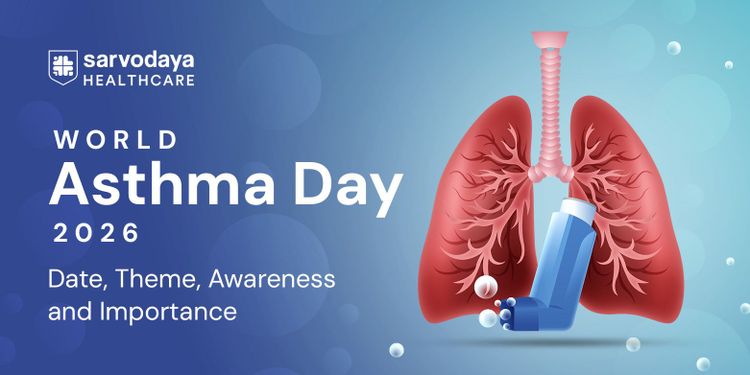


Asthma affects over 260 million people worldwide— cough, tight chest, and fatigue being the common concerns. With growing air pollution, changing lifestyles, and allergy exposure, concerns related to asthma keep rising in young individuals. World Asthma Day 2026 serves as a reminder to return the focus to providing effective care for millions. This year’s theme also focuses on making the inhalers accessible for every asthma survivor.
On World Asthma Day, different communities like healthcare systems and support groups come together to raise awareness among people about the diagnosis and the treatment of Asthma.
In this Asthma Awareness Day guide, you’ll understand asthma, its symptoms, triggers, and treatment options. Taking consultation from Sarvodaya’s pulmonology experts across Delhi NCR can help patients breathe easier every day.
What is World Asthma Day?
World Asthma Day is a global health awareness event led by the Global Initiative for Asthma (GINA).
It is observed on the first Tuesday of May every year, with the World Asthma Day date in 2026 falling on May 5.
The day began in 1998 in Barcelona, Spain, alongside the first World Asthma Meeting. Since then, it has grown into a worldwide movement bringing together doctors, hospitals, schools, and policymakers.
How the world participates in World Asthma Day:
- Hospitals and clinics organise spirometry camps and free check-ups
- Schools and communities host interactive asthma awareness sessions
- Doctors actively review inhaler techniques with patients
- Social media campaigns simplify myths and facts about asthma care
- Governments and NGOs highlight gaps in access to treatment
Over 1000 asthma cases convert into severe cases simply because they were not treated on time with the right treatment.
Read More- Asthma Explained: From Early Symptoms to Effective Treatment
World Asthma Day 2026 Theme: Access to Anti-Inflammatory Inhalers
The World Asthma Day theme for 2026 highlights a gap that continues to affect millions worldwide. Many patients still depend only on quick-relief inhalers, without treating the underlying airway inflammation.
There are so many misconceptions surrounding the condition. For instance, people often ignore the difference between a reliever inhaler and an anti-inflammatory inhaler.
Both contribute to relieving the attack, but only the anti-inflammatory inhaler provides comfort in the long term. The purpose of a reliever inhaler is to give immediate relief; however, it does not stop the inflammation.
This year, the theme of World Asthma Day 2026 is focused on removing the same myths and challenges, both access and awareness, because the right treatment must reach the right patient.
In India, inhalers are often avoided due to myths around addiction or severity, pushing patients toward less effective options. This is why the day becomes crucial.
What is Asthma?
Asthma is a long-term inflammatory condition of the airways, not just a temporary breathing difficulty.
It affects how easily air moves in and out of the lungs, especially during triggers or physical activity.
In healthy lungs, airways stay open and flexible, allowing smooth airflow. In asthma, three things happen together:
- Inflammation – the inner lining of the airways becomes swollen and sensitive
- Bronchospasm – muscles around the airways tighten suddenly
- Mucus build-up – thick mucus narrows already tight passages
This combination makes breathing feel restricted, causing wheezing, coughing, and chest tightness.
Asthma exists on a spectrum, which means symptoms and severity can vary widely. It can begin at any age, often starting in childhood, especially in boys. In women, it mostly affects them in their adulthood.
Asthma is completely manageable with the right treatment. Many athletes, including Olympic medallists, live with asthma and perform at the highest level.
Read More- Asthma Problems Explained: Causes, Symptoms, and Treatment
What Causes Asthma and What Triggers It?
Asthma usually develops over time due to a mix of genetic and environmental factors. It often begins early in life but may appear later depending on exposure and risk.
Common causes include:
- Family history of asthma, eczema, or allergic rhinitis
- Atopy, a tendency to develop allergic reactions, is also one of the causes
- Childhood respiratory infections affecting lung development
- Early exposure to allergens or polluted air
- Air pollution, especially in urban environments
- Obesity, which increases risk and symptom severity
- Occupational exposure to dust, chemicals, or fumes
What triggers an asthma episode?
Triggers are external factors that set off symptoms in someone who already has asthma.
These include:
- Pollen, mould, and other outdoor allergens
- Dust mites, pets, and indoor allergens
- Air pollution and vehicle emissions
- Cigarette smoke, including second-hand exposure
- Strong smells, perfumes, or chemical fumes
- Cold air or sudden weather changes
- Exercise, especially in dry or cold conditions
- Respiratory infections like cold or flu
- Stress or strong emotions
- Certain medicines like aspirin or NSAIDs
In India, some triggers are unique to our environment and seasons; for example, crop burning smoke, Diwali firecrackers, high dust exposure, and indoor cooking smoke can sharply worsen symptoms.
Common Symptoms of Asthma
Asthma symptoms do not look the same for everyone. Some people have occasional mild episodes, while others experience daily discomfort that disrupts routine life.
Recognising common asthma symptoms early can prevent complications and improve long-term control.
Common asthma symptoms:
- Wheezing, a whistling sound while breathing, especially when exhaling
- Persistent cough that often worsens at night, early morning, or after exercise
- Shortness of breath even during light activity or at rest
- Chest tightness, a squeezing or heavy feeling in the chest
- Coughing after exercise or cold air exposure
- Waking from sleep due to coughing or breathing difficulty
- Needing a reliever inhaler more than twice a week often a sign of poor control
Signs of worsening asthma:
- Symptoms becoming more frequent or intense
- Reliever inhaler giving less relief than usual
- Difficulty speaking full sentences during an episode
- Drop in peak flow readings, if monitored at home
Understanding these signs is the first step to a correct diagnosis, followed by the right treatment.
Treatment Options for Asthma
There is no specific cure for asthma, but it is completely manageable if the diagnosis and treatment plan are effective. With personalised care, most people live active, unrestricted lives without daily symptoms.
How asthma is treated:
- Anti-inflammatory inhalers (ICS) reduce airway inflammation daily, not just during attacks
- Reliever inhalers (bronchodilators) open airways quickly during episodes, but are not a long-term solution alone
- Combination inhalers (ICS + LABA) provide both control and relief in moderate to severe asthma
- Oral medications such as leukotriene modifiers or short steroid courses for managing flare-ups
- Biologics, including advanced therapy for severe allergic asthma, when standard treatment is not enough
- Allergen immunotherapy also builds long-term tolerance to identified allergic triggers
- Lifestyle changes, such as avoiding triggers, reduce the frequency and severity of episodes
With guidance from the best pulmonologist in Delhi NCR, the next step is learning how to manage asthma every day.
When Should You See a Pulmonologist for Asthma?
Not every cough might need a consultation; however, if you see any alarming signs, it's advisable to consult the best pulmonologist in Delhi NCR.
See a pulmonologist if:
- You have a cough lasting more than 8 weeks without a clear cause
- You wheeze regularly, especially at night or after exercise
- Your reliever inhaler is less effective than before
- You wake at night with chest tightness or breathlessness
- Your symptoms are worsening despite regular medication
- You have never had a spirometry or lung function test
- You were diagnosed with asthma, but never received an action plan
- A child has a persistent cough, repeated chest infections, or breathlessness with play
Seek urgent care if:
- Severe breathlessness does not improve after using a reliever inhaler
- You cannot speak full sentences during an episode
- Lips or fingernails turn bluish
- A child is breathing very fast or visibly struggling
If you relate to these signs, consulting a pulmonologist in Greater Noida or a trusted chest hospital in Delhi can be the turning point toward better control.
Asthma Care at Sarvodaya: Diagnosis, Treatment and Lifelong Support
The World Asthma Day 2026 message is simple: the right diagnosis and treatment plan can change outcomes. At Sarvodaya’s Centre for Pulmonology, a trusted chest hospital in Delhi, this is delivered in every consultation performed by some of the best specialists.
What Sarvodaya's pulmonology team offers:
- Led by the best pulmonologist in Delhi NCR with expertise in asthma and allergic diseases
- Spirometry and FeNO testing for accurate diagnosis and airway inflammation assessment
- Comprehensive allergy testing to identify triggers and personalise long-term treatment
- Advanced bronchoscopy and EBUS for complex cases requiring deeper airway evaluation
- Complete inhaler guidance, including technique, spacer use, and controller versus reliever clarity
- Dedicated sleep study lab for asthma patients with suspected sleep apnoea overlap
- Treatment focused on identifying asthma triggers, reducing exposure to allergens, and managing symptoms
- Centres in Faridabad and easy access to a pulmonologist in Noida for NCR families
From mild to severe cases, from identifying what triggers asthma to making an effective treatment plan for long-term wellness, Sarvodaya Hospital has the right specialists and services to offer comprehensive care for every need.