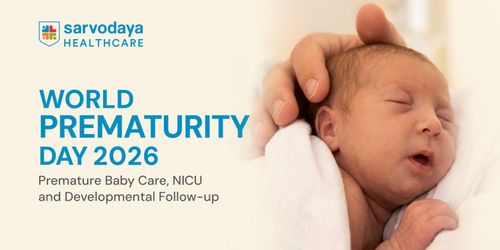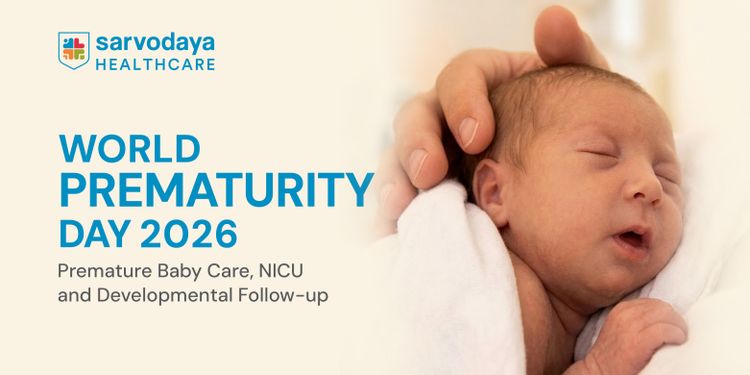


When a baby is born weeks before the expected due date, the first concern is often whether the baby can breathe comfortably, maintain body temperature and feed well enough to grow. For some babies, this means spending days or weeks in a Neonatal Intensive Care Unit (NICU).
But reaching a stable condition and going home are only part of the journey. A premature baby may still need help with feeding, regular growth assessments and closer monitoring of vision, hearing and development.
The care a baby receives after leaving the NICU can be just as important as the care provided in the first days of life. Understanding what premature babies need, what parents should watch for and why follow-up appointments matter can help families support their child's progress with greater confidence.
World Prematurity Day 2026: Why Does This Day Matter?
Observed on 15 November, World Prematurity Day raises awareness about the challenges faced by babies born too early and the families caring for them. The day also highlights the importance of improving neonatal care and ensuring that premature babies receive the right support as they grow.
The WHO estimates that around 1 in 10 babies worldwide is born prematurely. Advances in newborn care have improved outcomes for many of these babies, but surviving the early days is not the only goal. Some need continued medical and developmental support after hospital discharge.
The official theme for World Prematurity Day 2026 is:
“Small babies, big potential. Invest in follow-up care to protect their future!”
The message is especially important because parents may naturally feel that the hardest part is over once their baby is discharged from the NICU. Yet feeding difficulties, slow weight gain, vision or hearing concerns and developmental delays may become apparent only as the baby grows.
This year's theme draws attention to three essential aspects of premature baby care:
- Support during the newborn period: Help with breathing, temperature regulation, feeding and other problems related to being born early.
- Care after discharge: Regular assessments to monitor growth, nutrition, hearing, vision and development.
- Support for parents: Clear guidance about caring for the baby at home, recognising warning signs and knowing when to seek medical advice.
The message is not that every premature baby will develop complications. Many make good progress. It is that every baby deserves care suited to their individual needs, including follow-up when it is necessary.
When Is a Baby Considered Premature?
A baby is considered premature or preterm when born before 37 completed weeks of pregnancy. A full-term pregnancy usually lasts about 40 weeks, so a premature baby has had less time to develop before birth.
Doctors classify preterm birth according to gestational age:
| Category | Gestational age at birth |
| Extremely preterm | Before 28 weeks |
| Very preterm | From 28 weeks to less than 32 weeks |
| Moderate to late preterm | From 32 weeks to less than 37 weeks |
Why does this distinction matter?
A baby born at 35 weeks may need help with feeding or maintaining body temperature, while a baby born much earlier may need respiratory support and more intensive monitoring. The earlier a baby is born, the greater the likelihood of complications related to immature organs. Birth weight and the baby's condition at birth also influence the care required.
Not every premature baby needs prolonged intensive care. The medical team assesses each newborn to determine what support is necessary and when it can be safely reduced.
Read More - World Prematurity Day 2025: Supporting Preterm Babies and Their Families
Why Are Some Babies Born Prematurely?
Premature birth can occur for different reasons. Sometimes labour begins spontaneously before the pregnancy reaches full term. In other cases, doctors may recommend an early delivery because continuing the pregnancy could put the mother or baby at risk.
Factors that may increase the risk include:
- Previous premature birth: A history of preterm delivery can increase the chance of another premature birth.
- Multiple pregnancy: Twins, triplets and other multiple pregnancies carry a higher risk of early delivery.
- Maternal health conditions: Conditions such as high blood pressure, pre-eclampsia and certain infections may contribute to the need for early delivery.
- Problems involving the cervix, uterus or placenta: These may increase the likelihood of preterm labour or make early delivery necessary.
- Certain pregnancy-related complications: Bleeding, premature rupture of the membranes and other complications may lead to birth before 37 weeks.
However, premature birth does not always have one identifiable cause. It can occur even when a woman has received antenatal care and followed medical advice.
Understanding risk factors helps doctors plan appropriate monitoring during pregnancy. It should not be used to blame the mother for a birth that occurs early.
What Health Complications Can Affect Premature Babies?
Premature babies have had less time to develop their organs before birth. The problems they face depend on how early they were born, their birth weight and their overall medical condition.
Some difficulties appear immediately, while others need monitoring over time.
In the early days, doctors may pay particular attention to:
- Breathing difficulties: Immature lungs may not produce enough surfactant, a substance that helps keep the air sacs open. Some babies need oxygen or other respiratory support.
- Difficulty maintaining body temperature: Premature babies have less body fat and may lose heat more easily.
- Feeding difficulties: A baby may not yet have the coordination or strength needed to suck, swallow and breathe effectively during feeding.
- Low blood sugar and jaundice: These may require monitoring and treatment, depending on the baby's condition.
- Infections: Immature immune defences can make premature babies more vulnerable to infections.
Some babies, particularly those born very early or with very low birth weight, may also need monitoring for complications involving the brain, eyes, hearing or longer-term development.
For example, retinopathy of prematurity (ROP) is a condition affecting the developing blood vessels of the retina. It can threaten vision in some babies, which is why eligible premature or low-birth-weight infants need timely eye screening.
As a child grows, doctors may also assess motor skills, language, hearing, vision, feeding and learning-related development.
This does not mean a premature baby will necessarily experience all these problems. The purpose of monitoring is to identify any concern early, when appropriate support may help.
Why Might a Premature Baby Need NICU Care?
A Neonatal Intensive Care Unit (NICU) provides specialised care for newborns who need closer observation, medical support or help with essential functions such as breathing and feeding.
For a premature baby, the need for NICU care depends on gestational age, birth weight, breathing, temperature regulation, feeding ability and other clinical findings.
Depending on the baby's condition, NICU care may involve:
- Incubators or radiant warmers to help maintain a stable body temperature.
- Oxygen or respiratory support when the lungs need assistance.
- Continuous monitoring of breathing, heart rate, oxygen levels and other vital signs.
- Specialised feeding support, including expressed breast milk given through a feeding tube when a baby cannot yet feed effectively by mouth.
- Intravenous fluids or medicines when needed.
- Monitoring of weight gain, jaundice, blood sugar and signs of infection.
An incubator or breathing support does not mean the baby will necessarily have long-term health problems. These measures help the medical team support the baby while the organs mature and the baby develops the ability to maintain essential functions independently.
Parents can also remain involved in their baby's care, according to the baby's condition and the unit's guidance. Touch, talking to the baby, providing breast milk and participating in routine care can all be important parts of the family's role.
What Is Kangaroo Mother Care, and Why Is It Important?
Kangaroo Mother Care (KMC) is a method of caring for premature and low-birth-weight babies that centres on prolonged skin-to-skin contact and breastfeeding support.
During skin-to-skin contact, the baby is placed upright against the caregiver's bare chest and secured safely. This close contact helps maintain the baby's temperature, supports breastfeeding and promotes bonding.
KMC can offer several benefits:
- Helps regulate body temperature.
- Supports breastfeeding and breast-milk feeding.
- Can reduce the risk of infection and other complications.
- Encourages bonding between the baby and caregiver.
- Supports the baby's overall care and development.
The WHO recommends KMC as routine care for preterm and low-birth-weight infants, starting as early as possible when it can be provided safely. The medical team determines how to initiate it, how to position and secure the baby, and how to monitor breathing and other vital signs.
Parents should learn the correct technique from trained healthcare professionals. A baby who needs intensive respiratory support or has certain medical complications may need specific precautions before or during KMC.
KMC is not a replacement for necessary medical treatment. It complements medical care and can continue at home after discharge, according to the baby's needs and the care team's instructions.
How Are Feeding Needs Managed in Premature Babies?
Feeding a premature baby can require more planning than feeding a full-term newborn. Some premature babies can breastfeed, while others may need time to develop the coordination required to suck, swallow and breathe safely.
The aim is to provide adequate nutrition for growth while avoiding feeding difficulties.
Is breast milk important for premature babies?
Yes. A mother's own milk is recommended for premature babies because it provides nutrients and immune factors that support their growth and help protect against infections. Mothers may need support with expressing and maintaining their milk supply, particularly when the baby cannot breastfeed directly.
Depending on the baby's maturity and condition, feeding may involve:
- Direct breastfeeding: When the baby can latch and feed safely and effectively.
- Expressed breast milk: When the baby cannot yet breastfeed directly.
- Tube feeding: When the baby needs milk delivered through a feeding tube until oral feeding becomes safe and effective.
- Additional nutritional support: Some premature or low-birth-weight babies need fortified milk or other nutritional adjustments to meet their growth needs.
The medical team monitors feeding tolerance, weight gain and other indicators to determine whether the baby is receiving enough nutrition. Feeding plans may change as the baby grows and becomes better able to feed.
What should parents monitor after discharge?
Parents should follow the feeding plan provided by the healthcare team and attend growth and feeding reviews. Seek medical advice if the baby persistently feeds poorly, vomits repeatedly, becomes unusually sleepy during feeds or shows signs of dehydration, such as substantially fewer wet nappies.
Do not change milk concentration, add supplements or alter a prescribed feeding plan without guidance from the baby's clinician.
What Is Corrected Age, and How Is It Used to Assess Development?
One common source of worry for parents is watching a premature baby reach milestones later than a baby born at full term. Before assuming that a delay means something is wrong, it is important to understand corrected age, also called adjusted age.
Corrected age accounts for how early the baby was born. Doctors may use it when assessing growth and developmental milestones, particularly during the first two years.
For example, imagine a baby born eight weeks before the expected due date. When that baby reaches four months after birth, the corrected age is approximately two months.
The calculation is:
Corrected age = actual age since birth − the number of weeks the baby was born early.
This helps clinicians compare development more appropriately. A premature baby may reach certain milestones later according to the calendar age while making expected progress for their corrected age.
Corrected age is a guide, not a guarantee that every developmental difference is normal. Doctors still monitor movement, muscle tone, hearing, vision, communication, feeding and other developmental skills.
If a parent notices a loss of previously acquired skills, unusual movement, poor visual response or another concern, it should be discussed with the child's doctor rather than attributed to prematurity alone.
What Follow-up Care Does a Premature Baby Need After Discharge?
Leaving the NICU is an important milestone, but discharge does not mean that follow-up care is no longer necessary. Some health or developmental concerns only become apparent as the baby grows.
A premature baby's follow-up plan depends on gestational age at birth, birth weight, complications during the newborn period and progress at discharge.
Appointments may include:
- Growth and nutrition assessment: Monitoring weight, length and head circumference, and reviewing feeding.
- Developmental assessment: Checking movement, muscle tone, interaction, language development and age-appropriate milestones.
- Vision and hearing checks: Including specialised screening when the baby is at risk of conditions such as ROP or hearing impairment.
- Immunisation review: Ensuring that vaccinations are given according to the recommended schedule and the child's clinical needs.
- Respiratory and general health review: Monitoring breathing problems, recurrent illness or other concerns related to the baby's neonatal course.
- Early developmental support: Referral to relevant specialists or therapy services when an assessment identifies a need.
The team should also explain what parents can expect at home, which symptoms require attention and when the next appointment is due.
Which warning signs should parents watch for at home?
Premature babies may need prompt medical assessment if they develop:
- Difficulty breathing, pauses in breathing or a change in lip or skin colour.
- Poor feeding or refusal to feed.
- Unusual sleepiness, reduced responsiveness or marked weakness.
- Fever or an unusually low temperature.
- Significantly fewer wet nappies or other signs of dehydration.
Seek urgent medical help for breathing difficulty, bluish lips, pauses in breathing or reduced responsiveness. In a young infant, do not wait for symptoms to become severe before obtaining advice.
Parents should leave hospital with a clear discharge plan, including feeding instructions, prescribed medicines or supplements, appointments and contact guidance for concerns.
Premature Baby Care at Sarvodaya Hospital
Sarvodaya Hospital provides Paediatrics and Neonatology services for newborns, including premature and low-birth-weight babies. Care may include newborn assessment, specialised neonatal support, NICU care, feeding guidance, and monitoring of growth and development.
At Sarvodaya Hospital, Sector 8, Faridabad, the Paediatrics Department has a Level III NICU for high-risk and premature newborns, supported by neonatal equipment including incubators, ventilatory support and phototherapy units.
Premature babies may need different levels of care at different stages. The initial focus may be on breathing, temperature regulation and feeding. As the baby stabilises, the care plan shifts towards growth, feeding progress, preparation for discharge and follow-up.
Families looking for a neonatologist in Faridabad can explore the newborn-care services at Sarvodaya Hospital, Sector 8. Sarvodaya Hospital also has a neonatologist in Greater Noida and a paediatrician in Mathura.
Choosing a hospital is not only about the care a baby receives immediately after birth. It is also important to understand the plan for discharge, feeding support, developmental monitoring and follow-up appointments. These help parents continue the baby's care confidently after returning home.