
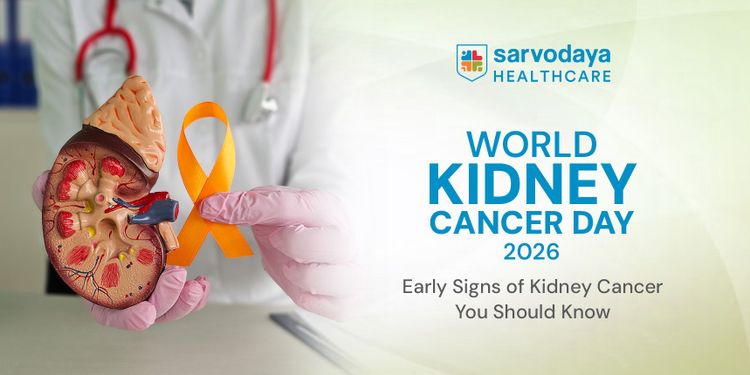


Kidney cancer is often difficult to detect in its early stages because symptoms may be mild, unclear or completely absent. Many people discover a kidney tumour during tests done for another health concern. This silent nature is exactly why World Kidney Cancer Day 2026 becomes important.
World Kidney Cancer Day is observed every year on the third Thursday of June to raise awareness about kidney cancer, early diagnosis, treatment and patient support. In 2026, World Kidney Cancer Day will be observed on June 18. The official theme for 2026 is “Kidney Cancer and Emotional Wellbeing,” highlighting the emotional challenges many patients face during diagnosis and treatment.
In this article, you will learn about common kidney cancer symptoms, warning signs, risk factors, diagnosis, treatment options, and when to consult a specialist.
What is World Kidney Cancer Day?
World Kidney Cancer Day is a global awareness initiative led by the International Kidney Cancer Coalition. It brings together patients, caregivers, doctors, healthcare organisations and communities to improve awareness around kidney cancer.
The day was established in 2017 and is now observed worldwide every year. It focuses not only on medical awareness but also on the emotional and social impact of living with kidney cancer.
World Kidney Cancer Day focuses on:
- Helping people recognise early warning signs
- Encouraging timely medical evaluation
- Spreading awareness about diagnosis and treatment
- Supporting patients and caregivers emotionally
- Reducing fear, delay and misinformation
- Promoting better conversations between patients and doctors
The message is simple: kidney cancer may remain silent for a long time, but early attention to symptoms can make a real difference.
World Kidney Cancer Day 2026 Theme
The theme of World Kidney Cancer Day 2026 is “Kidney Cancer and Emotional Wellbeing.” This theme highlights an important part of cancer care that is often ignored: the emotional burden of diagnosis, treatment and follow-up.
Patients may experience fear, confusion, anxiety, sleep issues or uncertainty about the future. Many may not openly discuss these concerns with their doctors or family members.
This year’s theme encourages patients to talk about emotional wellbeing as part of their treatment journey. Cancer care is not only about scans, reports and medicines. It is also about helping the person feel supported, informed and heard.
What is Kidney Cancer?
Kidney cancer begins when abnormal cells in the kidney start growing uncontrollably and form a tumour. The kidneys are two bean-shaped organs located on either side of the spine, below the rib cage. They filter waste from the blood, produce urine and help manage fluid balance, blood pressure and certain hormones.
The most common type of kidney cancer in adults is renal cell carcinoma. In many cases, a kidney tumour may grow slowly and not cause symptoms at first.
This is why kidney cancer is sometimes found incidentally during an ultrasound, CT scan or MRI done for abdominal pain, urinary issues or another unrelated reason.
Why Early Detection of Kidney Cancer Matters
Early detection can improve treatment planning and outcomes. When kidney cancer is found at an early stage, treatment may be more focused, and surgery may be possible before the tumour spreads.
The challenge is that kidney cancer does not always announce itself clearly. Symptoms may be mistaken for urinary infection, kidney stones, back strain or general weakness.
That is why awareness matters. People should not panic at every symptom, but they should also not ignore persistent or unexplained signs. A little timely caution is better than pretending the body is just being dramatic for entertainment.
Common Kidney Cancer Symptoms
Many people with kidney cancer do not experience symptoms in the early stage. When symptoms appear, they may vary from person to person.
Common kidney cancer symptoms may include:
- Blood in the urine
- Pain in the lower back or side
- A lump or swelling in the side or abdomen
- Unexplained weight loss
- Loss of appetite
- Fever that does not go away
- Persistent tiredness or weakness
- Anaemia or low red blood cell count
- Swelling in the legs or ankles
- High blood pressure in some cases
These symptoms can also occur due to non-cancerous conditions such as kidney stones, urinary infection or other kidney problems. However, persistent symptoms should always be evaluated by a doctor.
Blood in Urine: A Warning Sign You Should Not Ignore
One of the most important warning signs of kidney cancer is blood in urine, also called haematuria. Blood in urine, kidney cancer concern becomes especially important when bleeding is painless, recurrent or not clearly linked to infection or injury.
Blood in urine may appear as:
- Pink, red or cola-coloured urine
- Blood is visible once and then disappears
- Microscopic blood detected only on urine test
- Blood without burning or fever
It is important to remember that blood in urine does not always mean cancer. It may happen because of urinary tract infection, stones, prostate issues, injury or other kidney diseases. However, it should never be ignored.
A doctor may advise urine tests, imaging and further evaluation to identify the cause.
Kidney Tumour Symptoms
A kidney tumour may remain silent for a long time. In some people, it is discovered only when it grows large enough to affect nearby tissues or when imaging is done for another reason.
Possible kidney tumour symptoms include:
- Dull pain on one side of the back or abdomen
- A lump or fullness in the side
- Blood in urine
- Unexplained tiredness
- Weight loss without trying
- Fever without infection
- Reduced appetite
- Anaemia
In advanced cases, symptoms may depend on whether the cancer has spread to other parts of the body. For example, bone pain, breathlessness or persistent cough may need urgent medical evaluation.
Kidney Cancer Risk Factors
A risk factor does not mean a person will definitely develop cancer. It only means the chances may be higher. Many people with risk factors never develop kidney cancer, and some people without obvious risk factors may still be diagnosed.
Common kidney cancer risk factors include:
- Smoking or long-term tobacco use
- Obesity or excess body weight
- High blood pressure
- Family history of kidney cancer
- Long-term dialysis
- Certain inherited genetic conditions
- Older age
- Male gender
- Long-term misuse of some pain medicines
- Workplace exposure to certain chemicals
Some risk factors, like age or family history, cannot be changed. Others, such as smoking, weight, blood pressure and unnecessary medicine use, can be managed with the right medical advice and lifestyle changes.
How is Kidney Cancer Diagnosed?
Kidney cancer diagnosis usually begins with a doctor understanding the patient’s symptoms, medical history, family history and risk factors. A physical examination may also be done.
Tests may include:
- Urine test to check for blood or abnormal cells
- Blood tests to assess kidney function and overall health
- Ultrasound abdomen to detect a kidney mass
- CT scan or MRI for detailed imaging
- Chest imaging if spread is suspected
- Biopsy in selected cases, when needed
- Additional tests to stage the cancer
In some cases, imaging is enough for doctors to strongly suspect kidney cancer. A biopsy may not always be required before treatment, depending on the case and treatment plan.
Once kidney cancer is diagnosed, staging helps doctors understand the size of the tumour, whether it is limited to the kidney or whether it has spread.
Kidney Cancer Treatment Options
Kidney cancer treatment depends on the stage of cancer, tumour size, kidney function, patient’s age, overall health and whether cancer has spread.
Treatment options may include:
- Active surveillance for selected small kidney tumours
- Partial nephrectomy, where only the tumour and a small part of kidney tissue are removed
- Radical nephrectomy, where the entire kidney may be removed
- Ablation therapies for selected small tumours
- Targeted therapy for advanced kidney cancer
- Immunotherapy to help the immune system fight cancer
- Radiation therapy in selected cases, mainly for symptom control
- Palliative and supportive care when needed
For early-stage kidney cancer, surgery is often an important treatment option. For advanced disease, a combination of treatment approaches may be needed.
The right treatment plan should always be decided after proper evaluation by a specialist team.
When Should You See a Doctor?
You should consult a doctor if you notice blood in urine, persistent back or side pain, unexplained weight loss, loss of appetite or a lump in the abdomen.
See a doctor if you have:
- Blood in urine, even once
- Pain in one side of the lower back not related to injury
- Recurrent urinary symptoms without clear cause
- Persistent fever without infection
- Unexplained tiredness or weakness
- Sudden weight loss
- Family history of kidney cancer
- High-risk factors such as smoking, obesity or high blood pressure
Seek urgent care if blood in urine is heavy, if you are unable to pass urine, or if symptoms are accompanied by severe pain, dizziness or weakness.
Kidney Cancer Care at Sarvodaya Hospital
World Kidney Cancer Day 2026 is a reminder that early symptoms should not be ignored. At Sarvodaya Hospital, patients with suspected kidney cancer, kidney tumour symptoms or blood in urine receive structured evaluation and specialist-led care.
Sarvodaya’s cancer and urology teams focus on timely diagnosis, staging and personalised treatment planning.
What Sarvodaya offers for kidney cancer care:
- Evaluation for blood in urine and suspected kidney tumours
- Urine tests, blood tests and kidney function assessment
- Ultrasound, CT scan and advanced imaging support
- Specialist consultation for kidney cancer diagnosis
- Multidisciplinary care involving urology, oncology, radiology and pathology
- Surgical planning for suitable kidney cancer cases
- Medical oncology support for advanced kidney cancer
- Follow-up care and monitoring after treatment
For patients looking for kidney cancer treatment in Faridabad, Sarvodaya Hospital offers access to experienced specialists, diagnostic support and comprehensive cancer care under one roof.
If you notice warning signs such as blood in urine, unexplained side pain or abnormal imaging findings, do not wait for symptoms to worsen. Timely consultation can help clarify the cause and guide the next step.