
Overview
Osteoarthritis is a degenerative joint disease caused by the gradual breakdown of cartilage that cushions the ends of bones. As cartilage wears away, bones rub against each other, leading to pain, stiffness, swelling, and reduced joint movement. It is the most common form of arthritis and typically affects weight-bearing joints such as the knees, hips, spine, and hands.
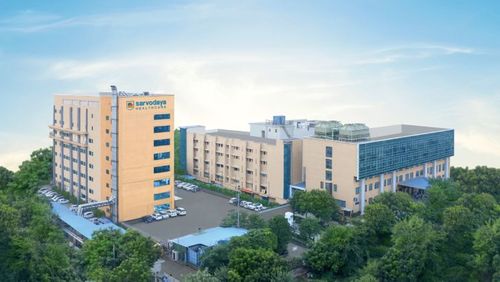
Osteoarthritis develops slowly and worsens over time, often impacting mobility and daily activities. Early diagnosis and appropriate treatment can significantly slow progression and improve quality of life. At Sarvodaya Hospital, experienced orthopaedic doctors in Faridabad provide comprehensive osteoarthritis treatment, including joint-preserving therapies and advanced surgical care such as knee replacement, when required.
Symptoms of Osteoarthritis
- Joint pain during movement or after activity
- Morning stiffness that improves with movement
- Swelling or tenderness around the joint
- Reduced range of motion
- Grinding or clicking sensation in the joint
- Joint deformity in advanced stages
- Difficulty walking, climbing stairs, or gripping objects
Causes of Osteoarthritis
- Age-related cartilage degeneration
- Excess body weight increases joint stress
- Previous joint injury or trauma
- Repetitive joint overuse
- Genetic predisposition
- Muscle weakness around joints
- Poor joint alignment
Diagnosis of Osteoarthritis
Accurate osteoarthritis diagnosis is essential to determine disease severity and guide treatment.
- Clinical Examination: Clinical examination evaluates joint pain, swelling, stiffness, movement restriction, muscle strength, and gait abnormalities, helping assess disease severity and functional limitation during osteoarthritis evaluation.
- X-rays: X-rays help identify cartilage loss, joint space narrowing, bone spur formation, and joint deformity, confirming osteoarthritis diagnosis and guiding treatment planning and disease staging.
- MRI Scan: MRI scan is used in selected cases to assess cartilage integrity, ligaments, menisci, and early joint damage when X-ray findings are inconclusive or symptoms persist.
- Blood Test : Blood tests help rule out inflammatory arthritis, infection, or autoimmune conditions, ensuring accurate osteoarthritis diagnosis and preventing mismanagement of joint-related symptoms.
Treatment Options & Technology for Osteoarthritis
- Medications: Medications such as pain relievers and anti-inflammatory drugs help reduce pain, swelling, and stiffness, enabling better joint movement and improved daily function in osteoarthritis.
- Physiotherapy: Physiotherapy strengthens surrounding muscles, improves joint stability, enhances flexibility, and maintains mobility, helping slow disease progression and reduce pain during everyday activities.
- Lifestyle & Weight Management: Lifestyle and weight management reduce excessive load on affected joints, decrease pain, slow cartilage degeneration, and improve overall joint function and long-term treatment outcomes.
- Joint Injections: Joint injections like corticosteroids or viscosupplementation provide targeted pain relief, reduce inflammation, and improve joint lubrication in patients with moderate osteoarthritis symptoms.
- Minimally Invasive Procedures – Selected minimally invasive procedures are used to address mechanical joint issues, reduce pain, improve function, and delay the need for joint replacement when appropriate.
- Robotic Knee Replacement – Advanced robotic-assisted knee replacement allows highly precise implant placement through smaller incisions, resulting in less tissue damage, faster recovery, and improved joint alignment.
- Minimally Invasive Hip Replacement – Minimally invasive hip replacement techniques use smaller incisions and muscle-sparing approaches to reduce pain, blood loss, hospital stay, and enable quicker return to mobility.
Prevention & Lifestyle Modifications for Osteoarthritis
Although osteoarthritis cannot always be prevented, lifestyle measures can slow progression.
- Maintain a Healthy Body Weight: Reduces excess load on weight-bearing joints, decreases pain, slows cartilage degeneration, and helps preserve joint function long term.
- Engage in Regular Low-Impact Exercise: Regular low-impact exercises such as walking, swimming, or cycling improve joint mobility, muscle strength, and circulation without placing excessive stress on affected joints.
- Avoid Joint Overuse and Repetitive Strain: Overuse helps prevent further cartilage damage, reduces inflammation, and lowers the risk of accelerated osteoarthritis progression.
- Strengthen Muscles Around Joints : Strengthening muscles surrounding joints improves stability, reduces mechanical stress, supports joint alignment, and helps decrease pain during movement and daily activities.
- Maintain Good Posture and Joint Alignment: Distributes load evenly across joints, reduces abnormal stress, and helps prevent worsening of osteoarthritis symptoms.
Pre–Post Surgery / Treatment Lifestyle Modifications
Pre-Treatment / Pre-Surgery Care
- Activity modification to reduce joint stress
- Weight optimisation for better surgical outcomes
- Prehabilitation exercises to strengthen muscles
- Medication review and lifestyle risk reduction
Post-Treatment / Post-Surgery Care
- Adherence to physiotherapy and rehabilitation plans
- Gradual return to daily activities
- Weight-bearing restrictions as advised
- Pain management and infection prevention
- Regular follow-ups to monitor joint recovery