


It can be challenging for any parent to discover that their newborn has a structural anomaly. However, important developments in modern paediatric care offer reassuring pathways for successful management. Among the complex conditions observed in infants is an anomaly of the lower digestive tract, requiring prompt attention from a newborn surgery specialist at a hospital in Delhi NCR. A multidisciplinary approach ensures that physiological functions are restored, allowing young patients to lead healthy lives.
In this blog, we discuss the essential aspects of a congenital anorectal malformation, providing a comprehensive understanding of the condition from initial presentation to recovery.
Understanding the Physiological Condition
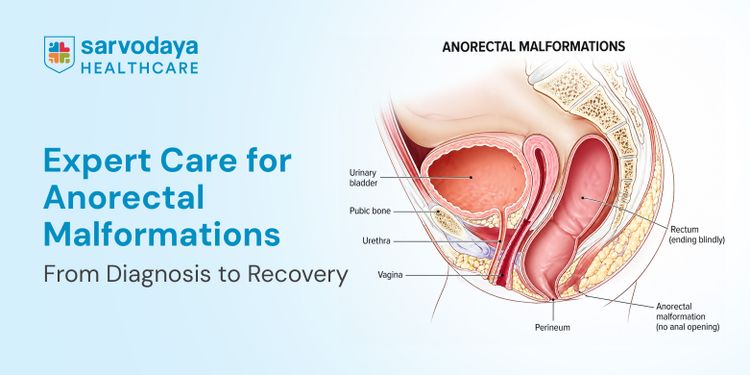
A congenital anorectal malformation occurs when the lower end of the digestive tract does not develop appropriately during fetal growth. This anomaly can manifest in several ways, from a slight constriction of the anal opening to the passage's total absence. In newborn cases, the latter is sometimes referred to as an imperforate anus. The rectum may end in a blind pouch, or it may connect to the urinary tract or reproductive organs through an abnormal fistula.
This condition disrupts the normal flow of faeces, necessitating consultation with a specialist.These abnormalities are categorised as low, middle, or high lesions by medical professionals. The treatment required for anorectal birth abnormalities in order to restore bowel continuity is determined by this classification. To ensure the best possible functional recovery and continence management, treating paediatric anorectal diseases requires a sustained commitment.
Anorectal Malformation Causes and Risk Factors
Although the precise cause of many embryonic abnormalities is still being investigated, experts have pinpointed certain contributing factors.
Professionals can create prognosis strategies by understanding the many causes of anorectal malformations:
The main anorectal malformation causes are:
- Genetic Factors: The development of the lower intestine is disrupted by some chromosomal abnormalities and genetic disorders.
- Environmental Influences: Early pregnancy exposure to some environmental pollutants or adverse maternal health circumstances can be a contributing factor.
- Associated Anomalies: Other developmental problems affecting the spine, heart, kidneys, or limbs sometimes coexist with this syndrome.
Anorectal Malformation Symptoms
Early detection is essential to manage lower digestive anomalies effectively. The primary anorectal malformation symptoms are usually identified during the first physical examination performed soon after delivery.
Here are some anorectal malformation symptoms to look out for:
- Absence of a Typical Anal Opening: The most visible sign is the complete lack of a typical anal opening.
- Delayed Meconium Passage: A significant clinical indicator is the failure of the newborn to pass their first stool, or meconium, within the first 48 hours.
- Progressive Abdominal Distension: The inability to pass stool inevitably leads to a swollen or bloated abdomen.
- Abnormal Stool Passage: In complicated cases, stool may visibly pass through unconventional pathways, such as the urinary tract.
Comprehensive Diagnostic Approaches
For a successful surgery to be planned, the anomaly must first be accurately identified. To ensure an accurate diagnosis, a trusted child surgery specialist in Faridabad uses meticulous clinical evaluations and advanced imaging techniques:
- Comprehensive Physical Examination: A clinical evaluation after birth helps identify external anomalies, such as an imperforate anus in newborn
- Specialised Radiological Imaging: Cross-table lateral X-rays are crucial for visualising the internal lower anatomy.
- High-Resolution Ultrasound Scans: Abdominal, pelvic and spinal ultrasounds are used to assess vital organs, including the kidneys and spinal cord.
- Echocardiograms: Comprehensive cardiac imaging ensures that all conditions are identified before anorectal malformation surgery.
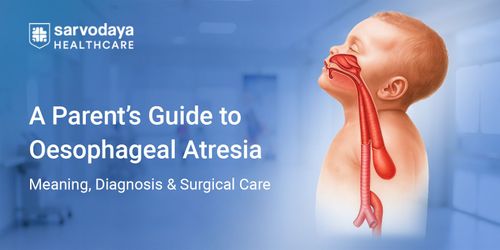
Read More- A Parent’s Guide to Oesophageal Atresia: Meaning, Diagnosis & Surgical Care
Effective Treatment Protocols and Surgical Interventions
Correcting this complex condition required reconstructive treatments to establish a functional pathway for bowel movements.
Successful anorectal birth defects treatment is carefully tailored to the specific anatomical presentation with these different approaches:
- Initial Stoma Creation: In complex cases, surgeons first perform a protective colostomy. This helps the baby by carefully redirecting faeces to an abdominal surgery incision, allowing the infant to grow stronger.
- Definitive Reconstructive Surgery: The core of the treatment protocol is the posterior sagittal anorectoplasty. This specialised anorectal malformation surgery separates the rectum from any fistulas, reconstructs the anal opening, and preserves the sphincter muscle complex.
- Colostomy Closure surgery: Once the reconstructed perineal area has healed safely, a subsequent surgery closes the temporary colostomy, enabling normal passage of stool.
- Long-Term Bowel Management: Continuous follow-ups with clinical experts in paediatric anorectal disorders are essential to monitor continence and provide therapeutic support.
Conclusion
Advances in paediatric surgical techniques have significantly improved physiological outcomes for children born with these structural challenges. With the right medical intervention, precise reconstructive surgery, and dedicated post-operative care, the vast majority of children achieve excellent functional bowel control and lead active lives.
Sarvodaya Hospital stands out as a premier multispecialty hospital for paediatric surgery, offering state-of-the-art diagnostic facilities and a highly experienced medical team. As the leading paediatric surgery hospital in Faridabad, the institution provides comprehensive ARM diagnosis and treatment, expertly guiding families through every stage of clinical care.
If you require a specialist consultation for a diagnosed condition, prompt medical guidance is essential. Reach out and book an appointment now to ensure your child receives the highest standard of care.