
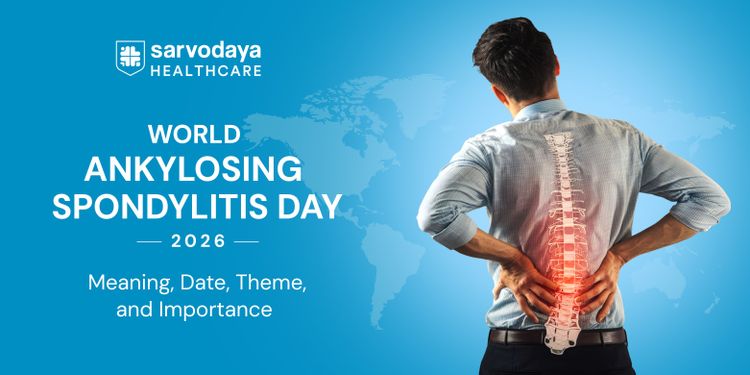


World Ankylosing Spondylitis Day will be celebrated on May 2, 2026, on the first Saturday of May (unless the date is May 1). As per the reports, Ankylosing Spondylitis is a chronic disease that affects around 16.5 lakh people in India, and it keeps increasing due to a lack of awareness and wrong diagnosis. Sometimes this condition is not even detected in X-ray and is often caught in blood tests and imaging tests such as MRI. World Ankylosing Spondylitis Day is a reminder to raise awareness about the same condition, so that early diagnosis and timely care can be achieved.
People call it “normal back pain,” but something about it never feels normal. You wake up stiff every morning, as if your back locked itself overnight. The pain eases when you move, but sitting or resting brings it right back. This pattern often points to ankylosing spondylitis, a chronic inflammatory condition that goes unnoticed if not consulted with an expert promptly.
People and experts across the world organise campaigns, raise funds, post on social media platforms, and organise and attend events. Some even share their personal stories on online media channels.
This year, the theme challenges and raises awareness around the condition and supports patients to seek early diagnosis and effective treatment. The World Ankylosing Spondylitis Day theme 2026, “Not Only Back Pain,” challenges years of misdiagnosis and under-recognition.
In this guide, you’ll understand the importance of Ankylosing Spondylitis Day, how the day is celebrated globally, what Ankylosing Spondylitis is, its symptoms, causes, and modern treatment options.
What is World Ankylosing Spondylitis?
Ankylosing Spondylitis is an inflammatory disease (an overactive immune system rather than a simple wear and tear) that affects mainly the spine. However, it can cause inflammation in other parts of the body. The signs are noticed early in adulthood, where, in the beginning, they might go unnoticed and interpreted as basic stiffness and back problems.
In this condition, your body’s immune system makes a misguided attempt to heal itself by forming new bone to treat inflamed areas. With time, some of the bones in the spine fuse. ‘Fusing’ (medically termed ankylosis) refers to the process where individual bones in your spine (vertebrae) grow together into one solid, continuous bone.
In simple language, your flexible structure turns rigid and restricts even basic movements like glancing over your shoulder.
What is World Ankylosing Spondylitis Day 2026?
World Ankylosing Spondylitis Awareness Day is a global initiative led by the Axial Spondyloarthritis International Federation (ASIF). Launched in 2010, ASIF now connects 60+ patient organisations across 45+ countries, all working toward earlier diagnosis and better care.
Every year, the first Saturday of May turns into a worldwide movement for axial spondyloarthritis awareness day, and in 2026, it falls on May 2. May is usually considered Ankylosing Spondylitis Awareness Month by some individuals.
What actually happens on May 2?
- Patients, doctors, and advocates host webinars and live discussions to understand symptoms and treatment.
- Communities organise awareness programs and local events.
- Personal stories are shared on social media using #WorldASDay, breaking stigma and sharing real journeys.
- Hospitals and rheumatology centres run educational sessions and early screening initiatives.
Most people have never heard of axial spondyloarthritis, despite it affecting 0.1–1.4% of the global population. This is why, for Ankylosing spondylitis, global awareness is very crucial.
Read More- Rheumatoid Arthritis Awareness Day 2026: Awareness, Date, & Importance
World Ankylosing Spondylitis 2026 Theme: “Not Only Back Pain"
The World Ankylosing Spondylitis Day theme 2026, “Not Only Back Pain” challenges one of the biggest myths around this disease.
It reminds both patients and doctors that this is not a simple spine problem, but a systemic inflammatory condition.
Most people expect stiffness and back pain. What surprises them is how widely axial spondyloarthritis can affect the body, including joints, eyes, skin, gut, heart, and more.
Causes of Ankylosing Spondylitis
There isn’t one single answer to the common causes of ankylosing spondylitis. This condition develops through a mix of genetic risk, immune activity, and environmental triggers.
Common Causes of Ankylosing Spondylitis:
- The genetic link (HLA-B27): HLA-B27 is the strongest known risk factor for ankylosing spondylitis. You will likely be diagnosed with ankylosing spondylitis if someone in your family had the condition (however, not necessary).
- The immune mechanism: The immune system attacks joint attachment points, called entheses. This ongoing inflammation can trigger new bone formation, leading to stiffness or fusion over time.
- Environmental triggers: External factors may activate the condition in at-risk individuals; for instance, smoking, physical stress, and injury may trigger early symptoms. Now that the causes are clearer, let’s look at how these changes show up as symptoms.
Early Signs and Symptoms of Ankylosing Spondylitis
The most important thing to understand about the early symptoms of ankylosing spondylitis is that the pain is different from regular back pain.
Early Symptoms of Ankylosing Spondylitis You Shouldn't Ignore:
- Persistent lower back or buttock pain, especially around the sacroiliac joints
- Stiffness after waking that improves only after moving around
- Pain returning after long sitting or rest
- Night pain that disrupts sleep, especially in the early morning hours
- Fatigue that feels deeper than normal tiredness
- Gradual loss of spinal flexibility over time
- Eye inflammation (uveitis) causes redness, pain, or light sensitivity
- Heel pain from inflammation where tendons attach to the bone
- Chest tightness or discomfort while taking deep breaths
- Hip or shoulder pain without a clear injury
- Skin changes like psoriasis (red, scaly patches)
- Gut issues such as bloating, diarrhoea, or bowel inflammation
Recognising this pattern early and seeking help from a rheumatology hospital can help you treat your condition effectively.
Read More- How to Control Uric Acid: Causes, Symptoms, Treatment and Home Remedies
Ankylosing Spondylitis Treatment
There is no cure for ankylosing spondylitis treatment, but care today looks very different from the past.
How ankylosing spondylitis is treated:
- Painkillers (NSAIDs) help reduce pain and swelling and are usually started first
- DMARD medicines help when joints like knees, hips, or shoulders are affected
- Biologic injections control inflammation from the root in moderate to severe cases
- JAK inhibitor tablets are newer options when other treatments don’t work well
- Daily exercise and physiotherapy keep your body flexible and reduce stiffness
- Joint injections give quick relief in specific painful areas
- Surgery is rarely needed and is only used in very advanced cases
The most important thing about treatment is starting early. The right plan can preserve mobility, reduce pain, and prevent long-term complications.
Consulting the best rheumatologist in Delhi NCR ensures the right treatment at the right time.
Ankylosing Spondylitis Care at Sarvodaya
“Not Only Back Pain” means care cannot stay limited to the spine alone. At Sarvodaya Hospital, ankylosing spondylitis treatment means receiving guidance from some of the best rheumatologists in Faridabad and Delhi NCR.
What the Sarvodaya Rheumatology Centre offers:
- Focused AS care guided by the best rheumatologist in Delhi NCR with expertise in biologics and DMARDs
- Real-time musculoskeletal ultrasound, MRI, and PET CT for early and accurate diagnosis
- Complete immunological testing, including HLA-B27, ANA, Anti-CCP, ESR, and CRP
- Full access to biologics and targeted therapies for Ankylosing spondylitis treatment under one roof
- Image-guided joint injections and aspiration for precise relief in affected joints
- Integrated physiotherapy and occupational therapy within the treatment pathway
- Nutrition counselling that considers the gut-inflammation link in ankylosing spondylitis
- Easy access to a rheumatologist in Faridabad and Noida across multiple centres
If your back pain feels different, do not ignore it, considering it a regular back pain; instead, visit or book a consultation with the best rheumatologist in Noida.