


If you have been advised of surgery, you may have heard your doctor mention two minimally invasive techniques: laparoscopic surgery and robotic surgery. Since both involve small incisions, less pain, and faster recovery than traditional open surgery, many patients naturally wonder whether they are simply two different names for the same procedure.
Although both belong to the same family of minimally invasive surgery, they differ in the way the surgeon operates and the level of precision that can be achieved in certain situations.
This naturally raises another question.
If laparoscopic surgery has transformed surgical care for decades, why was robotic surgery developed?
The answer lies not in replacing laparoscopy, but in overcoming some of its technical limitations during complex procedures. Understanding that evolution makes it much easier to appreciate where each technique fits into modern surgical care.
How Minimally Invasive Surgery Changed Modern Operations
For many years, surgeons could reach organs inside the abdomen only by making a large incision. Whether operating on the gallbladder, intestine, uterus, or kidney, a wider opening provided the visibility and access needed to perform the procedure safely.
While effective, this approach came at a cost. Larger incisions often resulted in greater pain after surgery, increased blood loss, a longer hospital stay, and a recovery period that could extend over several weeks.
The greatest challenge was rarely the operation itself. In many cases, recovery from the incision took longer than recovery from the procedure performed inside the body.
The introduction of laparoscopic surgery changed that completely.
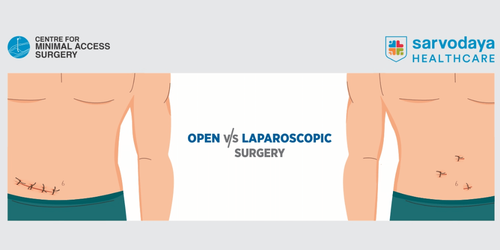
Instead of opening the abdomen through a single large incision, surgeons began performing operations through a few small incisions. A camera provided a magnified view of the surgical field, while specially designed instruments allowed the procedure to be completed without exposing the organs directly.
For patients, this translated into several important advantages:
- Smaller incisions and reduced scarring
- Less post-operative pain
- Reduced blood loss
- Lower risk of wound-related complications
- Shorter hospital stay
- Faster return to normal activities
Even today, laparoscopic surgery remains the standard approach for many abdominal operations and is regarded as one of the most significant advances in modern surgery.
As surgeons gained experience with this technique, however, they also recognised situations where greater precision, flexibility, and visualisation would be beneficial, particularly during technically demanding procedures.
Those challenges paved the way for robot-assisted surgery.
How Does Laparoscopic Surgery Work?
The surgeon performs the entire operation while viewing the inside of the body on a high-definition monitor rather than looking directly at the organs. This requires a combination of technical expertise, depth perception, and precise hand-eye coordination developed through specialised training.
The procedure generally follows these steps:
Step 1: Creating the incisions
The surgeon makes a few small incisions through which the camera and surgical instruments are inserted.
Step 2: Making organ visibility clearer
Your belly is filled with gas, which temporarily lifts the abdominal wall away from the organs, creating enough space for the surgeon to see more clearly and operate safely.
Step 3: Visualising the surgical field
A laparoscope, which contains a high-definition camera and light source, provides a magnified view of the operative area on a monitor.
Step 4: Performing the operation
Long, slender instruments are inserted through the remaining incisions, allowing the surgeon to complete the procedure while continuously viewing the magnified image on the screen.
One aspect of laparoscopic surgery often surprises patients.
Throughout the procedure, the surgeon does not look directly at the organ being operated on. Every movement is guided by the magnified video image displayed on the monitor. This technique demands exceptional precision and coordination, particularly during procedures involving delicate structures or confined anatomical spaces.
Why Was Robotic Surgery Developed?
As operations became more complex, particularly those involving cancer, delicate blood vessels, nerves, or organs located deep inside the body, surgeons realised that working with long, rigid instruments had its limitations.
That, in simple terms, is one of the biggest challenges of laparoscopic surgery.
The Challenges Surgeons Face During Laparoscopic Surgery
- Limited range of movement: Traditional laparoscopic instruments are long and rigid. They can move forward, backwards, and rotate to some extent, but they cannot mimic the flexibility of the human wrist.
- Two-dimensional vision in conventional systems: Although many modern laparoscopic systems now offer 3D imaging, conventional laparoscopy relied on a two-dimensional view, making depth perception more challenging during delicate procedures.
- Natural hand tremors: Even the steadiest human hand has tiny, involuntary movements. These are usually insignificant, but during highly precise surgery, every millimetre matters.
- Surgeon fatigue: Some laparoscopic procedures last several hours. Standing throughout the operation while maintaining precise hand movements can be physically demanding.
None of these limitations means laparoscopic surgery is ineffective. In experienced hands, it remains an excellent option for a wide range of procedures. But robotic surgery allows even more precise control without limiting the range of movement.
How Does Robotic Surgery Work?
One of the most common misconceptions is that the robot performs the surgery.
In reality, robotic surgery remains entirely surgeon-controlled. The robotic system does not make decisions, perform movements independently, or replace the surgeon's expertise. Instead, it translates the surgeon's hand movements into highly precise movements of the surgical instruments throughout the procedure.
The operation typically involves the following steps:
Step 1: Pre-operative Planning
Every robotic surgery begins with careful planning. The surgical team reviews the patient's medical history, imaging studies, and the nature of the disease before deciding whether the robotic approach is appropriate. Choosing the right patient for the right procedure remains the most important step in achieving a successful outcome.
Step 2: Creating Access to the Surgical Area
The surgeon makes a few small incisions, similar to those used in laparoscopic surgery. Through these ports, a high-definition camera and specialised robotic instruments are introduced into the body. The robotic arms remain outside the patient's body throughout the procedure, while only the slender surgical instruments enter through the small incisions.
Step 3: Surgeon-Controlled Robotic Assistance
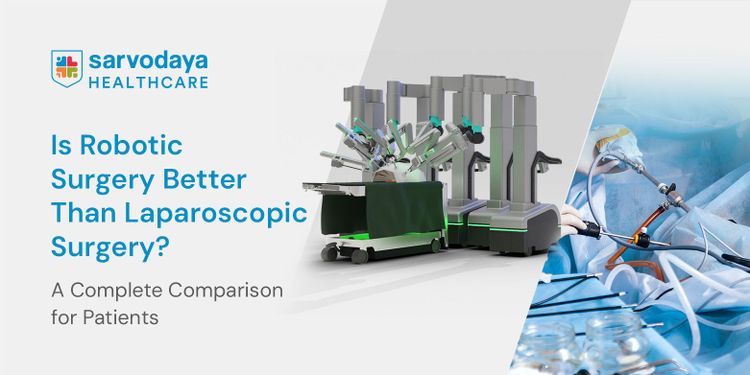
Once the instruments are positioned, the surgeon moves to a nearby console that provides a magnified, high-definition three-dimensional view of the surgical field. Using hand and foot controls, the surgeon directs every movement of the robotic instruments in real time.
The robotic system cannot perform any movement on its own. Every action reflects the surgeon's commands with exceptional precision.
Step 4: Enhanced Precision During Surgery
As the surgeon operates, the robotic system translates hand movements into smaller, steadier, and more controlled movements inside the body. It also filters natural hand tremors and allows the instrument tips to move with a greater range of motion than conventional laparoscopic instruments.
These capabilities are particularly valuable during procedures that involve intricate dissection around nerves, blood vessels, or confined anatomical spaces where precision is essential.
Step 5: Completing the Procedure
After the operation is complete, the instruments are removed, and the small incisions are closed. From the patient's perspective, recovery remains similar to other forms of minimally invasive surgery. The principal difference lies in the level of control and dexterity available to the surgeon during the operation.
Is Robotic Surgery Better Than Laparoscopic Surgery?
After understanding how both techniques work, the next question is obvious: Is robotic surgery actually better than laparoscopic surgery?
Both laparoscopic surgery and robotic surgery are forms of minimally invasive surgery and offer significant advantages over traditional open procedures. Both aim to reduce pain after surgery, minimise blood loss, shorten hospital stays, and help patients return to their normal activities sooner.
To understand which treatment would be preferable, the question shouldn’t be Which technology is better? Instead, it should be Which approach is better suited to this particular operation and this particular patient?
For some routine procedures, laparoscopic surgery continues to provide excellent outcomes and remains the preferred approach. However, during technically demanding operations that require meticulous dissection around delicate nerves, blood vessels, or organs located in confined spaces, the enhanced dexterity, visualisation, and precision offered by robotic surgery may provide additional advantages.
It is important to remember that these differences describe the capabilities of the technology, not the outcome of every operation. The success of surgery continues to depend on careful planning, appropriate patient selection, and the expertise of the surgical team.
How Do Surgeons Decide Between Robotic and Laparoscopic Surgery?
Patients often assume that choosing the newer technology automatically leads to a better result. In practice, the decision is much more individualised.
Before recommending a surgical approach, the surgeon carefully evaluates several factors, including:
- The condition being treated and its stage
- The complexity of the procedure
- The location of the affected organ and surrounding structures
- Previous abdominal or pelvic surgeries
- The patient's overall health and medical fitness for surgery
- The expected benefits and limitations of each technique for that particular case
After considering all these factors, the surgeon recommends the approach that offers the safest operation and the best possible outcome for the individual patient.
In many situations, laparoscopic surgery remains the ideal choice. In others, robotic surgery may offer technical advantages that help the surgeon operate with greater precision. The decision is therefore based on clinical judgement rather than on technology alone.
Sarvodaya's Approach to Minimally Invasive Surgery
At Sarvodaya Hospital, we believe that successful minimally invasive surgery is not defined by the technology alone. It begins with an accurate diagnosis, careful patient evaluation, and choosing the surgical approach that offers the safest and most effective outcome for each individual.
Our Department of General and Minimally Invasive Surgery combines experienced surgeons, advanced surgical technology, and a multidisciplinary approach to provide comprehensive care across a wide range of abdominal and gastrointestinal conditions. Whether a patient is best suited for laparoscopic surgery or robotic surgery, every treatment plan is guided by clinical judgement and evidence-based practice.
Our comprehensive approach includes:
- Comprehensive pre-operative evaluation to determine the most appropriate surgical approach based on the patient's condition, medical history, and overall health.
- Expert surgeons with extensive experience in both laparoscopic surgery and robotic-assisted surgery, ensuring that patients receive the technique best suited to their individual needs.
- Advanced minimally invasive surgical technology, including state-of-the-art laparoscopic systems and robotic surgical platforms that support precision during complex procedures.
- Multidisciplinary treatment planning, with close collaboration between surgeons, anaesthetists, radiologists, gastroenterologists, intensivists, and other specialists whenever required.
- Modern operation theatres equipped to perform a wide spectrum of minimally invasive procedures with a strong focus on patient safety.
- Enhanced recovery protocols, including effective pain management, early mobilisation, nutritional support, and rehabilitation to promote faster recovery.
- Dedicated post-operative follow-up, ensuring that recovery is monitored closely and patients receive continued guidance even after discharge.
From the first consultation to complete recovery, our focus remains on delivering personalised surgical care that combines clinical expertise, advanced technology, and compassionate support at every stage of the patient's journey.