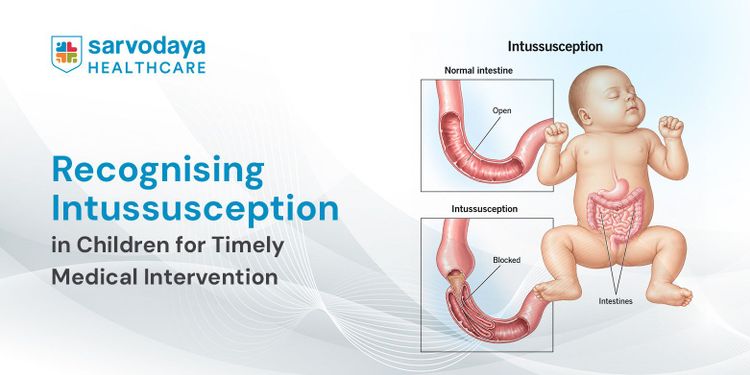


Witnessing your child suffer from severe abdominal discomfort can be distressing. While many stomachaches can be treated easily, other conditions need to be evaluated right away. Intussusception, a dangerous disorder in which one intestinal segment slides into another like a folding telescope, is one example. This action creates an obstruction, blocking the normal passage of food and liquids.
In this blog, we explore the nature of this condition, highlight the early warning signs of intussusception, and discuss available medical solutions.
Understanding the Condition
The most common cause of intestinal obstruction in children between the ages of three months and three years is intussusception. The telescoping bowel blocks the intestine and cuts off the blood supply to the affected area. This causes tissue damage if left untreated. Thus, it is essential to recognise the early warning signs of intussusception in children in order to provide prompt medical attention. Parents must remain vigilant, as the presentation often resembles less serious gastrointestinal issues.
Recognising the Indicators
Symptoms often appear in a healthy child without prior warning. Parents should become familiar with the common symptoms of intestinal blockage in children to ensure they do not miss a critical situation.
Here are the primary indicators parents should monitor closely:
- Severe Abdominal Cramping: The child may suddenly pull their knees to their chest and cry loudly due to sharp pain.
- Vomiting: Initial vomiting may contain undigested food, quickly becoming green or yellow.
- Red Jelly-Like Stools: Blood and mucus-filled faeces are a telltale sign.
- Lethargy and Weakness: The child may appear unusually tired or unresponsive between pain episodes.
- Palpable Abdominal Lump: Caregivers or doctors may feel a sausage-shaped mass in the abdomen.
Noting these specific intussusception in children symptoms helps your child's abdominal pain specialist doctor make an accurate preliminary assessment.
Read More- Why Children Fall Sick During Weather Changes and How to Strengthen Immunity
Underlying Triggers
In the majority of paediatric cases, the exact causes of this illness are still mostly unclear. Nonetheless, medical professionals have identified certain patterns. It is essential to understand the potential causes of intussusception in infants to grasp why it occurs predominantly in a specific age group.
Several factors are frequently associated with this condition:
- Viral Infections: Swollen lymph nodes might pull one part of the bowel into another, as many cases occur after a cold or gastroenteritis.
- Anatomical Variations: A polyp or other structural trigger may be present in older children.
- Age Factor: Infants between the ages of six and eighteen months are most commonly affected.
- Gender Predisposition: According to statistics, male children are somewhat more likely to experience this obstruction.
While knowing the causes of intussusception in infants cannot prevent the condition, it highlights the importance of monitoring infants for any symptoms of intestinal blockage in children.
Diagnostic Approaches for Intussusception
The medical staff responds quickly when a child with suspected abdominal issues is brought to a renowned multispecialty paediatric hospital in Faridabad. In order to confirm or rule out the early warning signs of intussusception as quickly as possible, the diagnostic method used is designed to be quick and non-invasive.
The diagnosis typically involves a multi-step clinical approach:
- Clinical History and Physical Exam: The child's abdominal pain specialist will initially enquire about the stool's appearance and the pattern of the pain. During the examination, the physician may feel a noticeable, sausage-shaped lump in the abdomen; this is a crucial symptom of the telescoping bowel.
- Abdominal Ultrasound: Abdominal ultrasound is the gold standard for identifying symptoms of intussusception in children. It doesn't use radiation and is quite accurate. The telescoped bowel frequently shows up on an ultrasound screen as a "target" or "bullseye," clearly providing evidence for the blockage.
- X-rays: While less definitive than an ultrasound, an X-ray can show symptoms of intestinal blockage in children, such as trapped air or an absence of gas in certain parts of the colon.
- Diagnostic Enema: In some cases, a specialist may use a contrast enema (using air or a safe liquid) under X-ray guidance. This not only confirms the location of the child's stomach pain's serious causes but often serves as the initial step in the treatment process.
Read More- Recognising the Stomach Infection Symptoms in Children: Symptoms, Causes and Treatment
Medical Intervention
Upon arrival, the doctor examines the patient physically and may prescribe imaging tests such as an ultrasound. Once verified, prompt action is required. The choice of treatment for intussusception in children depends on the severity.
The standard medical approaches include:
- Enema Reduction: A radiologist administers an air or barium enema. The pressure frequently pushes the telescoped intestine back into its correct position.
- Surgical Correction: If the enema is unsuccessful, surgical intervention becomes mandatory.
- Intravenous Fluids: The child receives fluids to prevent dehydration.
- Post-Procedure Monitoring: After correction, the child is observed to ensure the problem does not recur.
When surgery is required, parents must rely on a state-of-the-art paediatric surgery hospital in India to provide excellent safety standards.
Conclusion
Managing an unexpected paediatric emergency can be daunting. However, knowing the warning signs of intussusception in children enables caregivers to take prompt action and seek medical attention. The most reliable methods to treat this safely and avoid long-term problems are prompt diagnosis and professional assistance.
At Sarvodaya Hospital, Faridabad, the most advanced paediatric surgery hospital in India, has a dedicated team of specialists who offer round-the-clock emergency care. They provide exceptional treatment strategies, and the preventive consultation benefits patients by educating families on symptom recognition and post-treatment care.
Do not ignore severe abdominal discomfort in your child. If you observe concerning signs or wish to schedule a routine check-up at our multispecialty pediatric hospital in Faridabad, book an appointment now.