


In 2025, India recorded an estimated 2,32,832 new breast cancer cases according to projections from the National Cancer Registry Programme (NCRP). One reason for the increase in incidence is a lack of awareness of early detection and delays in timely treatment.
Women’s health has been widely neglected for years. She, who takes care of the family, is often sidelined, and even minor unusual symptoms or signs are often ignored.
WHO highlights that approximately 80% of breast cancers occur in women without specific risk factors other than sex and age. Early diagnosis and access to comprehensive treatment are therefore important even for women who do not consider themselves high-risk.
Breast cancer awareness is not just limited to wearing a pink ribbon, a few social media posts or participating in an awareness campaign. It is more than that.
Breast Cancer Awareness Month 2026 is observed throughout October, as a reminder and an important opportunity to talk openly about breast cancer, recognise possible warning signs, understand screening, and encourage timely medical care. It is also about understanding your own breast health and knowing when a change needs medical attention.
In this blog, we will discuss in detail the importance of Breast Cancer Awareness Month 2026, the theme, the causes, symptoms, prevention and other important information regarding Breast Cancer.
What is Breast Cancer Awareness Month?
Breast Cancer Awareness Month is a health awareness campaign observed every year throughout October. It is a reminder to prioritise breast health and aims to increase awareness of breast cancer, encourage early detection, support timely diagnosis and treatment, and improve access to comprehensive cancer care.
The purpose of breast cancer awareness campaigns is not to create fear. It is to make breast health a normal part of healthcare conversations.
Why is Breast Cancer Awareness Important?
Breast cancer can develop without causing noticeable symptoms in its early stages. This is one reason screening and awareness are important.
At the same time, finding a breast lump does not automatically mean cancer. Many breast changes are caused by benign conditions. However, an unusual or persistent change should be evaluated rather than ignored.
Breast cancer awareness therefore involves two important messages:
- Do not panic about every breast change.
- Do not ignore a breast change simply because it does not hurt.
Understanding this distinction can help women seek appropriate medical attention without unnecessary fear or delay.
Theme for World Breast Cancer Awareness Month 2026
The theme for Breast Cancer Awareness Month 2026 is Every Story is Unique, Every Journey Matters.
Breast cancer is more than a diagnosis; it is the beginning of a deeply personal journey that affects every individual and family differently. This Breast Cancer Awareness Month, the focus should be more directed toward understanding individual risk, encouraging timely screening and early detection, and ensuring compassionate, personalised care and support at every step.
What are the Common Signs and Symptoms of Breast Cancer?
Knowing the possible breast cancer signs and symptoms is an important part of breast cancer awareness. Identifying the symptoms on time and early treatment can result in better outcomes and cure the patient of cancer completely in some cases.
Contrary to popular belief, pain in the chest or breast is not the primary symptom of breast cancer. Many breast cancer cases present with no pain. So it is important to know all the common signs and symptoms of breast cancer.
Possible signs to notice or changes include:
- A new lump in the breast
- A lump or swelling in the armpit
- A thick or firm area in or near the breast
- A change in the size or shape of the breast
- Nipple inversion or a change in the direction of the nipple
- Nipple discharge that is not breast milk
- Changes in the skin of the breast, nipple or areola
- Redness, darkening, scaling or swelling
- Skin dimpling or puckering
- A rash involving the nipple or areola
- Persistent changes in the appearance or feel of the breast
Importantly, a normal mammogram does not mean that every future breast change can be ignored. If you notice a new or persistent change after a recent screening test, consult your doctor for appropriate evaluation.
What are the Causes and Major Risk Factors for Breast Cancer?
- Increasing age
- Family history of breast or ovarian cancer
- Inherited genetic mutations, such as BRCA1 and BRCA2
- Previous breast cancer or certain benign breast conditions
- Early onset of menstruation or late menopause
- Later first pregnancy or never being pregnant
- Prolonged exposure to oestrogen
- Being overweight or obese, particularly after menopause
- Physical inactivity
- Alcohol consumption
- Previous radiation therapy to the chest
- Certain hormonal factors and long-term exposure to some hormone therapies
At What Age Should Women Start Breast Cancer Screening?
There is no single screening schedule that applies identically to every woman. The appropriate age and frequency can depend on age, family history, genetic risk, previous breast conditions, breast density and other individual factors.
WHO describes mammography-based population screening primarily in the context of women aged 50–69 years, while also emphasising that screening programmes should be linked to timely diagnosis and treatment.
Every woman from the age of 13-14 can perform a self-breast examination at home every month to check for unusual lumps or nodes in the breast, changes in size or nipple discharge.
Women with a substantially increased risk, such as those with certain inherited genetic mutations or a strong family history, may need screening earlier or more frequently.
Discuss your individual breast cancer risk with an experienced breast cancer specialist or a cancer doctor near you and follow a screening plan appropriate for you.
How can Breast Cancer be Detected Early?
Early detection involves both awareness of breast changes and appropriate screening.
1. Know Your Breasts
Become familiar with the normal appearance and feel of your breasts. This makes it easier to notice a new or unusual change.
2. Follow Recommended Screening
Mammography uses X-rays to create images of breast tissue and can identify abnormalities that may not be noticeable during a physical examination. Three-dimensional mammography, also known as digital breast tomosynthesis, is another mammographic technology used in breast screening.
Depending on age, symptoms and individual risk, a doctor may recommend additional imaging such as ultrasound or breast MRI.
3. Self Breast Examination
It takes hardly 3-5 minutes to self-examine the breasts at home. If you notice a lump, nipple change, skin change or persistent breast abnormality, speak to a doctor even if you are younger than the usual screening age.
When a suspicious abnormality is identified, diagnostic evaluation may involve a clinical examination, mammography, ultrasound or MRI. If imaging identifies an area that requires further investigation, a biopsy may be performed. A biopsy is the definitive way to determine whether cancer is present.
But do not delay the diagnosis
Read More - Mammography Test Explained: Procedure, Types, Results and What to Expect
What are the Available Treatment Options for Breast Cancer?
Breast cancer is not one single disease. There are different types and molecular subtypes, and treatment depends on factors such as the type of cancer, stage, tumour characteristics, biomarker results, overall health and individual circumstances.
Treatment may include one or more of the following:
Chemotherapy
Chemotherapy uses medicines to destroy or control cancer cells. It may be given before surgery to reduce tumour size or after surgery to reduce the risk of recurrence, depending on the individual cancer characteristics.
Surgery
Surgery may involve removing the tumour while preserving as much breast tissue as appropriate, known as a lumpectomy, or removing the breast, known as a mastectomy. Some patients may also undergo lymph node evaluation. Reconstruction may be considered where appropriate.
Radiation Therapy
Radiation Therapy uses high-energy radiation to destroy cancer cells or prevent them from growing. It may be recommended after surgery or as part of treatment for particular stages and types of breast cancer.
Hormone Therapy
Some breast cancers use hormones such as oestrogen or progesterone to grow. Hormone therapy can help slow or stop the growth of hormone receptor-positive breast cancers and may be used for both early-stage and advanced disease.
Targeted Therapy
Targeted treatments are designed to act on specific characteristics of cancer cells. For example, some breast cancers have increased levels of the HER2 protein and may be treated with HER2-directed therapies when clinically appropriate.
Immunotherapy
Immunotherapy may be used for selected breast cancers, including certain cases of triple-negative breast cancer.
Treatment is increasingly personalised. A multidisciplinary cancer team may bring together surgical oncology, medical oncology, radiation oncology, radiology, pathology and other specialists to develop an appropriate treatment plan.
When Should You Consult a Cancer Specialist for Breast-related Symptoms?
You should seek medical advice from an experienced cancer doctor if you notice a new or persistent breast change, particularly a lump, nipple discharge, nipple inversion, skin dimpling, redness, swelling or a change in breast size or shape.
Don’t wait until a symptom becomes painful or severe. Breast cancer may not cause pain, particularly in its early stages.
If you already have an abnormal mammogram, biopsy result or a diagnosis of breast cancer, timely consultation with an appropriate cancer care team is important for diagnosis, staging and treatment planning.
Breast Cancer Awareness Month 2026: Make Awareness a Habit
Breast Cancer Awareness Month 2026 is a reminder that awareness should continue beyond October.
Know what is normal for you. Understand your personal risk. Follow an appropriate screening schedule. Pay attention to persistent changes. And seek medical advice rather than trying to diagnose a breast change yourself.
Sarvodaya Cancer Institute brings one of the most experienced teams of cancer doctors, including medical oncologists, radiation oncologists, and robotic cancer surgeons, nuclear medicine experts, bone marrow transplant specialists and more, who are highly skilled in managing almost all kinds of cancers.
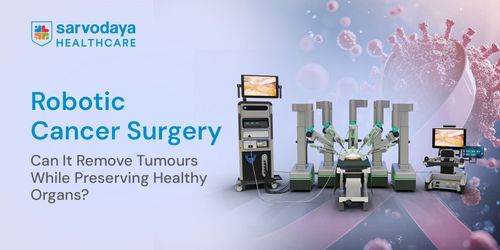
One of the leading cancer care centres in North India, Sarvodaya Cancer Institute houses advanced technologies, such as Versa HD 6D Couch LINAC for radiation therapy, PET CT and Gamma Camera for high-end scans, AI-Powered Smart Surgical Robot for minimally invasive cancer surgeries, Digital Mammography, 3T MRI, advanced ultrasound systems and more.
If you are looking for a cancer hospital in Faridabad, Delhi NCR, Noida and Mathura, consider Sarvodaya Hospital for cancer care, where prevention, diagnosis, pathology, imaging, surgery, day care, chemotherapy, medical oncology, nuclear therapy, radiation therapy and other facilities are present under one roof.
If you have doubts regarding breast cancer or any other cancer or need a second opinion for breast cancer, consult our experts without delay. Book your appointment now.