


A child standing with both knees touching while the ankles remain apart can make any parent pause. Is this simply a stage of growth, or does it indicate a problem with bone development?
The answer isn't always straightforward.
Many children develop knock knees in children as part of their natural growth. In others, however, persistent or pronounced knock knees may point to an underlying condition that deserves medical attention. The appearance alone doesn't always provide the answer.
What matters is whether your child's leg alignment is developing as expected for their age. Understanding that difference helps doctors decide whether observation is enough or whether further evaluation and treatment may be needed.
What Are Knock Knees?
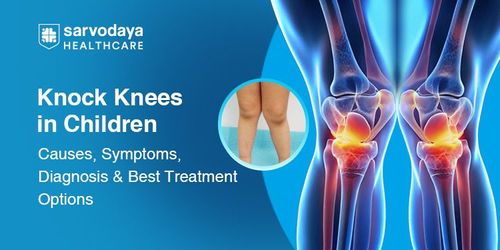
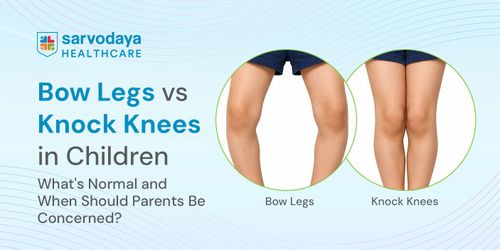
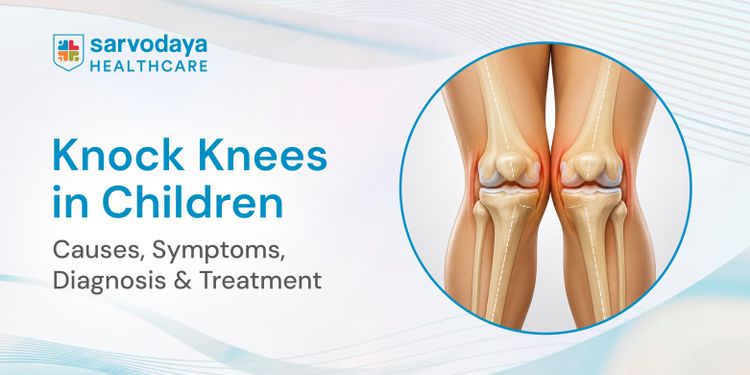
Knock knees, medically known as genu valgum, describe a leg alignment in which the knees angle inward and touch each other while the ankles remain apart when standing with the legs straight.
Children's bones don't grow in a fixed, straight line from birth. As the hips, thighs, knees, and lower legs develop, their alignment changes through several predictable stages. Knock knees are one of these developmental stages, which is why they commonly appear during early childhood.
Most children with knock knees remain active and do not experience pain. They continue to run, play, climb stairs, and participate in everyday activities without difficulty. In fact, parents usually notice the appearance of the legs long before the child develops any symptoms.
This is why doctors don't assess knock knees based on appearance alone. They also consider the child's age, walking pattern, growth history, and overall development before deciding whether the condition follows the expected course.
When Are Knock Knees a Normal Part of Growth?
One of the most common misconceptions is that children should have straight legs throughout their early years. In reality, leg alignment changes naturally as a child grows.
During infancy, many children have bowed legs. As the bones continue to develop, the alignment gradually shifts, and between three and five years of age, knock knees often become more noticeable. For most children, this represents a normal phase of skeletal growth rather than a bone disorder.
Over the next few years, the legs continue to realign. By around seven to eight years of age, most children develop the typical adult leg alignment without requiring any treatment.
While this pattern is common, every child grows at a different pace. Doctors don't rely on age alone when evaluating knock knees in children. They also assess how pronounced the deformity is, whether it is improving over time, and whether it affects the child's movement or daily activities.
When Should Parents Be Concerned?
Not every child with knock knees needs treatment, but every persistent or unusual pattern deserves careful assessment. Certain signs help doctors distinguish normal growth from conditions that may require closer monitoring or intervention.
You should consult a paediatric orthopaedic specialist if your child:
● Continues to have pronounced knock knees beyond seven to eight years of age
● Has one leg that appears more affected than the other
● Complains of knee, hip, or ankle pain
● Walks with a limp or struggles to run and play comfortably
● Tires easily during physical activity because of leg discomfort
● Shows a widening gap between the ankles as the knees touch
● Develops worsening deformity instead of gradual improvement
● Has a history of bone injury, infection, or a known growth disorder
These signs don't necessarily indicate a serious condition. However, they do suggest that your child's leg development deserves a detailed evaluation to identify the underlying cause and determine whether treatment is required.
What Causes Persistent Knock Knees?
When knock knees continue beyond the expected age of correction or become unusually severe, doctors look beyond normal growth to understand why the alignment has persisted.
Some of the common causes include:
Vitamin D Deficiency and Rickets
Healthy bone development depends on adequate Vitamin D and calcium. Deficiencies during childhood can weaken growing bones and affect their alignment, leading to persistent knock knees.
Genetic and Developmental Conditions
Some children inherit conditions that influence bone growth and skeletal alignment. These conditions may prevent the legs from naturally correcting as the child grows.
Growth Plate Injuries
The growth plates near the ends of children's bones guide normal bone development. An injury or infection affecting these areas can alter bone growth and lead to changes in leg alignment.
Excess Body Weight
Additional pressure on developing bones and joints can make knock knees more noticeable and may contribute to worsening alignment in some children.
Other Orthopaedic Conditions
Less commonly, persistent knock knees may result from metabolic bone disorders or other conditions that affect normal skeletal development. Although these causes are uncommon, early diagnosis plays an important role in planning the right treatment.
The encouraging news is that persistent knock knees do not automatically mean surgery. Once doctors identify the underlying cause, they can recommend the most appropriate treatment, which may range from regular monitoring and physiotherapy to guided growth procedures or surgery in selected cases.
How Are Knock Knees Diagnosed?
Diagnosing knock knees in children begins with determining whether the child's leg alignment reflects normal growth or an underlying condition that requires treatment. Rather than relying on appearance alone, orthopaedic specialists perform a comprehensive evaluation to understand the cause and severity of the condition.
Your child's assessment may include:
● Detailed medical history to understand growth milestones, previous illnesses or injuries, family history, and any symptoms such as pain or difficulty walking.
● Physical examination to assess leg alignment, walking pattern (gait), joint movement, and the distance between the ankles when the knees are together.
● Standing X-rays, when required, to accurately evaluate bone alignment, measure the degree of deformity, and assess growth plates.
● Blood tests, if nutritional deficiencies such as Vitamin D deficiency or conditions like rickets are suspected.
● Additional investigations, whenever necessary, to rule out metabolic bone diseases or other growth-related conditions.
The purpose of these investigations is not just to confirm knock knees, but to identify the underlying cause and decide whether observation, rehabilitation, or treatment is the most appropriate next step.
Can Knock Knees Be Treated?
Treatment for knock knees in children depends on the child's age, the severity of the deformity, its underlying cause, and whether it affects everyday activities. The goal is always to support healthy bone development while avoiding unnecessary intervention.
Depending on the clinical evaluation, treatment may include:
● Regular observation and follow-up for younger children whose leg alignment is expected to improve naturally with growth.
● Nutritional correction to address Vitamin D deficiency or rickets when poor bone health contributes to the deformity.
● Physiotherapy and rehabilitation to improve muscle strength, balance, posture, and walking mechanics in children who can benefit from guided exercises.
● Guided growth procedures, performed while the child is still growing, to gradually correct bone alignment in selected cases.
● Corrective surgery, reserved for children with severe or persistent deformity that continues to affect walking, joint function, or overall quality of life after careful evaluation.
The reassuring part is that most children with knock knees do not require surgery. An early assessment simply helps doctors choose the right treatment at the right stage of growth, giving children the best opportunity for healthy bone development.
When Should You Consult a Paediatric Orthopaedic Specialist?
Many parents hesitate to seek medical advice because they hope the condition will improve with time. While this is true for many children, an expert evaluation provides clarity and ensures that no underlying problem goes unnoticed.
A paediatric orthopaedic specialist can determine whether your child's leg alignment reflects normal growth or whether it requires monitoring or treatment.
As Dr. Somesh Virmani, Senior Director & HOD - Orthopaedics, Joint Replacement & Sports Injury, explains:
"Most knock knees seen during early childhood are a normal stage of growth. Our responsibility is to identify the small number of children whose leg alignment isn't following the expected pattern, so that they receive the right treatment at the right time."
Consult a specialist if you notice persistent deformity, pain, difficulty walking, limping, or if you have concerns about your child's overall bone development. A timely assessment can provide reassurance when everything is progressing normally and guide appropriate treatment whenever it is needed.
Sarvodaya's Approach to Paediatric Knock Knee Care
Every child grows differently, which is why the management of knock knees in children begins with a thorough evaluation rather than a one-size-fits-all approach. At Sarvodaya Hospital, our paediatric orthopaedic specialists combine clinical expertise with advanced diagnostic technology to understand the underlying cause, assess bone growth, and recommend the most appropriate treatment for every child.
From the first consultation through recovery and follow-up, our multidisciplinary team works together to support healthy bone development and help children move comfortably and confidently.
Our comprehensive approach includes:
● Detailed clinical evaluation to assess leg alignment, walking pattern (gait), growth milestones, and overall musculoskeletal development before planning treatment.
● Advanced diagnostic support, including standing alignment X-rays and other investigations whenever required, to accurately identify the cause and severity of the deformity.
● Experienced orthopaedic specialists, with over 26 years of expertise, providing comprehensive care for children's bone, joint, and growth-related conditions.
● Personalised treatment plans that may include observation, nutritional correction, physiotherapy, guided growth procedures, or corrective surgery, depending on your child's age and clinical needs.
● Integrated rehabilitation and physiotherapy support to improve strength, balance, movement, and recovery following treatment whenever required.
● Coordinated multidisciplinary care, with seamless collaboration between orthopaedic surgeons, paediatricians, physiotherapists, radiologists, and rehabilitation specialists to deliver complete care under one roof.
● Long-term growth monitoring and follow-up, ensuring your child's progress continues in the right direction even after treatment.
Our goal extends beyond correcting leg alignment. We aim to support healthy bone development, comfortable movement, and an active childhood through timely diagnosis, personalised treatment, and continued care.
If you've noticed persistent knock knees, difficulty walking, or concerns about your child's leg alignment, consult our paediatric orthopaedic team. An early evaluation can provide reassurance, identify any underlying concerns, and help your child receive the right care at the right stage of growth.