
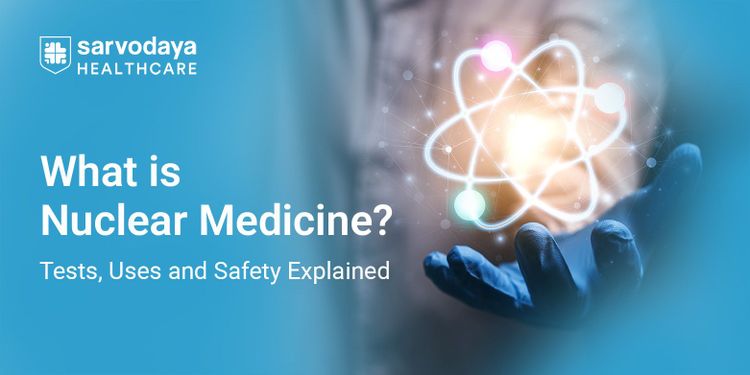


Nuclear medicine is a specialised branch of medical science that uses small amounts of radioactive materials to diagnose and treat various diseases. By detecting changes at a cellular level, nuclear medicine imaging helps doctors identify abnormalities much earlier than many conventional imaging techniques.
In this blog, we explain what nuclear medicine is, explore major nuclear medicine uses, describe what happens during a nuclear medicine scan, and discuss available nuclear medicine treatment options.
Understanding What Is Nuclear Medicine
In nuclear medicine, a patient receives a small quantity of a radiopharmaceutical, which travels to a specific organ or tissue. The emitted signals are captured by specialised cameras to produce detailed images, enabling doctors to assess how well an organ is functioning.
Key features of nuclear medicine imaging include:
- It evaluates physiological activity rather than just structure.
- It detects disease at an early stage, often before visible structural changes occur.
- It supports both diagnosis and nuclear medicine treatment in certain conditions.
- It is supervised by a trained nuclear medicine doctor to ensure accuracy and safety.
How Nuclear Medicine Imaging Works
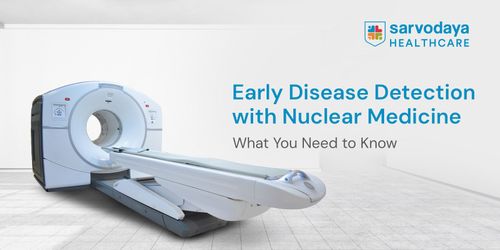
Nuclear medicine imaging follows a carefully monitored process designed to ensure both accuracy and patient safety. In nuclear medicine, a small amount of a radiotracer is introduced into the body, usually through an injection, oral dose, or inhalation. The substance travels to the target organ, where it emits signals that are captured by a gamma camera or specialised scanner to create detailed images. These images serve as the basis for a precise nuclear medicine scan.
The steps involved in a typical nuclear medicine scan include:
- Administration of a radiotracer specific to the organ being examined
- A waiting period to allow absorption into the target tissue
- Image acquisition using advanced scanners
- Detailed analysis and reporting by the specialist
Common Nuclear Medicine Scans
Different scans are designed to evaluate specific body systems, and each plays a vital role in expanding nuclear medicine’s use across various medical fields.
Some commonly performed nuclear medicine scan approaches include:
- Bone scan for detecting fractures, infections and cancer spread
- Thyroid scan to assess overactive or underactive thyroid conditions
- Cardiac perfusion scan to evaluate blood flow to the heart muscle
- Renal scan to measure kidney function and drainage
- A PET scan, a specialised form of nuclear medicine imaging, is widely used in cancer detection and staging.
These investigations support oncological decision-making alongside a reputable oncologist in Noida.
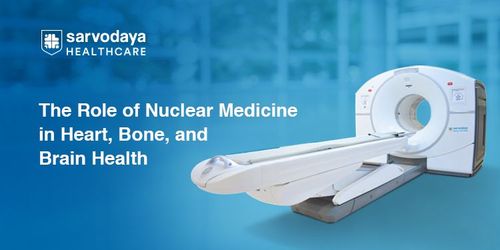
Read More- The Role of Nuclear Medicine in Heart, Bone, and Brain Health
Key Nuclear Medicine Uses in Modern Healthcare
The scope of nuclear medicine use has expanded considerably in recent decades. Because nuclear medicine imaging evaluates organ function at a cellular level, it plays a vital role in early diagnosis, disease staging and treatment monitoring. This functional insight often allows doctors to detect abnormalities before structural changes become visible on conventional scans.
The most important nuclear medicine uses in modern healthcare include:
- Cancer detection and staging, particularly through PET-based nuclear medicine imaging, which helps identify tumour spread and guide therapy decisions
- Cardiac evaluation, including assessment of blood flow and heart muscle viability
- Bone disorder assessment, such as detecting metastasis, infection or hidden fractures
- Thyroid disease diagnosis and management, including hyperthyroidism and nodules
- Kidney function analysis, measuring filtration and drainage efficiency
At a leading cancer hospital in India, this technology supports precise treatment planning.
Read More- Nuclear Medicine, The Next Generation Molecular Theranostics
Nuclear Medicine Treatment Options
In addition to diagnosis, nuclear medicine treatment offers targeted therapeutic solutions for selected conditions.
Common forms of nuclear medicine treatment include:
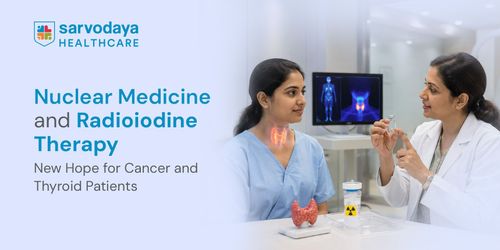
- Radioiodine therapy for hyperthyroidism and thyroid cancer
- Targeted radionuclide therapy for certain advanced cancers
- Palliative treatment to relieve bone pain caused by metastasis
- Theranostic approaches, combining diagnostic nuclear medicine imaging with personalised therapy
In comprehensive centres, such as the best cancer hospital in India, nuclear medicine treatment is integrated safely and effectively into the overall care plan.
Safety and Radiation Considerations
In most cases, radiation exposure is comparable to or even lower than that of many conventional diagnostic imaging procedures. The radiotracers used in nuclear medicine imaging decay quickly and are naturally eliminated from the body.
Key safety measures in nuclear medicine include:
- Individualised dose calculation based on age, weight and medical condition
- Use of short-lived radiopharmaceuticals to minimise radiation exposure
- Monitoring by a trained nuclear medicine doctor throughout the procedure
- Clear post-scan instructions to ensure safe elimination of the tracer
Conclusion
Nuclear medicine has transformed modern healthcare by offering precise functional insight into disease processes. From early diagnosis through advanced nuclear medicine imaging to targeted nuclear medicine treatment, this speciality bridges the gap between detection and therapy.
At Sarvodaya Hospital, Faridabad, patients benefit from comprehensive nuclear medicine services, delivered by experienced specialists and supported by advanced technology. Whether you are seeking evaluation at a trusted cancer hospital in Delhi NCR or guidance from the best oncologist in Delhi NCR, integrated care ensures personalised treatment planning.
For comprehensive and compassionate care, book an appointment now and take a proactive step towards better health.