


Although urinary health is an essential component of general health, many people are reluctant to consult a doctor when they observe abnormalities in their urine patterns. A weak urine stream, trouble starting to urinate, or an unexpected urge to urinate - might all be signs of an underlying illness that needs to be evaluated by a professional. One of the best non-invasive diagnostic methods for assessing urine flow and spotting possible issues before they worsen is a uroflowmetry test.
In this blog, we explore what uroflowmetry is, how the test is performed, what the results indicate, and why timely testing can make a significant difference in your long-term urological health.
Understanding Uroflowmetry
A straightforward, painless diagnostic technique that gauges the volume and speed of urine flow during urination is called a uroflowmetry test. The test measures the amount of urine passed over a specific time period and the speed at which it is evacuated from the bladder. These measures assist medical professionals in locating anomalies in the urinary tract that can cause pain or malfunction.
The test offers important clinical insights into the function of the bladder, urethra, and surrounding tissues by evaluating the rate of urine flow, expressed in millilitres per second. In order to create a comprehensive and precise image of a patient's urological condition, it is usually utilised in conjunction with other diagnostic tests.
Why a Uroflowmetry Test Is Recommended
There are several clinical reasons why a uroflowmetry test is advised. When a patient exhibits symptoms that point to a potential obstruction, bladder muscular weakness, or another urological problem, doctors may recommend this study. It is also used to track the course of treatment after medical therapy or urological surgery.
Common indications for uroflowmetry testing include:
- A weak or interrupted urine stream
- Straining or difficulty initiating urination
- Frequent urination, particularly at night
- Difficulty stopping the flow of urine
- Urinary incontinence or sudden urgency
- Suspected benign prostatic hyperplasia (BPH) in men
- Post-surgical follow-up for urological tests
How the Uroflowmetry Test Is Performed
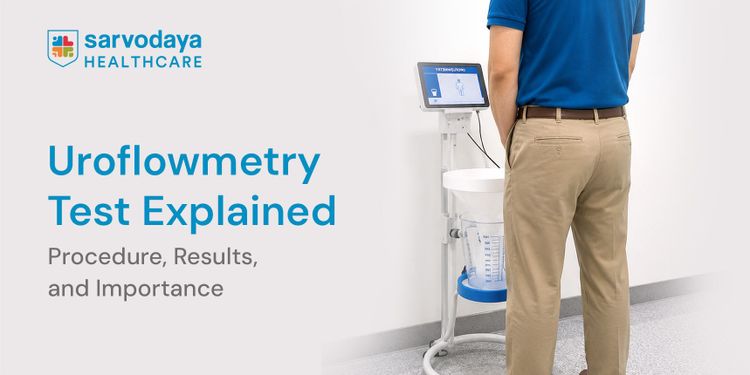
The process is simple and occurs in a clinical environment. After consuming enough fluids in advance, patients are expected to arrive with a comfortably full bladder. There are no needles, catheters, or anaesthesia needed for this completely non-invasive examination.
The test typically involves the following steps:
- The patient is directed to a private toilet fitted with a special funnel-shaped device connected to a uroflowmeter.
- The patient urinates into the device in a natural and relaxed manner, without altering the flow.
- The uroflowmeter records the rate of urine flow, the total duration of urination, and the overall volume passed.
- This data is displayed as a flow curve, which the doctor reviews and interprets in the context of the patient's symptoms and medical history.
Uroflowmetry Test for Male Patients
Although the test is administered on both men and women, a uroflowmetry test is more frequently performed on male patients since diseases, including BPH and urethral strictures, are more common in males. The test is well-positioned to identify quantifiable changes in urine flow caused by the prostate gland's enlargement and partial obstruction of the urethra as men age.
When a man has lower urinary tract symptoms (LUTS), a uroflowmetry test is frequently one of the first tests advised. Urologists can determine whether more testing, medication, or surgery may be necessary by evaluating peak flow rate and voiding patterns.
Read More- Urinary Tract Infection (UTI) Symptoms, Causes, and Treatments
Interpreting Uroflowmetry Test Results
The primary value recorded during the test is the maximum, or peak, urine flow rate, measured in millilitres per second (mL/s).
As a general reference:
- A peak flow rate above 15 mL/s is considered within the normal range for most adults.
- A rate between 10 and 15 mL/s may suggest mild obstruction or a degree of reduced bladder function.
- A rate below 10 mL/s typically indicates significant obstruction or a weakened detrusor muscle.
It is important to note that results are always interpreted within the broader clinical context. Age, voided volume at the time of the test, and individual anatomical differences all influence outcomes. A qualified urologist in Delhi NCR will interpret results in conjunction with a patient's full medical history and any additional investigations.
Uroflowmetry Test Price and Accessibility
This diagnostic investigation's price is one of its noteworthy benefits. When compared to other urological evaluations, the cost of a uroflowmetry test in India is often minimal, making it affordable for a variety of patients. Depending on the facility, location, and whether the test is conducted alone or as part of a larger diagnostic package, the cost of the uroflowmetry test may vary slightly.
Well-equipped facilities offering complete urology treatments can perform uroflowmetry tests for patients in Faridabad. Expert-led consultations and transparent pricing guarantee that patients receive a precise diagnosis without needless financial hardship.
Conclusion
A uroflowmetry test is a vital diagnostic tool that enables urologists to detect and monitor a wide range of urinary conditions with accuracy and efficiency. Early identification of urinary dysfunction leads to better outcomes and a significantly improved quality of life.
At Sarvodaya Hospital, Faridabad, recognised as the best urology hospital in India, patients benefit from comprehensive urological care delivered by a team of experienced specialists. The hospital's urology department is equipped with advanced diagnostic infrastructure, including state-of-the-art uroflowmetry facilities, to support both accurate diagnosis and ongoing monitoring.
If you or a loved one is experiencing urinary symptoms, do not delay seeking professional advice. Take a positive step towards better urological health today and book an appointment now.