
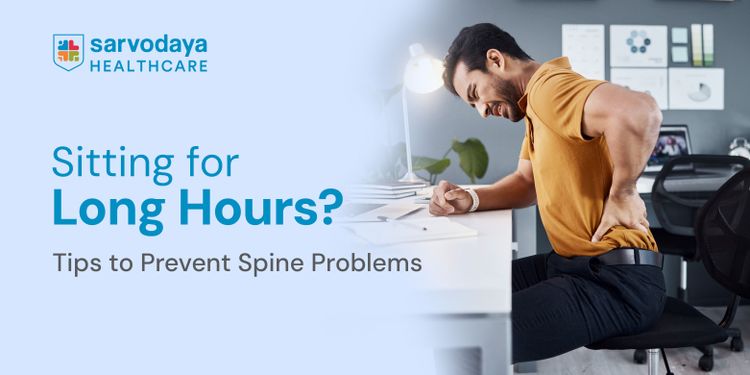


Sitting for long hours has become a routine part of modern life, whether at work, during travel, while studying, or when using digital devices. While sitting itself is not harmful, staying in the same position for prolonged periods can place extra strain on the spine, back muscles, neck, and shoulders. Over time, this may contribute to stiffness, poor posture, back pain, neck discomfort, and reduced flexibility.
The good news is that many sitting-related spine problems can be prevented with small, consistent changes. Maintaining proper posture, using an ergonomic workstation, taking regular movement breaks, and strengthening the muscles that support the spine can help reduce everyday strain and support long-term spine health.
In this article, we’ll explain how prolonged sitting affects the spine, the warning signs to watch for, and practical tips to prevent spine problems while sitting for long hours.
| Key Takeaways | |
|---|---|
| ● | Sitting for long hours can place strain on the spine and contribute to stiffness, poor posture, and discomfort. |
| ● | Common sitting-related concerns include lower back pain, neck pain, shoulder stiffness, and postural imbalance. |
| ● | Regular movement breaks and correct sitting posture can help reduce everyday spinal strain. |
| ● | Stretching, strengthening exercises, and an ergonomic workspace support better posture and long-term spine health. |
How Does Sitting for Long Hours Affect the Spine?
Many people think of sitting as a restful activity, but sitting in the same position for long periods can place continuous stress on the spine, especially the lower back and neck. Over time, limited movement, poor posture, and muscle inactivity can contribute to stiffness, discomfort, and reduced spinal flexibility.
Several factors can affect spine health when sitting for long hours, including:
Increased Pressure on the Spine: Prolonged sitting can increase pressure on the spinal discs, particularly in the lower back. This may contribute to back discomfort, especially when sitting with poor posture or without proper support.
Reduced mobility: Remaining in one position for several hours limits joint movement and muscle activity. This can make the back, hips, neck, and shoulders feel stiff or restricted.
Poor posture habits: Long hours of sitting often lead to slouching, rounded shoulders, or forward head posture, especially while working on a laptop or mobile device. These postural habits can strain the neck, shoulders, and upper back.
Muscle stiffness and weakness: When muscles remain inactive for long periods, they can become tight, weak, or uncomfortable. Weak core and back muscles may also reduce support for the spine.
These effects may gradually impact posture, mobility, and overall spine health, making it important to take regular movement breaks and maintain proper sitting habits.
What Are the Common Spine Problems Linked to Prolonged Sitting?
Sitting for long hours can contribute to several spine-related concerns, especially when combined with poor posture, lack of movement, and inadequate back support. While occasional discomfort may improve with rest and movement, repeated strain over time can increase the risk of persistent pain, stiffness, and postural problems.
Lower back pain: Lower back pain is one of the most common problems linked to prolonged sitting. Sitting for long periods can increase pressure on the lumbar spine and may strain the lower back muscles, especially when posture is poor or the chair does not provide adequate support.
Neck pain: Neck pain may develop when people lean forward towards screens, look down at mobile phones, or sit with the head pushed forward for long periods. This posture can strain the neck, shoulders, and upper back.
Disc-related problems: Prolonged sitting, especially with slouching or poor spinal support, may increase pressure on the spinal discs. In some people, this can aggravate existing disc problems or contribute to disc bulging or herniation over time.
Postural imbalances: Poor sitting habits can gradually affect the body’s natural alignment. Rounded shoulders, forward head posture, tight hip muscles, and weak core muscles may place additional stress on the spine.
Ignoring recurring pain, stiffness, or posture-related discomfort may allow spine problems to worsen over time. Early lifestyle changes and timely medical evaluation can help prevent long-term complications.
Why is Poor Posture a Major Concern for Desk Workers?
Poor posture is more than a cosmetic concern. It affects how the spine, muscles, joints, and supporting structures work throughout the day. For desk workers, even small posture habits, such as slouching, leaning towards a screen, or sitting without back support, can gradually lead to pain, stiffness, and reduced mobility.
Spinal misalignment: Slouching or sitting with the head and shoulders pushed forward can disturb the spine’s natural alignment, placing extra stress on the neck, upper back, and lower back.
Increased muscle strain: When posture is poor, the muscles supporting the spine have to work harder to keep the body stable. Over time, this can lead to fatigue, tightness, and discomfort.
Reduced flexibility: Sitting in the same position for long hours can make the neck, back, shoulders, and hip muscles tighter and less mobile.
Long-term spine-related concerns: Persistent poor posture may contribute to recurring back pain, neck pain, postural imbalance, and worsening of existing spine problems.
These effects may not appear immediately, but they can become more noticeable over time, especially when prolonged sitting is combined with limited movement and lack of exercise.
How Can You Improve Your Sitting Posture?
Good posture is not about sitting perfectly straight all day. It is about maintaining a neutral, comfortable position that supports the spine and reduces unnecessary strain on the muscles and joints.
Keep the back supported: Sit with the lower back supported against the chair. Using a chair with good lumbar support, or placing a small cushion behind the lower back, can help maintain the natural curve of the spine.
Position the screen at eye level: Keep the screen directly in front of you, with the top of the screen at or slightly below eye level. This helps reduce the tendency to bend the neck forward while working.
Keep the feet flat on the floor: Sit with both feet resting flat on the floor or on a footrest. Avoid crossing the legs for long periods, as this can affect posture and place uneven strain on the hips and lower back.
Avoid slouching: Keep the shoulders relaxed, the head aligned with the spine, and the elbows close to the body. Avoid leaning forward or rounding the shoulders for extended periods.
Improving sitting posture consistently can help reduce daily discomfort and support better spine health over time.
How Can You Create a Spine-Friendly Workspace?
Your workspace setup can directly affect your posture, comfort, and spine health. Small ergonomic adjustments can help reduce unnecessary strain on the neck, back, shoulders, and wrists, making it easier to work comfortably for longer periods.
Choose a supportive chair: Use a chair that supports the lower back and helps maintain the natural curve of the spine. The chair height should allow the feet to rest flat on the floor or on a footrest.
Set the desk at the right height: The desk should allow the elbows to stay close to the body and bend at around 90 degrees while typing or writing. This helps reduce strain on the shoulders, arms, and upper back.
Keep the screen at eye level: Position the screen directly in front of you, with the top of the screen at or slightly below eye level. This can help prevent frequent neck bending or looking down for long periods.
Support the arms comfortably: Keep the forearms supported and the shoulders relaxed while working. Avoid lifting the shoulders or reaching forward for the keyboard and mouse.
Following basic office ergonomics can help reduce daily strain on the spine and support better posture during long working hours.
Why are Regular Movement Breaks Important?
The body is designed to move. Sitting in the same position for long periods can increase pressure on the spine, reduce circulation, and make the muscles feel stiff or tired. Regular movement breaks help interrupt prolonged sitting and give the spine, muscles, and joints a chance to reset.
Relieve spinal pressure: Standing up and moving around can temporarily reduce pressure on the spinal discs, especially in the lower back.
Improve circulation: Gentle movement helps promote blood flow to the muscles and joints, reducing the feeling of heaviness or discomfort.
Reduce stiffness: Simple stretches or short walks can help loosen tight muscles in the back, neck, shoulders, and hips.
Support muscle health: Active muscles provide better support to the spine and help maintain posture during long working hours.
Try to stand, stretch, or walk for a few minutes every 30 to 60 minutes to reduce the strain caused by prolonged sitting.
Exercises and Stretches That Help Prevent Spine Problems
Regular exercise can play an important role in maintaining spine health. Strengthening the muscles that support the spine and improving flexibility can help reduce stiffness, improve posture, and lower the risk of recurring back or neck discomfort.
Neck stretches: Gentle neck stretches, such as slowly tilting the head from side to side or turning it left and right, can help reduce stiffness caused by prolonged screen use.
Back strengthening exercises: Exercises such as bridges and bird-dogs can help strengthen the back and hip muscles that support spinal stability.
Core strengthening: A strong core helps support the lower back and maintain better posture during sitting, standing, and movement. Simple exercises such as pelvic tilts, modified planks, or abdominal bracing may be helpful when done correctly.
Walking and mobility exercises: Walking, gentle mobility drills, and regular stretching can help improve circulation, reduce stiffness, and keep the spine and joints more flexible.
These exercises should be performed gently and consistently. If back pain, neck pain, numbness, tingling, or weakness is already present, it is best to consult a doctor or physiotherapist before starting a new exercise routine.
Tips to Protect Your Spine While Working from Home
Remote work can make it easy to prioritise comfort over posture. Many people work from sofas, beds, or dining tables for long hours, often without realising that these positions may strain the neck, back, shoulders, and hips over time.
Create a dedicated workspace: Use a proper desk and chair whenever possible. A stable workstation helps maintain better posture and reduces unnecessary strain on the spine.
Avoid working from the bed or sofa: Soft surfaces do not provide adequate back support and may encourage slouching, twisting, or leaning forward for long periods.
Maintain proper posture: Sit with the back supported, shoulders relaxed, feet flat on the floor, and the screen positioned at eye level.
Schedule movement breaks: Set reminders to stand, stretch, or walk for a few minutes every 30 to 60 minutes. Regular movement helps reduce stiffness and supports better circulation.
Improving work-from-home posture and taking regular movement breaks can help reduce discomfort and support long-term spine health.
When to Consult a Doctor for Back or Neck Pain
Occasional back or neck discomfort after long hours of sitting may improve with rest, posture correction, stretching, and regular movement breaks. However, pain that persists, worsens, or affects the arms, legs, or daily activities should not be ignored, as it may indicate an underlying spine, muscle, or nerve-related concern.
Consider consulting a doctor if you experience:
Pain lasting several weeks: Back or neck pain that continues despite rest, posture changes, or basic self-care should be medically evaluated.
Pain radiating to the arms or legs: Pain that travels from the neck to the arm, or from the lower back to the leg, may suggest nerve irritation or compression.
Numbness, tingling, or weakness: Loss of sensation, tingling, or weakness in the arms or legs should be assessed promptly, especially if symptoms are worsening.
Difficulty performing daily activities: Pain that interferes with walking, sitting, sleeping, working, or routine tasks requires medical attention.
Severe or sudden symptoms: Seek urgent medical care if back or neck pain is associated with loss of bladder or bowel control, recent injury, fever, unexplained weight loss, or sudden weakness.
For mild discomfort, a physician can be the first point of consultation. They can assess the symptoms, rule out common causes, and guide the next steps. If the pain is persistent, recurrent, radiates to the arms or legs, or is associated with numbness, tingling, weakness, or difficulty with movement, it is advisable to consult an orthopaedic specialist or spine specialist.
Timely diagnosis can help identify the cause of pain and guide the right treatment before the condition worsens.
How Sarvodaya Hospital Supports Spine Health
Comprehensive spine care involves early diagnosis, expert guidance, and personalised treatment based on the patient’s symptoms, lifestyle, and underlying condition. At Sarvodaya Hospital, patients with back pain, neck pain, posture-related discomfort, or suspected spine problems are evaluated to identify the exact cause and recommend appropriate care.
Expert spine and orthopaedic care: Experienced orthopaedic specialists evaluate and manage a wide range of spine-related concerns, including back pain, neck pain, disc-related problems, postural issues, and nerve-related symptoms.
Advanced diagnostic services: Imaging and diagnostic facilities help doctors assess the spine, muscles, joints, and nerves more accurately when further evaluation is needed.
Personalised treatment plans: Treatment may include medicines, lifestyle guidance, posture correction, physiotherapy, pain management, or advanced interventions depending on the severity and cause of symptoms.
Rehabilitation and physiotherapy support: Physiotherapy and rehabilitation programmes can help improve strength, flexibility, posture, mobility, and recovery.
For patients who require advanced care, specialised spine surgery services may also be recommended when conservative treatment is not enough. With an integrated approach to orthopaedics, spine care, rehabilitation, and joint health, Sarvodaya Hospital supports patients in managing pain, improving mobility, and returning to daily activities with greater comfort.
Conclusion
The body is designed to move, but modern routines often involve sitting for long hours at work, while studying, travelling, or working from home. Over time, prolonged sitting, poor posture, and limited movement can place strain on the spine and contribute to back pain, neck pain, stiffness, and posture-related discomfort.
The good news is that many sitting-related spine concerns can be reduced with simple, consistent changes. Maintaining proper posture, setting up an ergonomic workspace, taking regular movement breaks, stretching, and strengthening the muscles that support the spine can all help protect long-term spine health.
It is also important to listen to the body. If back or neck pain becomes persistent, worsens over time, radiates to the arms or legs, or begins to affect daily activities, timely medical evaluation is recommended. At Sarvodaya Hospital, the orthopaedics and spine care team can assess the cause of pain and recommend appropriate treatment based on the patient’s condition.
To consult a spine specialist or orthopaedic doctor at Sarvodaya Hospital, call (24*7 helpline) 9654511414 or book an appointment online.