


You may think your leg pain is coming from your muscles, knee or hip.
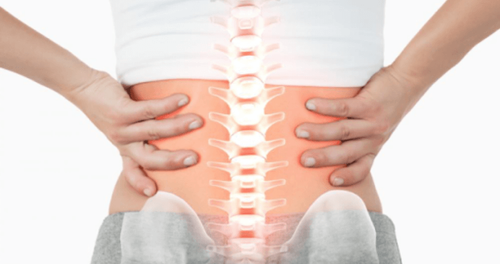
But what if the real problem is higher up, in your spine?
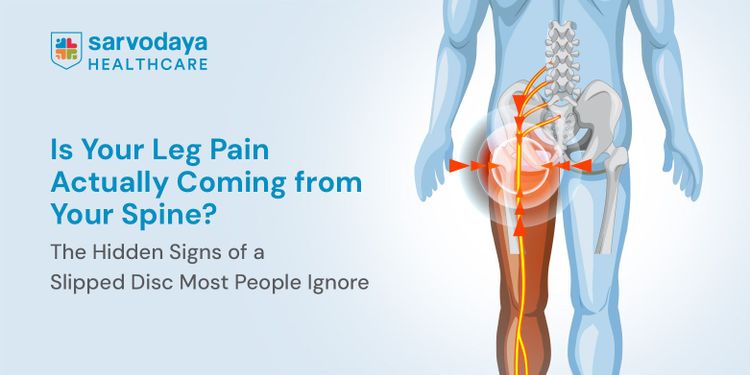
A slipped disc in the lower back can irritate or compress a nearby nerve. When that happens, the pain may travel from the lower back or buttock into the thigh, calf or foot. You may also notice numbness, tingling or weakness in the leg.
This is why some people keep treating their leg pain like a muscle problem without realising that the source may be in the spine.
So, how can you tell when leg pain may actually be coming from your back?
How Can a Problem in Your Spine Cause Leg Pain?
The lower spine contains nerve roots that carry signals between your spinal cord and your legs.
Think of these nerves like electrical cables travelling from the spine towards different parts of your leg.
If a slipped disc presses against one of these nerves, the problem starts in the back, but you may feel the symptoms much farther away.
This can cause sciatica, a type of nerve pain that commonly travels from the lower back or buttock down one side of the leg.
That is why you can have pain in your calf or foot even when there is nothing wrong with the calf or foot itself.
What Is a Slipped Disc?
Your spine is made up of a series of bones called vertebrae. Between these bones sit soft, rubbery discs that act like cushions and help your spine absorb movement and pressure.
Each disc has a softer centre surrounded by a tougher outer layer.
A slipped disc, medically called a herniated disc, occurs when part of the softer inner material pushes through a tear or weak area in the outer layer.
If the displaced disc material irritates or presses on a nearby nerve, you can develop pain, numbness, tingling or weakness along the path of that nerve.
5 Signs Your Leg Pain May Actually Be Coming From Your Spine
Leg pain does not automatically mean you have a slipped disc. But certain patterns make doctors think about a nerve or spine-related cause.
1. The Pain Travels Down Your Leg
This is one of the biggest clues.
Instead of staying in one spot, the pain may start around your lower back or buttock and travel down the thigh, calf or even into the foot.
You may describe it as:
- Sharp or shooting
- Burning
- Electric-shock-like
- A sudden jolt travelling down the leg
This pattern commonly occurs with sciatica.
2. Your Leg Feels Numb or Tingly
Pain is not the only way a compressed nerve makes itself known.
You may feel:
- Pins and needles
- Numbness
- Burning
- Reduced sensation in part of the leg or foot
The important clue is that the sensation follows the area supplied by the affected nerve.
3. Your Pain Changes When You Cough, Sneeze or Move
Have you noticed your leg pain becoming sharper when you cough or sneeze?
Certain movements and positions can aggravate nerve-related pain. Sitting for long periods, bending or particular movements may also make symptoms worse.
This does not prove that you have a slipped disc, but it can provide an important clue about where the pain may be coming from.
4. Your Leg Feels Weak, Not Just Painful
This is a symptom people sometimes overlook.
You may notice that:
- Your foot feels difficult to lift.
- You trip more often.
- One leg feels weaker than the other.
- Climbing stairs becomes harder.
- Your walking feels less steady.
A compressed nerve can affect the muscles connected to it, causing weakness as well as pain or altered sensation.
New or increasing weakness deserves medical attention.
5. Your Leg Pain Comes With Lower Back or Buttock Pain
You do not always need to have back pain for a slipped disc to affect a leg.
But when lower back or buttock pain occurs together with pain travelling down the leg, numbness, tingling or weakness, doctors may consider a spinal nerve problem.
The combination can tell your doctor much more than the location of the pain alone.
Does Every Leg Pain Mean You Have a Slipped Disc?
No.
This distinction matters.
A slipped disc is one possible cause of nerve-related leg pain, but sciatica can also occur because of other problems, including narrowing of the spinal canal or bone changes in the spine. Leg pain can also come from muscles, joints and other conditions unrelated to the spine.
That is why treating the pain without finding its source may not solve the problem.
The location of your pain tells you where you feel the problem. It does not always tell you where the problem started.
Read More - Spine Surgery - Types, Benefits, Recovery & Risks
What Causes a Slipped Disc?
A slipped disc does not always happen because someone lifted one heavy object incorrectly.
As we age, the discs in the spine gradually lose some of their flexibility and can become more vulnerable to injury.
Other factors can also increase the risk, including:
- Repeated heavy lifting or twisting
- Long periods of sitting
- Being overweight
- Certain physically demanding jobs
- Lack of regular physical activity
- Sudden injury or awkward movement
- Smoking, which can affect disc health
Sometimes, however, people cannot identify any particular event that caused the symptoms. A disc problem may simply become noticeable when it starts irritating a nerve.
How Is a Slipped Disc Diagnosed?
Your doctor does not diagnose a slipped disc from an MRI alone.
The evaluation usually starts with your symptoms and physical examination.
Your doctor may ask:
- Where does the pain begin and where does it travel?
- Do you have numbness or tingling?
- Have you noticed weakness?
- Does coughing or sneezing make the pain worse?
- When did the symptoms begin?
- What movements make them better or worse?
The doctor may also check your muscle strength, reflexes, sensation and walking pattern.
When is an MRI needed?
An MRI can show the soft tissues of the spine and help identify a herniated disc and the nerve it may be affecting.
But not everyone with back or leg pain immediately needs an MRI. Doctors decide whether imaging is necessary based on your symptoms, examination and clinical situation.
This matters because some people have herniated discs without experiencing any symptoms at all. An abnormality on an MRI does not automatically mean it is the source of your pain.
Can a Slipped Disc Get Better Without Surgery?
In many cases, yes.
Most people with a herniated disc improve with non-surgical treatment. Depending on the symptoms, treatment may include medicines, physical therapy and changes in activities that aggravate the pain.
Your doctor may recommend exercises that improve movement and strengthen the muscles supporting your spine.
The important point is that having a slipped disc does not automatically mean you need surgery.
When Might Surgery Be Needed for a Slipped Disc?
Surgery may be considered when symptoms remain severe despite appropriate non-surgical treatment or when nerve compression causes significant problems.
Doctors may consider surgery when there is:
- Persistent or severe pain
- Significant or worsening muscle weakness
- Difficulty standing or walking
- Symptoms that do not improve with non-surgical treatment
One common procedure is a discectomy, in which the surgeon removes the part of the disc pressing on the nerve. The exact surgical approach depends on the patient's condition.
When Is Leg Pain From a Slipped Disc an Emergency?
Most slipped discs are not emergencies.
But certain symptoms can indicate serious compression of the nerves controlling the legs, bladder and bowel.
Seek immediate medical attention if you develop:
- Loss of bladder or bowel control
- Difficulty passing urine
- Numbness around the groin, inner thighs or buttocks
- Sudden or significant weakness in the legs
- Serious difficulty walking
These can be warning signs of cauda equina syndrome, a rare but serious condition that requires urgent medical assessment.
Spine Care at Sarvodaya Hospital
If leg pain is coming from a slipped disc or another spinal problem, the first step is to identify exactly which nerve or part of the spine is involved.
At Sarvodaya Hospital, the Spine Surgery team provides evaluation and treatment for conditions including slipped discs, sciatica, spinal stenosis and nerve compression. Care can range from medication and physiotherapy to minimally invasive spine procedures and surgery when required.
For selected patients who need surgery, Sarvodaya also offers minimally invasive spine surgery, including procedures for herniated discs, with advanced imaging and surgical tools to support precise treatment and recovery.
The aim is not simply to treat the back. It is to identify the source of the nerve pain and help the patient return to comfortable movement.
The Takeaway: Don't Treat the Leg Without Finding the Source
Leg pain does not always begin in the leg.
If your pain travels from the lower back or buttock into the leg, or comes with numbness, tingling or weakness, your spine may be contributing to the problem.
A slipped disc is only one possible cause, but identifying the actual source of the pain is the first step towards choosing the right treatment.
When the nerve is the problem, treating only the place where you feel the pain may miss the real cause.