


Every day, thousands of people rely on a safe and consistent supply of blood to survive emergency surgeries, manage chronic diseases, recover from devastating injuries, and undergo cancer treatment. Blood cannot be generated in a laboratory; it can only be obtained via the voluntary generosity of donors. This makes blood donation one of the most medically necessary and fundamentally human acts anyone may choose to perform.
In this blog, we explore the significance of World Blood Donor Day, the 2026 theme and how facilities are supporting this life-saving cause across the region.
Understanding World Blood Donor Day
World Blood Donor Day, observed annually on June 14th, holds significant historical importance. The day was chosen to commemorate the birthday of Karl Landsteiner, an Austrian scientist whose creation of the ABO blood type system in 1901 turned blood transfusion from an experimental operation to a dependable standard of medical care. The World Health Organisation (WHO) initially created the event in 2004, and it has since become one of the most well-known worldwide health campaigns.
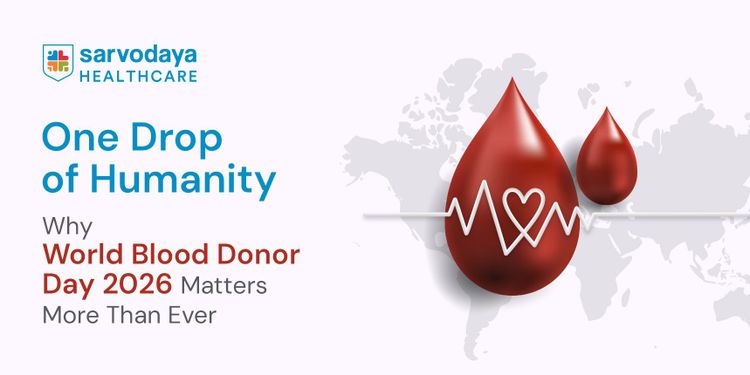
World Blood Donor Day 2026 is themed "One Drop of Humanity. Give Blood. Save Lives." The World Blood Donor Day theme represents the belief that every donated drop of blood contains the spirit of human unity and communal responsibility. Observed as an International Blood Donor Day, 14th June 2026, calls on individuals, healthcare institutions, and governments to champion voluntary, unpaid blood donation as a pillar of public health.
The Global and Indian Need for Safe Blood
The demand for safe blood is both urgent and persistent. According to the World Health Organisation, over 118 million blood donations are received worldwide each year, but supply regularly falls short of demand, especially in low- and middle-income countries where voluntary donation rates are low.
In India, hospitals that handle trauma cases, oncological treatments, and obstetric emergencies rely on constant access to blood. However, awareness of voluntary giving varies by community. World Blood Donation Day is an important annual opportunity to close this gap via education and community engagement. Facilities, including the best blood centres in metropolitan areas, are trying to increase voluntary donor registries and ensure blood is available when it is most required.
Eligibility to Donate Blood Safely
Blood donation is open to a broad range of individuals, provided they meet basic medical eligibility criteria.
The standard eligibility criteria for blood donation include:
● Age between 18 and 65 years, subject to medical assessment at the point of donation.
● Body weight of at least 50 kg.
● Haemoglobin levels within the acceptable threshold, as assessed at the donation centre.
● No recent history of fever, active infections, or transmissible diseases.
● No alcohol consumption within the 24 hours preceding donation.
● No pregnancy or recent childbirth, in the case of female donors.
Individuals who are uncertain about their eligibility are encouraged to consult qualified medical staff before proceeding.
Observing the Blood Donation Day
Blood Donor Day is celebrated with a variety of activities at the local, national, and international levels. Blood donation camps, awareness walks, and instructional sessions are often organised by hospitals, NGOs, and community organisations in the days leading up to June 14th.
Blood Donation Day 2026 invites people to engage in the following ways:
● Registering as a volunteer blood donor at a nearby hospital or donation drive.
● Raising awareness on social media with the official campaign hashtag.
● Organising donation camps in workplaces, colleges, or residential communities.
● Recognise and thank regular donors in one's community.
● Consult a healthcare expert if you are unsure about your eligibility or the donation process.
The Benefits of Donating Blood
Donating blood benefits both the recipient and the giver. Regular donation is connected with lower blood viscosity, which benefits cardiovascular health and helps the body regulate iron levels effectively. At the time of donation, each donor receives a quick health check, which may reveal previously unknown problems.
Aside from the physical benefits, blood donation promotes a strong sense of purpose and communal connection. This dual worth, to both the donor and those they assist, is precisely what distinguishes World Blood Donation Day as a celebration of not only charity, but also of the humanity that binds us all.
Conclusion
The observance of World Blood Donor Day on 14th June is a powerful reminder that no medical infrastructure can function without the commitment of voluntary donors. By donating regularly and encouraging others to do the same, each person strengthens a healthcare system that is better prepared to care for those in their most vulnerable moments.
Sarvodaya Hospital, Faridabad, is committed to supporting blood health awareness and providing comprehensive care to patients across the Delhi NCR region. With a team of expert haematologists, clinical counsellors, and a well-equipped facility, Sarvodaya offers structured guidance to individuals considering donation, those managing blood-related conditions, and patients requiring transfusions as part of ongoing treatment. Preventive consultation at Sarvodaya helps patients understand their eligibility, monitor their health proactively, and access the right specialist care before concerns develop into more complex medical situations.
If you or a loved one has questions about blood health, transfusion requirements, or any aspect of medical care this World Blood Donor Day, do not delay seeking professional advice. Take the first step towards a healthier tomorrow and book an appointment now.