
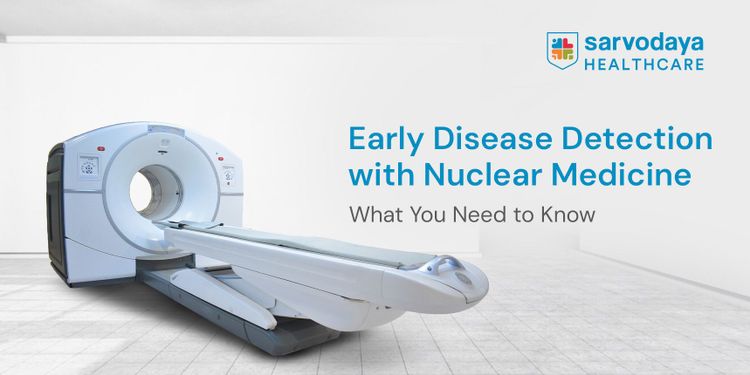


Modern medicine is increasingly focused on detecting disease before it causes noticeable symptoms, and diagnostic imaging has played a key role in this transition. Among the various techniques accessible to clinicians today, nuclear medicine stands out for its ability to disclose how tissues and organs operate at the cellular level, frequently well before structural abnormalities become visible on a conventional scan.
In this blog, we discuss how nuclear medicine helps in early disease detection, the role of the PET CT scan for early disease diagnosis, and how these advanced techniques support early disease detection with nuclear medicine.
Understanding Nuclear Medicine
Nuclear medicine is a type of medical imaging that uses small, safe doses of radioactive material, known as radiopharmaceuticals, to investigate how organs and tissues work. Unlike traditional imaging, which focuses on structure, nuclear medicine emphasises physiological activity, allowing problems to be detected long before they appear on an X-ray or ultrasound.
A well-equipped Nuclear Medicine Hospital in India usually combines functional imaging with contemporary scanning technology to provide a more complete diagnostic picture.
How Nuclear Medicine Helps in Early Disease Detection
Diseases often begin with subtle changes in cellular metabolism, blood flow, or organ function, long before they create visible symptoms or structural damage. Doctors can detect areas of abnormal activity in the body's absorption and processing of a radiopharmaceutical, which could suggest infection, inflammation, or cancer.
This makes Nuclear Medicine Early Disease Detection especially useful for illnesses where fast diagnosis improves treatment outcomes.
Read More - Nuclear Medicine and Radioiodine Therapy: New Hope for Cancer and Thyroid Patients
PET CT Scan for Early Disease Diagnosis
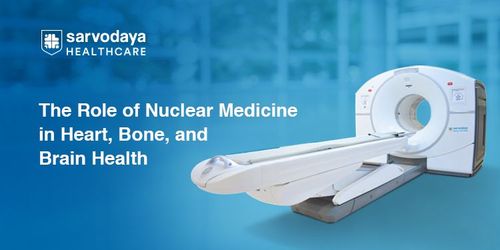
Among the several nuclear medicine techniques, the PET CT scan is one of the most popular and effective. It combines positron emission tomography with computed tomography to deliver both functional and anatomical information in a single study, allowing doctors to precisely define the location and extent of disease activity.
The following are some of the key applications of a PET CT scan for early disease diagnosis:
- Detecting Metabolic Changes: Identifies areas of abnormally high or low cellular activity that may indicate disease.
- Cancer Staging and Monitoring: Helps determine the extent of cancer spread and tracks response to treatment.
- Cardiac Assessment: Evaluates blood flow to the heart muscle to detect coronary artery disease.
- Neurological Evaluation: Assists in identifying conditions such as dementia and seizure disorders.
- Infection and Inflammation Detection: Locates hidden sources of infection that may be missed on other scans.
Nuclear Medicine for Early Cancer Detection
Cancer often develops silently, with cellular changes occurring long before a tumour becomes large enough to be detected by touch or traditional imaging. Nuclear medicine for early cancer detection addresses this by detecting abnormal metabolic activity in malignant cells.
Some of the ways molecular imaging for early cancer detection supports timely diagnosis are given below:
- Identifying Small Tumours: Detects cancerous growths that may not yet be visible on CT or MRI scans.
- Assessing Spread: Reveals whether cancer has spread to lymph nodes or distant organs.
- Guiding Biopsy: Helps direct biopsy needles to the most metabolically active areas for accurate sampling.
- Evaluating Treatment Response: Shows whether chemotherapy or radiotherapy is working effectively.
Read More - What Is Nuclear Medicine? Tests, Uses and Safety Explained
Thyroid Disorder Detection through Nuclear Medicine
The thyroid gland is particularly well suited to nuclear imaging, since it naturally absorbs iodine. Thyroid disorder detection through nuclear medicine typically involves a radioactive iodine uptake test or thyroid scan, helping doctors assess whether the gland is overactive, underactive or contains nodules needing further evaluation.
This allows conditions such as hyperthyroidism, hypothyroidism and thyroid nodules to be identified and monitored accurately.
Common Conditions Diagnosed Through Nuclear Medicine Imaging
Cancer diagnosis with PET CT and nuclear imaging is just one aspect of a larger diagnostic capability that includes cardiology, orthopaedics, and neurology.
Some of the conditions commonly diagnosed through nuclear medicine imaging are given below:
- Cardiovascular Disease: Assessing blood flow and heart muscle function.
- Bone Disorders: Identifying fractures, infections or bone metastases not visible on X-ray.
- Kidney Function Abnormalities: Evaluating how well each kidney is filtering and functioning.
- Neurological Conditions: Detecting early changes associated with memory disorders and epilepsy.
Why Choose an Advanced Nuclear Medicine Hospital
Accurate diagnosis is strongly dependent on the quality of the technology and the knowledge of the specialists who interpret the results. Choosing an advanced nuclear medicine hospital in Faridabad means that you have access to cutting-edge scanning technology as well as expert clinical guidance.
Some of the benefits of consulting a trusted nuclear medicine centre are given below:
- Modern Scanning Technology: Provides access to advanced PET CT and other nuclear imaging equipment for precise, reliable results.
- Specialist-Led Diagnosis: Ensures scan results are interpreted correctly and translated into an appropriate treatment plan.
- Experienced Clinical Oversight: Gives patients confidence through consultations with doctors who have deep expertise in nuclear medicine.
- Comprehensive Diagnostic Support: Integrates imaging with other specialities for a complete care pathway.
Conclusion
Early disease detection continues to change how cancer, thyroid diseases, and cardiovascular disease are diagnosed and treated. Nuclear medicine has become an essential component of modern diagnostic treatment since it detects functional abnormalities far before symptoms occur, allowing for earlier intervention and improved outcomes.
The Sarvodaya Hospital Nuclear Medicine & Nuclear Therapies Department in Faridabad offers advanced PET CT imaging, thyroid scans and a range of nuclear medicine techniques under the guidance of the most trusted nuclear medicine doctors in Delhi NCR. Compared to traditional imaging methods, which primarily capture structural detail, this functional approach allows abnormalities to be identified earlier and more precisely, often making a meaningful difference to treatment planning and recovery.
If you or a loved one requires expert diagnostic imaging, our team is here to guide you through every step of the process. Book an appointment now and take a proactive step toward early diagnosis and better health.