


When cancer surgery is recommended, one question often worries patients most: How much healthy tissue will also need to be removed?
The goal of cancer surgery is to remove the tumour completely while protecting as much healthy tissue and normal function as safely possible. Robotic cancer surgery can help surgeons achieve this balance in selected cancers.
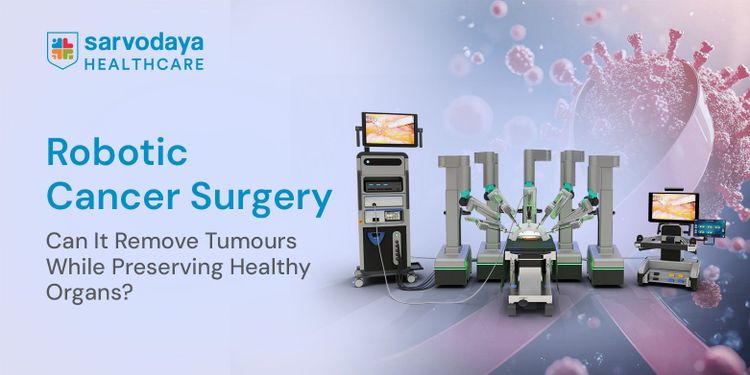
Robotic systems provide a magnified, three-dimensional view and allow surgeons to control small, flexible instruments with great precision. This can be particularly useful when a tumour lies close to delicate nerves, blood vessels or other important structures.
But there is an important distinction. The robot does not decide what to remove. The surgeon does. The technology helps the surgeon perform the planned operation with greater visibility, control and precision.
What Is Robotic Cancer Surgery?
Robotic cancer surgery is a form of minimally invasive surgery in which the surgeon uses a robotic system to perform the operation through small incisions.
The surgeon sits at a console and controls the instruments throughout the procedure. A high-definition camera provides a magnified, three-dimensional view of the area being operated on.
The instruments can also move with greater flexibility inside the body than conventional rigid instruments. This can make it easier to work in narrow or difficult-to-reach spaces.
So, the robot does not operate independently; it acts as an extension of the surgeon's hands.
Robotic surgery is also not a separate cancer treatment like chemotherapy or radiation. It is a surgical approach that can be used for selected cancer operations.
How Does Robotic Surgery Help Surgeons Remove Tumours More Precisely?
Cancer surgery often involves more than simply finding and cutting out a tumour.
A tumour may sit close to nerves that control bladder or sexual function. It may lie beside important blood vessels or within a deep part of the pelvis. In some cancers, surgeons also need to remove nearby lymph nodes to check or control the spread of disease.
This is where robotic technology can be useful.
The surgeon gets a magnified 3D view of the operating area. The robotic instruments can make controlled movements in confined spaces, helping the surgeon work around delicate structures.
This does not mean the surgeon automatically removes less tissue.
If cancer has involved surrounding tissue, that tissue may need to be removed to achieve proper cancer control. The real advantage is the ability to make carefully planned movements while clearly seeing the structures around the tumour.
Read More - Robotic Cancer Surgery: Revolutionising Cancer Treatment with Enhanced Precision
Can Robotic Surgery Remove a Tumour While Preserving Healthy Tissue?
In selected cancers, yes.
When a tumour is located near an important structure, the surgeon has to balance two goals: removing enough tissue to treat the cancer and avoiding unnecessary damage to healthy structures.
Robotic surgery can support this balance by providing better visualisation and instrument control.
Consider a kidney tumour as an example. If the tumour is suitable for kidney-preserving surgery, the aim may be to remove the tumour while retaining as much functioning kidney tissue as possible.
In prostate cancer, careful surgery around nearby nerves may help preserve functions such as urinary and sexual function when the cancer's location and extent allow it.
The same principle applies elsewhere. Preservation is considered only when it does not compromise cancer control.
That distinction matters because “organ preservation” does not mean keeping every part of an organ at any cost.
What Does “Organ Preservation” Actually Mean in Cancer Surgery?
Organ preservation sounds simple, but it can mean different things depending on the cancer.
Sometimes it means preserving as much functioning tissue as possible. In other situations, it means protecting nerves or nearby organs that are not affected by cancer.
For example:
- Kidney tumours: preserving healthy kidney tissue may help retain kidney function when appropriate.
- Prostate cancer: protecting nearby nerves may help preserve urinary and sexual function in suitable patients.
- Cervical cancer: certain procedures may preserve fertility in carefully selected patients.
- Ovarian cancer: surgery may aim to remove affected tissue while preserving healthy surrounding structures where medically appropriate.
- Colorectal cancer: careful dissection around nearby structures can help protect important tissues while removing the tumour and required lymph nodes.
The exact approach depends on the cancer's type, stage, size, location and relationship with surrounding structures.
So, the aim is not simply to remove less. It is to remove what needs to be removed, and protect what can safely be protected.
Read More - Robotic Surgery for Cancer: What Patients Should Know Before Choosing It
Which Cancers Can Be Treated With Robotic Surgery?
Robotic surgery can be considered for several cancers when the patient's disease and overall condition make the approach appropriate.
At Sarvodaya, robotic cancer surgery is offered for the following procedures:
Prostate Cancer
Robotic prostatectomy removes the prostate affected by cancer.
The prostate lies close to nerves and structures involved in urinary and sexual function. Robotic surgery can help surgeons work precisely around these structures when preservation is possible.
Cervical Cancer
Robotic hysterectomy or radical trachelectomy may be used for selected cervical cancers.
Radical trachelectomy can preserve the uterus in carefully selected patients who may wish to retain fertility. Whether this is possible depends on the cancer and its extent.
Kidney Tumours
Robotic nephrectomy can remove a kidney tumour while aiming to preserve kidney function when appropriate.
For selected early-stage tumours, surgeons may be able to remove the tumour while retaining healthy portions of the kidney.
Colorectal Cancer
Robotic colectomy or rectal resection can help surgeons work in the abdomen and deep pelvis.
The enhanced view and flexible instruments can be particularly useful when operating around structures in these confined areas. Cancer surgery may also involve removing nearby lymph nodes.
Thyroid Cancer
Robotic thyroidectomy is a minimally invasive approach used in selected cases.
It can provide an alternative surgical route that avoids a conventional large incision across the front of the neck. The suitability of this approach depends on the tumour and the patient's anatomy.
Lung Tumours
Robotic lobectomy removes the affected lobe of the lung in selected patients with lung tumours.
The procedure uses small chest incisions rather than the larger incision required for traditional open chest surgery.
Stomach Cancer
Robotic gastrectomy removes part or all of the stomach affected by cancer.
The enhanced view and instrument control can help surgeons work around delicate structures during this complex operation.
Pancreatic Cancer
The pancreas lies deep inside the abdomen and is surrounded by important blood vessels and other organs.
Robotic pancreatectomy can provide surgeons with enhanced visualisation and instrument control when removing selected pancreatic tumours.
Ovarian Cancer
Robotic ovarian cancer surgery may involve removing the ovarian tumour and affected tissues.
Where medically appropriate, surgeons may aim to preserve healthy surrounding structures while still achieving the required cancer treatment.
Oesophageal Cancer
Robotic oesophagectomy removes the diseased portion of the oesophagus.
The minimally invasive approach can provide enhanced visualisation and control while working in the chest and abdomen.
Bladder Cancer
Robotic cystectomy involves removing the bladder or affected portions of it, depending on the type of surgery required.
Robotic assistance can help surgeons perform precise movements in the pelvis while working around important structures.
The choice of procedure depends on the type and stage of cancer, tumour size and location, surrounding structures and the patient's overall health.
What Are the Benefits of Robotic Cancer Surgery?
Because robotic surgery is usually performed through smaller incisions, patients may experience several benefits compared with traditional open surgery.
These may include:
- Smaller surgical incisions and less visible scarring
- Less blood loss during some procedures
- Less postoperative pain
- Shorter hospital stays
- Faster recovery in appropriate cases
- Better access to deep or difficult-to-reach areas
- Greater precision when working around delicate structures
The extent of surgery still matters. A complex cancer operation remains major surgery even when performed robotically.
The benefit of the technology is that it can make certain operations less invasive without changing the fundamental goal: treating the cancer effectively.
Is Robotic Cancer Surgery Better Than Open Surgery?
Open surgery remains an important option for many cancers. In some situations, it may provide the best way to remove a large or complex tumour safely.
Robotic surgery may offer advantages when a minimally invasive approach can achieve the same cancer treatment while reducing surgical trauma.
The decision depends on several factors, including the tumour's size, location, and stage; nearby structures; previous surgeries; and the surgeon's assessment.
Who Is a Candidate for Robotic Cancer Surgery?
Not every patient with cancer is automatically a candidate for robotic surgery.
Before recommending it, the oncology team considers:
- The type of cancer
- The stage of cancer
- Tumour size and location
- Whether nearby organs or structures are involved
- Previous surgeries or cancer treatments
- Overall health and fitness for surgery
- Whether robotic surgery offers a meaningful advantage
Imaging, biopsy results and other investigations help the team understand the disease before choosing the surgical approach.
In complex cases, different cancer specialists may also review the patient's condition together before treatment is planned.
What Happens Before Robotic Cancer Surgery?
Robotic surgery begins long before the patient enters the operating room.
The cancer first needs to be accurately diagnosed and staged. This may involve imaging, biopsy, pathology and other investigations depending on the cancer.
The surgeon then studies the tumour's location and relationship with nearby structures. The team considers whether surgery is appropriate and whether the robotic approach can achieve the required cancer treatment safely.
The patient also undergoes a general health assessment to determine whether they are fit for anaesthesia and surgery.
This planning is important because the robot is only as useful as the surgical plan behind it.
Robotic Cancer Surgery at Sarvodaya Hospital
At Sarvodaya Hospital, robotic cancer surgery is supported by a 3rd Generation Smart Surgical Robot and a dedicated surgical oncology team.
The hospital currently lists robotic procedures for prostate, cervical, kidney, colorectal, thyroid, lung, stomach, pancreatic, ovarian, oesophageal and bladder cancers.
The approach combines minimally invasive surgery with the surgeon's control of the robotic system. Depending on the cancer, this can support precise tumour removal and careful work around delicate structures.
Sarvodaya's cancer care also brings together surgical oncology with other areas of cancer treatment. This allows the treatment plan to be based on the patient's complete cancer profile rather than the surgical technique alone.