
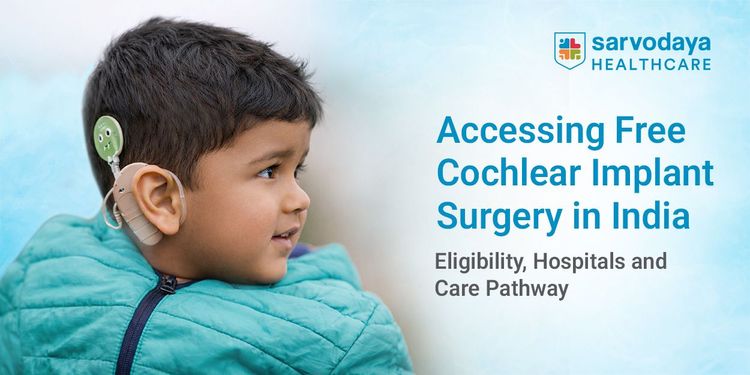


Hearing is fundamental to communication, learning and emotional development. When hearing loss occurs, it can quietly distance individuals from everyday interactions, often leading to frustration, isolation and delayed development.
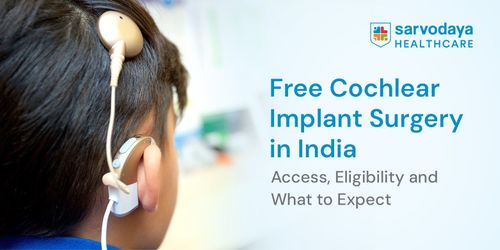
In this blog, we explain how free cochlear implant surgery in India at Sarvodaya Hospital, Sec 8, Faridabad, is helping individuals regain access to sound and speech.
Understanding Hearing Loss and Cochlear Implants
Hearing loss ranges from mild difficulty in understanding speech to profound deafness. While many people benefit from conventional hearing aids, some individuals experience inner ear damage so severe that amplification alone offers little improvement. In such cases, advanced hearing implants provide an effective alternative.
A cochlear implant is a medical device that bypasses damaged parts of the inner ear and directly stimulates the auditory nerve. Through cochlear implant surgery, patients gain access to meaningful sound, enabling speech development, learning and social participation.
Exploring Cochlear Implant Surgery
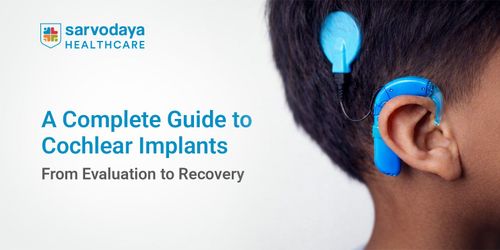
Cochlear implant surgery is a specialised surgery that places a small electronic device inside the inner ear to restore access to sound for individuals with severe hearing loss. The implant has two parts: an internal component placed beneath the skin and within the cochlea, and an external processor worn behind the ear. Together, they convert sound into electrical signals that stimulate the auditory nerve.
The surgery is safe, well-established, and performed under general anaesthesia. Most patients are discharged within a short hospital stay. After healing, the device is activated and adjusted through a structured rehabilitation programme. Surgery for cochlear implants does not immediately restore normal hearing, but with therapy and follow-up, patients learn to interpret sound effectively, enabling communication and learning.
Read More- Cochlear Implant Surgery - Procedure & Recovery
Government Support and Free Cochlear Implant Surgery in India
India has made significant progress in making advanced hearing care accessible through public health initiatives. Under national and state-funded programmes, free cochlear implant surgery in India is offered to eligible children and, in selected cases, adults. These schemes aim to reduce the long-term social and educational impact of profound hearing loss.
Through authorised hospitals under the Cochlear Implant India programme, eligible patients receive the implant device, surgery, and initial rehabilitation without a financial burden. These initiatives ensure that families from economically weaker backgrounds can access life-changing treatment that would otherwise remain out of reach.
Eligibility Criteria for Free Cochlear Implant Surgery
Clearly defined medical and socio-economic guidelines govern access to free cochlear implant surgery in India. Eligibility is determined through clinical evaluation and government verification.
The key criteria generally include:
- Severe to profound sensorineural hearing loss in one or both ears
- Minimal or no benefit from conventional hearing aids
- Preference for early intervention in children, usually between 1 and 5 years
- Medical fitness to undergo cochlear implant surgery
- Family income falling within government-defined limits
- Completion of required diagnostic tests and documentation
Final approval is granted only after assessment by an ENT specialist and an audiology team at an authorised centre.
Step-by-Step Process from Diagnosis to Surgery
The pathway from identifying hearing loss to receiving a cochlear implant follows a structured and medically supervised process. Each stage is designed to ensure accurate diagnosis, patient suitability and safe treatment delivery.
The typical journey includes the following steps:
- Comprehensive hearing assessment using audiometry, speech perception tests and imaging
- Clinical evaluation by an ENT specialist, often under the care of an experienced ENT surgeon in Delhi NCR or a recognised regional centre
- Confirmation of medical suitability for cochlear implant surgery
- Submission of documents for approval under the Cochlear Implant India schemes
- Pre-operative counselling for patients and families
- Performance of surgery for cochlear implant at an authorised hospital
- Device activation after healing, followed by structured rehabilitation
Recovery and Rehabilitation After Surgery
Postoperative recovery after cochlear implant surgery is usually not challenging, and most patients return home shortly after cochlear implant surgery. Slight pain or oedema in the area of the operation is normal and would go away with regular treatment. The implant is usually switched on a few weeks after it has healed.
The most significant part of the treatment is rehabilitation. Patients are taught to perceive sound and identify it through frequent mapping and sound training. In children, speech therapy is a significant part of language development. Follow-up is necessary to ensure the device continues to deliver optimal long-term benefit.
Read More- Cochlear Implant Surgery - Pros & Cons
Benefits of Early Cochlear Implant Intervention
The initial treatment determines how effectively an individual becomes accustomed to sound. Early implantation is beneficial in the development of natural speech and language in children and the maintenance of communication skills and independence in social life in adults.
The advantages of early intervention are:
- Improved speech and language acquisition in young children.
- Better academic preparation and school attendance.
- Improved socialisation and emotional confidence
- Maintaining the auditory pathways in adults.
- Minimised communication barriers in the long run.
- Greater independence in everyday life.
Early intervention enhances the functional and developmental benefits of modern hearing implants, making the results more robust throughout the lifetimes of families and patients.
Read More- India's Youngest Cochlear Implant Surgery on 5-month-old Baby
Living with a Cochlear Implant
A cochlear implant becomes a part of daily life, just as spectacles or a pacemaker do. Patients are taught to maintain the external processor, manage batteries, and protect the device during daily tasks. Follow-ups are conducted regularly to keep sound settings optimised as listening skills change.
With appropriate guidance, individuals adapt quickly and regain active participation in family, school and community life. Over time, most patients develop the ability to understand speech, recognise environmental sounds and communicate effectively, making the implant a lasting investment in independence and growth.
Conclusion
Through structured evaluation, expert surgical care and long-term rehabilitation, free cochlear implant surgery in India offers children and adults the opportunity to lead fuller, more connected lives with support from an experienced ENT Doctor in Faridabad.
Sarvodaya Hospital, Faridabad, stands as a trusted centre for comprehensive ENT and hearing care. With experienced specialists, advanced diagnostic facilities and integrated rehabilitation services, the hospital supports patients at every stage of cochlear implant surgery with guidance from a qualified ENT Specialist in Noida, non-profit CSR initiative, offers free cochlear implant surgery.
Take the first step towards better hearing and well-being and book an appointment now.