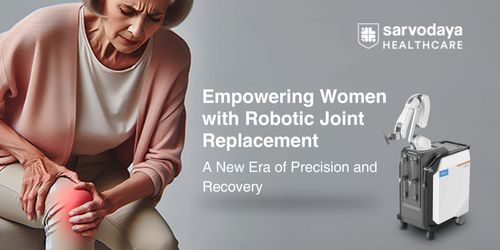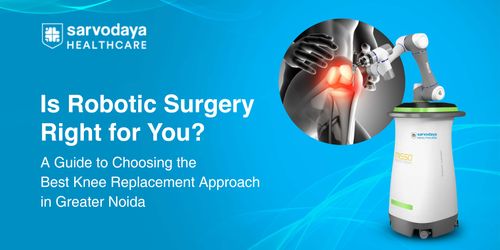

Robotic joint replacement may be recommended for patients with advanced joint damage, persistent pain and reduced mobility who require joint replacement surgery. The surgeon reviews imaging, joint alignment, medical history and overall health to determine whether robotic assistance is suitable.

Dr. Vivek Chandak
Senior Consultant (Unit II) - Orthopaedics & Robotic Joint Replacement
Specialization
- Orthopaedics
- Robotic Joint Replacement
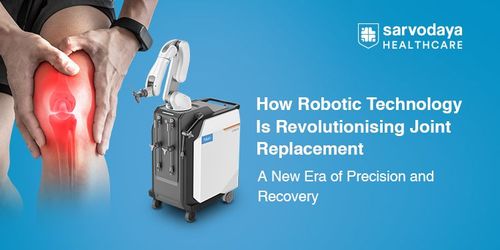
Robotic joint replacement is an advanced approach to orthopaedic surgery that uses robotic-assisted technology to support the planning and execution of selected joint replacement procedures. It may be considered for patients experiencing severe joint damage, persistent pain and reduced mobility.
A robotic knee replacement doctor in Mathura evaluates your symptoms, medical history, physical examination findings and imaging reports before recommending treatment. Robotic-assisted technology may support surgical planning, bone preparation and implant positioning in suitable cases.
At Sarvodaya Hospital, patients can consult a joint replacement specialist to understand whether robotic-assisted or conventional joint replacement is appropriate for their condition.
Conditions Treated by Robotic Joint Replacement Specialists
Robotic Joint Replacement may be considered when joint damage causes persistent pain, stiffness and difficulty performing daily activities. Conditions that may require joint replacement include:
Common Joint Conditions
- Osteoarthritis of the knee or hip
- Rheumatoid arthritis affecting the joints
- Advanced degenerative joint disease
- Post-traumatic arthritis
- Severe cartilage damage
- Joint deformities
- Selected fractures affecting the joint
- Avascular necrosis in suitable cases
When Is Robotic Joint Replacement Recommended?
A robotic joint replacement specialist in Mathura may recommend joint replacement when joint damage significantly affects your movement and quality of life.
Surgery may be considered when:
- Joint pain continues despite medicines and physiotherapy
- Pain affects walking, standing or daily activities
- Imaging shows advanced arthritis or structural damage
- Joint stiffness limits movement
- Non-surgical treatments no longer provide sufficient relief
- Joint damage causes difficulty with sleep, work or routine activities
- The patient is medically suitable for joint replacement
What Is Robotic Knee Replacement Surgery?
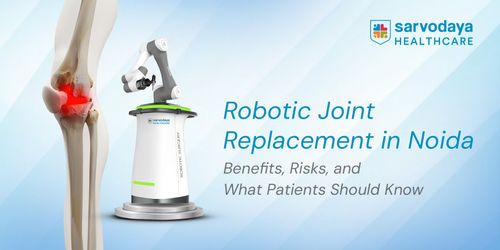
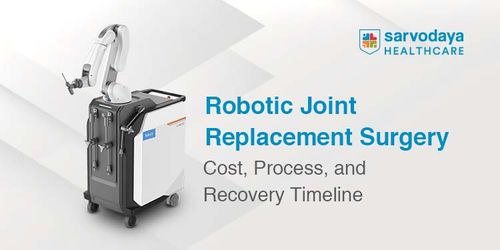
Robotic knee replacement is a surgical procedure in which robotic-assisted technology supports the surgeon during selected steps of knee replacement. The system may help with surgical planning, bone preparation and implant positioning, depending on the technology used.
The procedure generally involves the following stages:
- Pre-operative assessment: The surgeon reviews your symptoms, medical history, physical examination findings and imaging reports.
- Surgical planning: Anatomical information is used to plan the procedure according to your joint condition.
- Robotic-assisted preparation: The technology supports selected surgical steps based on the approved surgical plan.
- Implant placement: The surgeon positions the replacement components and remains responsible for clinical decisions.
- Recovery and rehabilitation: The care team guides movement, physiotherapy, pain management and follow-up appointments.
Benefits of Robotic Joint Replacement
Robotic-assisted joint replacement may offer potential benefits for suitable patients, including:
- Detailed pre-operative surgical planning
- Support for accurate bone preparation
- Assistance with implant positioning
- Planning based on individual joint anatomy
- Support in maintaining the planned surgical alignment
- Potentially improved consistency during selected procedures
Diagnostic Tests, Technology and Treatments Offered
Robotic joint replacement requires a detailed assessment of the joint, surrounding structures and the patient’s overall health. The diagnostic tests and technology used may vary according to the planned procedure and clinical requirements.
Diagnostic Tests and Technology
Assessment may include:
- Physical examination of the affected joint
- Review of medical history and symptoms
- X-rays and other relevant imaging tests
- Evaluation of joint alignment and mobility
- Pre-operative blood tests and medical assessment
- Digital surgical planning, where appropriate
- Advanced 3D models and state-of-the-art technology for detailed surgical planning
- Intraoperative measurements, depending on the robotic system
Joint Replacement Procedures
Depending on the diagnosis and clinical suitability, treatment options may include:
- Robotic-assisted knee replacement
- Partial knee replacement in selected patients
- Total knee replacement
- Hip replacement
- Revision joint replacement in appropriate cases
- Conventional joint replacement when clinically suitable
Recovery After Robotic Knee Replacement
Recovery after robotic knee replacement varies between patients. It depends on factors such as general health, age, muscle strength, type of procedure, pain management and participation in rehabilitation.
Recovery may involve:
- Early movement as advised by the surgical team
- Physiotherapy and prescribed exercises
- Pain and swelling management
- Gradual improvement in walking ability
- Follow-up consultations
- A gradual return to daily activities
Why Choose Sarvodaya Hospital for Robotic Joint Replacement?
When choosing a joint replacement surgeon in Mathura, you should consider the surgeon’s qualifications, experience, treatment approach, hospital facilities and rehabilitation support.
- Assessment by a joint replacement specialist
- Evaluation of joint pain, stiffness and mobility concerns
- Review of diagnostic imaging
- Discussion of surgical and non-surgical treatment options
- Planning for robotic-assisted surgery where appropriate
- Post-operative monitoring and rehabilitation guidance
FAQs
What is robotic knee replacement surgery?
Robotic knee replacement is a procedure in which robotic-assisted technology supports the surgeon during surgical planning and selected steps of knee replacement. The surgeon controls the procedure and makes clinical decisions based on the patient’s anatomy and surgical requirements.
What are the benefits of robotic joint replacement?
Potential benefits include detailed surgical planning, support with bone preparation and assistance with implant positioning. However, outcomes depend on the patient’s condition, surgical technique, rehabilitation and overall health. Robotic surgery does not guarantee the same outcome for every patient.
Who is a suitable candidate for robotic knee replacement?
A suitable candidate may have advanced knee arthritis, persistent pain, reduced mobility and insufficient relief from non-surgical treatment. The surgeon also considers bone condition, joint deformity, medical history and whether the available robotic technology is appropriate for the planned procedure.
How is robotic knee replacement different from traditional surgery?
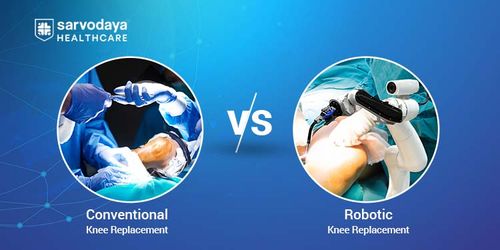
Robotic knee replacement uses technology to support surgical planning and selected operative steps, while conventional surgery uses traditional instruments and techniques. In both approaches, the orthopaedic surgeon performs the procedure and remains responsible for treatment decisions and patient safety.
How long does recovery take after robotic knee replacement?
Recovery depends on the patient’s health, procedure, rehabilitation and surgical findings. Some patients may begin walking with support shortly after surgery, while full recovery may take several weeks or months. Your surgeon and physiotherapist will provide guidance based on your progress.
When should I consult a joint replacement specialist?
You should consult a joint replacement specialist if you experience persistent joint pain, stiffness, swelling or difficulty walking despite treatment. Consultation is also advisable when arthritis affects your sleep, work or daily activities, or when imaging indicates significant joint damage.
How do I choose a robotic joint replacement surgeon in Mathura?
Consider the surgeon’s qualifications, joint replacement experience, familiarity with robotic-assisted procedures and the hospital’s rehabilitation support. Ask about the recommended treatment, possible risks, expected recovery and whether conventional surgery may also be suitable for your condition.
What conditions may require joint replacement surgery?
Joint replacement may be considered for advanced osteoarthritis, rheumatoid arthritis, post-traumatic arthritis, severe cartilage damage, joint deformity and selected cases of avascular necrosis. Surgery is generally considered when pain and functional limitations continue despite appropriate non-surgical treatment.
Where can I consult a robotic joint replacement specialist in Mathura?
You can contact Sarvodaya Hospital, Mathura, to enquire about consultation with a robotic joint replacement specialist, knee replacement doctor or orthopaedic surgeon. The hospital team can guide you regarding specialist availability, evaluation, treatment options and the suitability of robotic-assisted surgery for your condition.
Doctors
- Robotic Joint Replacement Doctor in Delhi
- Robotic Joint Replacement Doctor in Agra
- Robotic Joint Replacement Doctor in Noida
- Robotic Joint Replacement Doctor in Aligarh
- Robotic Joint Replacement Doctor in Faridabad
- Robotic Joint Replacement Doctor in Srinagar
- Robotic Joint Replacement Doctor in Gwalior
- Robotic Joint Replacement Doctor in Jhansi
- Robotic Joint Replacement Doctor in Greater Noida
- Robotic Joint Replacement Doctor in Jaipur Rajasthan
- Robotic Joint Replacement Doctor in Jalandhar Punjab
Our Specialities
- Medical Oncology Doctor in Mathura
- Surgical Oncology Doctor in Mathura
- Radiation Oncology Doctor in Mathura
- Genomic Oncology Doctor in Mathura
- Paediatric Oncology Doctor in Mathura
- Neurology Doctor in Mathura
- Cardiology Doctor in Mathura
- Orthopaedics Doctor in Mathura
- Rheumatology Doctor in Mathura
- Cancer Doctor in Mathura
- Endocrinology Doctor in Mathura
- Neurosurgeon Doctor in Mathura
- Spine & Arthroscopy Doctor in Mathura
- Gastroenterology Doctor in Mathura
- Cardiothoracic and Vascular Surgery (CTVS) Doctor in Mathura
- Paediatric Cardiac Surgery Doctor in Mathura
- Joint Pain Treatment Doctor in Mathura
- Ear, Nose, Throat (ENT) Doctor in Mathura
- Nephrology Doctor in Mathura
- Dermatology Doctor in Mathura
- Urology Doctor in Mathura
- Pulmonology Doctor in Mathura
- Internal medicine Doctor in Mathura
- Paediatrics Doctor in Mathura
- Obstetrics & Gynaecology Doctor in Mathura
- Ophthalmology (Eye Care) Doctor in Mathura
- Endocrinology & Diabetes Doctor in Mathura
- Psychiatry Doctor in Mathura
- Minimally invasive surgery Doctor in Mathura
- Critical Care Doctor in Mathura
- Fetal Medicine Doctor in Mathura
- Minimally Invasive and Laparoscopic Surgery Doctor in Mathura Doctor in Mathura