


Radiation therapy is one of the most common and effective standard treatments for cancer. If you have been advised to undergo radiation therapy, one of your first questions may be, “How many days will I need to go to the hospital?”
The answer depends on your cancer, treatment goal, radiation dose and the technique being used. Some people receive radiation therapy once a day for several weeks, while selected patients may complete treatment in just a few sessions.
Understanding the treatment schedule can make the process feel more predictable. It also helps to know why radiation is sometimes spread over several weeks and when shorter schedules may be appropriate.
How Many Days Does Radiation Therapy Usually Take?
For many cancers treated with external beam radiation therapy, treatment is given once a day, five days a week, from Monday to Friday.
A conventional course may continue for several weeks. NCI notes that external beam radiation therapy can commonly last around 2 to 10 weeks, depending on the cancer and treatment plan.
However, this does not mean every patient needs daily treatment for several weeks.
Some treatment plans use larger doses per session, allowing the total number of visits to be reduced. These approaches are called hypofractionation or, in selected cases, stereotactic radiation therapy.
Your radiation oncologist chooses the schedule based on what provides the best balance between treating the cancer and protecting nearby healthy tissues.
Read More - Radiation Therapy an Evolving Cancer Treatment
How Many Radiation Therapy Sessions Will I Need?
There is no single number of radiation therapy sessions that applies to everyone.
The number of sessions depends on factors such as:
- Type and stage of cancer
- Size and location of the tumour
- Treatment goal
- Total radiation dose required
- Nearby organs and healthy tissues
- Type of radiation therapy being used
For example, conventional external beam radiation may involve daily sessions over several weeks. Selected treatments using SRS or SBRT may be completed in one to five sessions.
The important point is that fewer sessions do not automatically mean better treatment. The schedule must deliver an effective dose while keeping normal tissue exposure within safe limits.
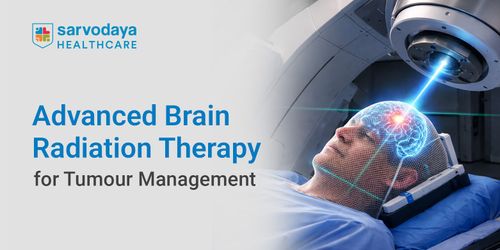
Read More - Advanced Brain Radiation Therapy for Tumour Management
Why Is Radiation Therapy Given Over Multiple Sessions?
Radiation therapy is often divided into multiple smaller doses called fractions.
This schedule allows cancer cells to receive repeated radiation exposure while giving healthy cells time to recover between treatments. It can also help doctors deliver the total prescribed dose in a way that suits the cancer and the surrounding tissues.
Think of the total radiation dose as a treatment plan that needs to reach a specific target. Instead of delivering the entire dose at once, doctors may divide it into carefully calculated portions.
The number of fractions therefore forms an important part of the treatment plan, rather than simply determining how often you need to visit the hospital.
How Often Do You Get Radiation Therapy?
With conventional external beam radiation therapy, treatment is commonly given once a day, five days a week.
Weekends are usually treatment-free, allowing patients to rest while the treatment course continues.
However, radiation therapy schedules can vary. Some patients may receive treatment more frequently, while others may have fewer sessions with a higher dose per treatment.
Your radiation oncologist will explain your individual schedule before treatment begins. You should not compare your number of sessions with another patient's schedule because two cancers can require very different radiation plans.
How Long Is One Radiation Therapy Session?
A radiation therapy appointment may take around 10 to 30 minutes, although the actual radiation delivery usually takes only a small part of that time.
Much of the appointment involves positioning you correctly and making sure the treatment area is aligned with the treatment plan.
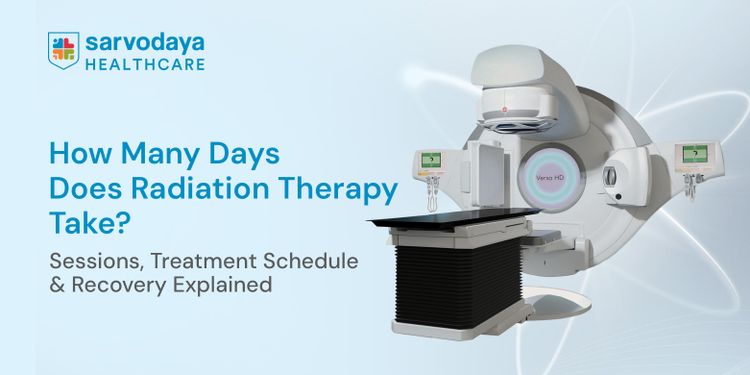
During external beam radiation therapy, you lie on a treatment table while a linear accelerator delivers radiation from carefully planned angles. You generally do not feel the radiation itself.
Most external beam radiation treatments are also given on an outpatient basis. This means you can usually return home after your session instead of staying in the hospital overnight.
Read More - CAR T-सेल थेरेपी: कैंसर के इलाज में एक नई उम्मीद
What Happens Before Radiation Therapy Starts?
Radiation therapy does not usually begin immediately after your doctor recommends it.
First, your radiation oncology team develops a treatment plan specifically for you. Imaging scans help identify the tumour and its relationship with nearby organs and tissues.
You may undergo a simulation session, where your treatment position is carefully established. The team may also use positioning devices or markings to help you remain in the same position during each treatment.
Your radiation oncologist then determines:
- Where the radiation needs to be directed
- How much radiation should be delivered
- How many sessions are needed
- Which technique is most appropriate
- How nearby healthy tissues can be protected
This planning stage is essential because radiation therapy is not simply about delivering a powerful dose. It is about delivering the right dose to the right place.
Can Radiation Therapy Be Completed in Fewer Days?
Yes, in selected cases.
Some cancers can be treated using hypofractionated radiation therapy, which delivers a larger dose during each session. This can reduce the total number of treatment visits.
Techniques such as SRS and SBRT can deliver highly focused radiation to selected small or well-defined tumours. Depending on the cancer and treatment plan, these approaches may require only a few sessions.
For example, some stereotactic body radiation treatments can be completed in one to five sessions for selected cancers.
However, a shorter treatment course is not suitable for every patient.
Your radiation oncologist considers the tumour, surrounding organs, treatment goal and the dose that can be safely delivered before choosing a shorter schedule.
How Is Radiation Therapy Planned to Protect Healthy Tissue?
Modern radiation therapy focuses not only on treating the tumour but also on limiting unnecessary radiation exposure to nearby healthy tissues.
Intensity-modulated radiation therapy (IMRT) can vary the intensity of radiation beams and shape the dose around the tumour. Image-guided radiation therapy (IGRT) uses imaging during treatment to help confirm positioning and make adjustments when necessary.
Other techniques may be useful for specific situations. These include stereotactic radiotherapy, respiratory gating and four-dimensional imaging for tumours affected by breathing or movement.
The goal is not simply to make treatment faster. It is to deliver radiation accurately while balancing tumour control with healthy tissue protection.
This is one reason modern radiation oncology involves detailed planning before the first treatment session.
Does Radiation Therapy Cause Side Effects?
Radiation therapy can cause side effects, but they vary according to the treatment area, radiation dose and individual patient.
Common effects can include fatigue and skin changes in the treated area. Other effects depend on which part of the body receives radiation.
Side effects may develop during treatment and can become more noticeable as the course progresses. Many common side effects begin improving after treatment ends, although recovery varies between patients.
Your treatment team monitors these effects and can recommend ways to manage them throughout the treatment course.
How Long Does It Take to Recover After Radiation Therapy?
Recovery after radiation therapy varies from person to person.
Some patients continue many normal activities during treatment and recover quickly afterwards. Others may experience fatigue or treatment-specific effects for several weeks.
Many common side effects slowly improve in the first few weeks of treatment.
Your recovery also depends on whether radiation therapy was given alone or alongside surgery, chemotherapy, immunotherapy or other cancer treatments.
What Can Make Radiation Therapy Take Longer?
The number of treatment days can change depending on your cancer and the purpose of radiation therapy.
Treatment may take longer when:
- A larger treatment area needs to be covered
- The cancer requires a conventional fractionation schedule
- Radiation is being combined with other treatments
- The treatment plan requires careful protection of nearby organs
- Your radiation oncologist determines that a slower schedule is safer or more appropriate
Treatment interruptions can also affect the overall schedule. If you are unwell or experience significant side effects, speak with your treatment team rather than stopping treatment on your own.
Does Radiation Therapy Hurt?
External beam radiation therapy is generally painless. During treatment, you lie comfortably on a treatment table while the machine delivers radiation to the planned treatment area.
You do not feel the radiation as it is delivered. The treatment itself is usually brief, although positioning and preparation may take most of the appointment.
Some people may develop temporary effects such as fatigue or skin changes during the course of treatment. These effects depend on the area being treated and usually improve after treatment.
Your radiation oncology team monitors your health throughout treatment and guides you on managing any treatment-related effects.
Radiation Therapy at Sarvodaya Cancer Institute
Radiation therapy works best when the treatment plan is tailored to the cancer rather than based on a standard number of sessions.
At Sarvodaya Cancer Institute, the Radiation Oncology team provides conventional and advanced radiotherapy approaches for different cancers. The department uses the VERSA HD 6D Couch LINAC along with techniques including IMRT, IGRT, SRS and SBRT.
The technology supports image-guided treatment, precise radiation delivery and specialised approaches for selected tumours. Techniques such as respiratory gating and 4D CBCT can also help manage tumours that move with breathing.
The treatment plan is determined according to the cancer type, stage, location, treatment goal and individual patient factors.
This means the focus is not simply on finishing radiation therapy in fewer days. It is on choosing an appropriate treatment schedule and delivering radiation as precisely as possible.