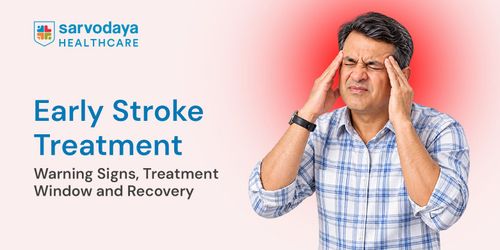

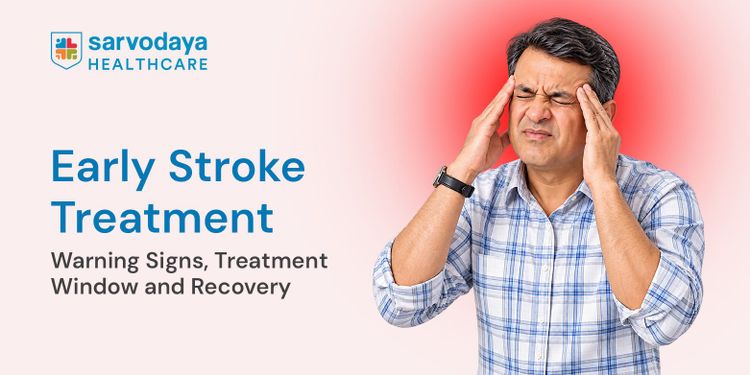


Your father is talking to you, but his voice begins to slur.
He struggles to raise his right arm, which falls several times, and one side of his face appears to droop.
For a moment, you wonder:
“Could he just be tired?”
“Should we wait and see if it passes?”
“Maybe I should call our family doctor first.”
However, weakness of the face or arm or speaking difficulties would never be a wait-and-watch situation, as they could be the early stroke symptoms and require immediate attention.
In this blog, we will explain why early stroke treatment matters, what happens during stroke emergency treatment, and how timely care may support stroke recovery.
Stroke Treatment at a Glance
Quick Answer: A stroke develops when the blood supply to an area of the brain is cut off, either by a blockage or bleeding from a damaged blood vessel. Call an emergency ambulance immediately if stroke symptoms appear. Prompt evaluation allows doctors to establish the kind of stroke and check whether the patient qualifies for treatments with limited time windows.
Why Every Minute Matters During a Stroke
Brain tissue requires a steady flow of oxygen-rich blood. A stroke disrupts this flow in the affected area.
A delay in treatment may allow the damage to affect a larger area of the brain. This can affect movement, speech, vision, memory, swallowing or other functions, depending on the affected area.
Stroke treatment time includes the journey and hospital admission. The patient also needs an examination, brain imaging and other assessments.
Therefore, neurological emergency care should be sought immediately after possible stroke symptoms appear.
Recognising the Early Signs of Stroke
Stroke symptoms commonly begin suddenly.
The FAST method can help you remember some of the main warning signs:
- Face: The face may feel numb or appear uneven on one side.
- Arms: One arm feels weak, numb or difficult to lift
- Speech: The person may struggle to speak clearly or produce understandable words.
- Time: Call an emergency ambulance immediately
Other possible early stroke symptoms include:
- Sudden weakness or numbness on one side of the body
- Sudden loss of balance or coordination
- Difficulty walking
- Sudden blurred, reduced or double vision
- Confusion or difficulty understanding speech
- An intense headache that starts suddenly and has no clear explanation
The Right Response When Stroke Symptoms Appear
If a stroke is suspected, note the time at which symptoms started. If the symptoms were first noticed upon waking, then note the last known time the person was well.
Call an emergency ambulance and take them to a stroke treatment hospital without delay.
While waiting for medical help:
- Keep the person safe and comfortable
- Loosen tight clothing around the neck
- Support them if they are weak or likely to fall
- Avoid giving food, water or oral medicines
- Do not give aspirin unless a doctor specifically advises it
- Keep information about their medicines and medical history ready
Do not spend time searching online for the best neurologist for stroke before leaving. Emergency assessment comes first. A stroke doctor or emergency team can begin the necessary evaluation after the patient reaches the hospital.
What Happens at a Stroke Specialist Hospital
The initial emergency evaluation aims to establish whether a stroke has occurred and determine which type it may be.
At a stroke specialist hospital, the emergency team may perform:
- A neurological examination
- Blood pressure and blood glucose assessment
- Blood tests
- A CT scan or MRI of the brain
- Scans of the blood vessels within the brain, when considered necessary
- Heart rhythm tests, such as an ECG
Brain imaging helps doctors distinguish between the two main types of stroke.
An ischaemic stroke develops when a clot obstructs an artery carrying blood to the brain. A haemorrhagic stroke results from bleeding caused by a leaking or ruptured blood vessel.
The neurologist for stroke considers the scan results, severity of symptoms, when the stroke occurred, medical history and current medications.
IV Thrombolysis for Ischaemic Stroke
IV thrombolysis is a treatment that uses medicine given through a vein to dissolve a blood clot. This treatment may reopen the blocked vessel and improve circulation in the affected area.
For many eligible patients, IV thrombolysis is considered within 4.5 hours of the onset of symptoms, or the time that the person was last known to be well. Some patients may still be considered after the usual window if advanced scans and specialist evaluation indicate that treatment could help.
Reaching the hospital within 4.5 hours does not automatically mean that a person can receive thrombolysis.
The stroke specialist considers factors such as:
- The type of stroke
- Brain scan findings
- The severity and nature of symptoms
- The time symptoms began
- Bleeding risk
- Recent surgery or injury
- Current blood-thinning medicines
- Blood pressure and other medical conditions
Other Early Treatments for Stroke
IV thrombolysis is only one possible form of stroke emergency treatment.
People with blockage in a major artery of the brain may also be eligible for a surgery called mechanical thrombectomy, which removes blood clots using a thin, flexible tube called a catheter and a device.
Thrombectomy is most effective when performed as soon as possible and is appropriate for select patients hours after onset (up to 24 hours in some cases) depending on the location of the clot, brain imaging and other clinical factors.
Treatment for a haemorrhagic stroke may involve:
- Careful control of blood pressure
- Medicines to reverse the effects of blood thinners
- Management of pressure inside the skull
- Neurosurgical or other specialist surgeries when required
A neurology hospital with emergency imaging and multidisciplinary support can assess which approach may be appropriate.
Early Care Can Support Stroke Recovery
Early treatment cannot guarantee complete recovery. However, timely treatment may limit brain damage in eligible patients and improve the possibility of regaining function.
Rehabilitation and stroke recovery care may start while the patient is still in the hospital. Once the patient is medically stable, the care team may assess movement, communication, swallowing, thinking and the ability to perform everyday activities.
Rehabilitation may include:
- Physiotherapy for movement, strength and balance
- Speech and language therapy
- Swallowing assessment and therapy
- Occupational therapy for daily activities
- Cognitive or psychological support
- Nutritional guidance
- Medicines and risk-factor management to help prevent another stroke
Factors That Influence Recovery
Every stroke affects the brain differently. The extent and pace of recovery may depend on:
- The area of the brain affected
- The size and severity of the stroke
- How quickly treatment begins
- The person’s age and general health
- Existing conditions such as diabetes or heart disease
- Complications during or after the stroke
- Access to rehabilitation
- Participation in recommended therapy
- Support from family and caregivers
Continuing Care with a Neurologist
Follow-up care continues even after the patient leaves the hospital. Visiting a stroke specialist can help you monitor recovery and manage factors that may increase the risk of another stroke.
During a neurology consultation, the doctor may review:
- Blood pressure, diabetes and cholesterol
- Heart rhythm problems
- Medicines and possible side effects
- Changes in movement, speech or memory
- Progress with rehabilitation
- Mood, sleep and emotional well-being
- Warning signs that require urgent care
A neurologist consultation is also important if new symptoms appear or recovery suddenly worsens.
Conclusion
A stroke can happen anytime - during a conversation, meal, or morning routine - but the sooner it is identified and the hospital is reached, the better the opportunity for medical staff to assess and consider treatment options.
Sarvodaya Hospital provides emergency assessment, brain imaging, critical care, specialist evaluation and rehabilitation support for patients requiring stroke care. Patients and families looking for a trusted neurology hospital in India can consider the availability of round-the-clock emergency care, trained specialists, imaging facilities and rehabilitation services when choosing a hospital.
For follow-up care, consult a stroke doctor and book an appointment now.