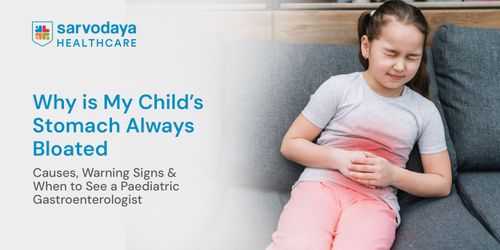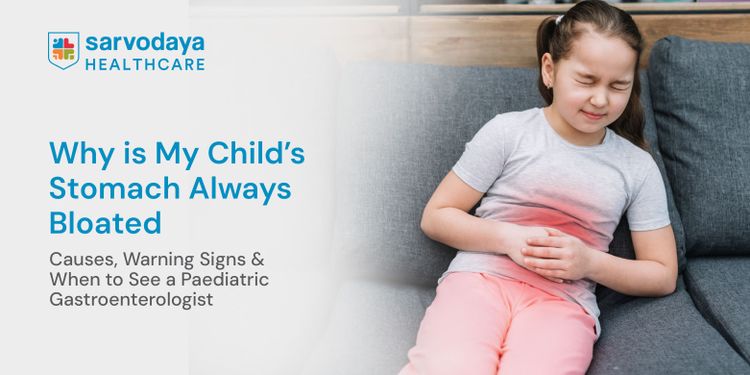


A child’s tummy can look bigger after a large meal, and occasional bloating is usually nothing unusual.
But what if your child’s stomach looks swollen most of the time, keeps becoming bloated after meals, or comes with constipation, loose stools or stomach pain?
Persistent abdominal bloating can have several explanations. Sometimes it is as simple as constipation or excess gas. In other children, recurring bloating may point to a food intolerance, coeliac disease or another digestive problem that needs evaluation.
The useful clue is often what happens along with the bloating.
Is It Really Bloating, or Does Your Child Simply Have a Round Tummy?
Children can naturally have a rounded abdomen, particularly when they are young.
Bloating is different. The abdomen may feel fuller or tighter than usual, appear more distended, or become noticeably larger at certain times of the day.
A useful thing to notice is whether the appearance changes.
If your child's tummy becomes bigger after meals and settles later, digestive gas or food-related triggers may be involved. If it remains persistently distended, especially alongside changes in bowel habits, appetite or growth, it deserves closer attention.
Constipation in Children
Constipation is one of the most easily missed reasons for a child's bloated stomach.
A child does not necessarily need to say, “I am constipated.” They may simply pass hard stools, go several days without passing stool, strain during bowel movements or deliberately hold their stool.
When stool builds up in the intestine, it can contribute to abdominal swelling, discomfort and bloating. Some children may even have loose-looking stool leak around the retained stool, which parents can mistake for diarrhoea.
Clues that constipation may be behind the bloating
Look for:
- Hard, dry or large stools
- Pain or difficulty while passing stool
- Fewer bowel movements than usual
- Stool withholding or avoiding the toilet
- Stomach pain that improves after passing stool
- Bloating or abdominal swelling
If constipation keeps returning, treating only the bloating will not solve the underlying problem.
Does Your Child Get Bloated After Drinking Milk?
If bloating appears repeatedly after milk or other dairy products, lactose intolerance is one possibility.
Lactose is the natural sugar in milk. When the body does not produce enough lactase, the enzyme needed to digest lactose, undigested lactose reaches the large intestine, where bacteria break it down and produce gas.
This can lead to bloating, gas, cramps and diarrhoea, often within hours of consuming dairy.
But parents should not automatically remove all dairy from a child's diet based on bloating alone. Children need adequate nutrition for growth, and the cause of recurring symptoms should be established before making major dietary changes.
What If Bloating Comes With Diarrhoea, Constipation or Poor Growth?
This combination deserves more attention than bloating on its own.
For example, coeliac disease can cause abdominal bloating or distension along with diarrhoea, constipation, gas and stomach discomfort. In children, poor absorption of nutrients can also affect weight gain and growth.
Some children may not have dramatic digestive symptoms. Instead, the clues may be more subtle:
- Slow weight gain
- Poor height gain
- Persistent tiredness or irritability
- Anaemia
- Recurrent digestive complaints
- A persistently swollen abdomen
- Bulky or unusually foul-smelling stools
This is one reason persistent bloating should not always be dismissed as “gas.”
Important: If coeliac disease is being considered, do not start a gluten-free diet before speaking with your doctor. Removing gluten can affect the accuracy of coeliac testing.
Could the Food Be the Problem?
Sometimes, yes. But “food intolerance” is broader than simply saying a child has a sensitive stomach.
Certain carbohydrates and foods can produce more gas or digestive symptoms in some children. Lactose is one example. Other digestive conditions can also cause bloating, so repeatedly removing foods without understanding the pattern can unnecessarily restrict a child's diet.
Instead of asking only “What food should I stop giving?”, it is more useful to notice:
What does your child eat, when does the bloating appear, and what other symptoms occur with it?
Keeping a simple food-and-symptom record for a few days can help your paediatrician identify useful patterns.
When Is a Bloated Stomach More Than Just Gas?
Occasional gas is common. Persistent bloating becomes more important when it is accompanied by other symptoms.
Speak with your child's paediatrician if bloating keeps returning or occurs with:
- Persistent or recurrent abdominal pain
- Constipation that does not improve
- Recurrent diarrhoea
- Vomiting
- Blood in the stool
- Unexplained weight loss
- Poor weight gain or slowed growth
- Significant fatigue or paleness
- A steadily increasing abdominal swelling
These symptoms do not automatically mean that your child has a serious disease. They simply help doctors decide whether further evaluation is needed.
What Does a Paediatric Gastroenterologist Actually Look For?
A paediatric gastroenterologist does not start by ordering every possible test.
The first step is usually understanding the pattern.
The doctor may ask about:
- When the bloating started
- Whether it changes after meals
- Bowel movement frequency and stool appearance
- Milk and other dietary triggers
- Abdominal pain, vomiting or diarrhoea
- Appetite and energy levels
- Weight and height over time
- Previous infections or medications
- Family history of digestive or autoimmune conditions
Your child's growth chart can be particularly useful. A digestive problem that affects nutrient absorption may show up as difficulty gaining weight or height.
Depending on the findings, the doctor may recommend blood tests, stool tests, imaging or other investigations.
Why Your Child's Growth Matters When Evaluating Bloating
A child's digestive system does more than process food. It also needs to absorb the nutrients required for growth.
That is why bloating plus poor growth is more significant than bloating alone.
Conditions such as coeliac disease can interfere with nutrient absorption and may affect a child's weight, height and overall development.
For this reason, your child's height and weight trends can sometimes provide important clues even when the digestive symptoms seem mild.
Can You Treat a Child's Bloating at Home?
For occasional bloating, simple measures may help.
Encouraging regular bowel habits, adequate fluids, physical activity and a balanced diet can support healthy digestion. If constipation appears to be contributing, your paediatrician can guide you on an appropriate bowel-management plan.
However, persistent bloating should not be managed by repeatedly removing foods or giving medicines without understanding the cause.
Children are still growing, so unnecessary dietary restrictions can affect their nutritional intake.
When Does a Child Need a Paediatric Gastroenterologist?
Your paediatrician may refer your child to a paediatric gastroenterologist when digestive symptoms are persistent, recurrent or affecting nutrition and growth.
Specialist evaluation may be particularly useful when bloating occurs with:
- Ongoing abdominal pain
- Recurrent constipation or diarrhoea
- Poor weight gain or slowed growth
- Recurrent vomiting
- Blood in the stool
- Suspected food intolerance
- Suspected coeliac disease
- Persistent symptoms despite basic dietary or bowel-management measures
A paediatric gastroenterologist can help identify whether the problem is related to bowel habits, food digestion, nutrient absorption or another gastrointestinal condition.
A Bloated Stomach Is a Symptom, Not a Diagnosis
The same symptom can have very different causes.
For one child, persistent bloating may improve once constipation is treated. For another, symptoms may repeatedly follow dairy intake. In another child, bloating combined with poor growth may prompt evaluation for a condition affecting nutrient absorption.
The aim is therefore not to find a single “best food for bloating.” It is to understand why your child's abdomen is becoming distended in the first place.
Paediatric Gastroenterology Care at Sarvodaya
At Sarvodaya, paediatric gastroenterology care focuses on evaluating digestive symptoms in children while considering their nutrition, growth and overall development.
The assessment can help identify the underlying cause of persistent symptoms and guide appropriate dietary, medical or further specialist management.
For parents, the goal is not simply to reduce bloating. It is to understand what is causing it and whether it is affecting the child's health or growth.