
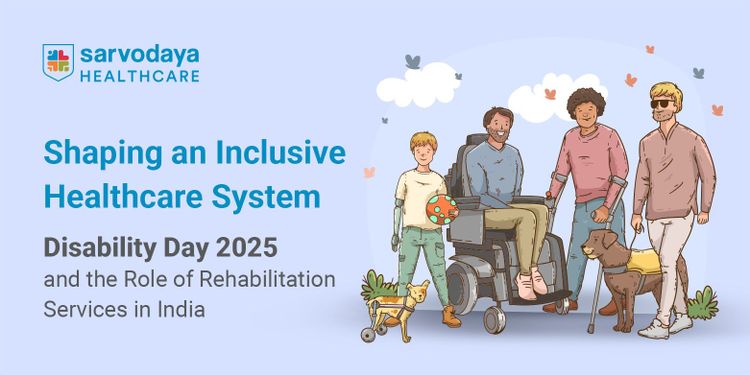


Every year, International Disability Day 2025 reminds the world that real progress lies in empowering every individual to live with dignity, comfort and opportunity. It is a call to acknowledge the rights of persons with disabilities and focus on their physical, social and emotional well-being. Celebrated on 3 December, this year places special emphasis on accessibility, rehabilitation and equal access to medical support across India.
In this blog, we explore why disability awareness 2025 plays a vital role in creating a sensitive and inclusive society and how improvements in accessible healthcare and rehabilitation can support physical recovery, emotional strength and independence.
Understanding Disabilities Beyond the Physical
Disability is not limited to restricted body function or movement. It can affect speech, senses, learning, communication and social interaction. While many associate disabilities mainly with mobility limitations, the reality is much broader and often deeply personal. People living with disabilities may struggle with daily tasks, but they also experience invisible challenges such as anxiety, social withdrawal and emotional fatigue.
A world with true disability awareness in 2025 acknowledges these unseen barriers and takes steps to reduce them. Communities, workplaces and schools need to build environments where individuals feel confident, independent and valued rather than limited by their condition.
Rehabilitation as a Foundation for Independent Living
Rehabilitation plays a critical role in supporting people with disabilities to regain strength, confidence and functionality. It focuses not only on physical improvement but also on social independence and emotional well-being. The growing availability of rehabilitation services in India has opened new possibilities for individuals who previously struggled to find structured and long-term support. With access to modern equipment, experienced therapists and personalised recovery plans, patients now have the opportunity to rebuild their abilities safely.
Among the most widely recognised treatment approaches is physiotherapy. A reputable physiotherapy hospital in India provides tailored therapy programs designed to restore mobility, improve balance and ease pain arising from injuries, neurological conditions or chronic illnesses. These therapy plans are not generic routines but are customised to suit each patient’s condition and capabilities.
Read More- 5 Common Medical Conditions Managed With Physiotherapy You Didn’t Know About
Occupational Therapy and Daily Functional Recovery
Many people living with disabilities need assistance with tasks such as holding objects, writing, dressing, bathing or navigating the home safely. Occupational therapists address these challenges using a structured plan that encourages independence at the patient’s own pace.
Occupational therapists evaluate the patient’s lifestyle, mobility challenges, emotional needs and environmental limitations. Once the assessment is complete, personalised interventions are introduced to enhance independence and comfort.
These often include:
- Motor skill training for hand and arm coordination
- Sensory integration exercises
- Behavioural therapy for cognitive and developmental conditions
- Adaptive equipment training for feeding, dressing and mobility
- Home modification suggestions to ensure safety and accessibility
Accessibility in Healthcare and Closing the Gap
Even today, not all medical facilities provide this level of support, and this gap often leads to delayed treatment or complete avoidance of healthcare services. Accessibility is not just a matter of convenience; it is a matter of basic rights. Every person deserves to be treated with dignity and respect, without obstacles that prevent them from receiving timely and appropriate care.
Improving accessibility settings offers practical advantages as well. It reduces hospital anxiety, enhances patient safety, and boosts treatment success because individuals can follow medical routines with comfort and independence. Healthcare systems that prioritise accessibility build trust, equality and confidence among patients with disabilities.
Inclusive Healthcare Services and the Importance of Specialised Eye Care
Inclusivity goes a step further than accessibility. Inclusive healthcare services allow patients with disabilities to receive multi-speciality care that recognises their specific medical needs and adapts treatments accordingly. One of the most important parts of inclusive healthcare is specialised eye treatment. Visual impairment is one of the major causes of disability, yet it is often overlooked when discussing long-term support for disabled individuals.
Access to a modern eye hospital in Delhi NCR ensures that patients with developmental, neurological or physical disabilities receive specialised visual rehabilitation and corrective treatment. Early detection of eye disorders can significantly reduce complications and improve quality of life. Highly trained ophthalmologists remain central to this care pathway. The best eye specialist in Delhi NCR understands both routine and disability-specific eye requirements, offering a personalised treatment experience that respects the comfort and communication needs of every patient.
Real Change Begins With Awareness
International Disability Day 2025 is not only about celebrating a date on the calendar. It is a reminder that progress depends on consistent action throughout the year. True disability awareness in 2025 involves shifting from sympathy to empowerment. Society must understand that individuals with disabilities do not need pity; rather, they require equal opportunities, medical support and a respectful environment that acknowledges their potential.
Awareness begins with families, schools, workplaces and healthcare systems making conscious efforts to include, support and uplift every individual.
Conclusion
Creating a future of dignity and opportunity for persons with disabilities requires more than temporary campaigns or symbolic gestures. Rehabilitation, long-term therapy support and inclusive healthcare services empower individuals to take control of their physical, emotional and social well-being.
Sarvodaya Hospital, Faridabad, has been playing an active role in advancing accessible and inclusive healthcare for individuals across the region. With specialised rehabilitation facilities, structured physiotherapy and advanced occupational therapy in Faridabad, the hospital ensures that patients receive personalised support throughout their recovery journey. By integrating disability-sensitive medical care with world-class diagnostic and therapeutic services, Sarvodaya Hospital commits to helping every individual live a dignified, independent and fulfilling life.
To take the first step towards a healthier and more independent life for yourself or a loved one, do not hesitate to book an appointment now.