Overview
Robotic-assisted revision knee replacement is a surgical procedure performed to replace or correct components of an existing knee replacement that are no longer functioning properly. It may be required when the original implant becomes loose, worn, damaged or affected by infection. The procedure aims to address the underlying problem, relieve pain and improve knee stability and function.
Revision knee replacement surgery is generally more complex than primary knee replacement because the surgeon must assess the existing implant, surrounding bone, ligaments and soft tissues. Depending on the condition of the knee, some or all components of the original implant may need to be replaced. Specialised revision implants may be required to provide appropriate support and stability.
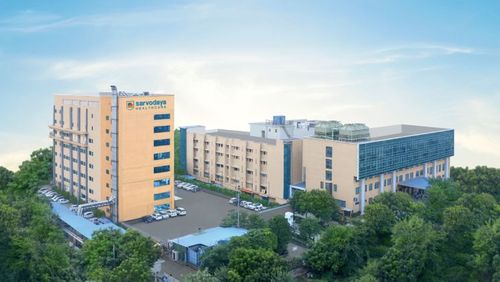
At Sarvodaya Hospital, the decision to perform robotic-assisted revision knee replacement depends on the patient's symptoms, implant condition, bone quality, infection assessment and overall health. Robotic technology may support surgical planning and implant positioning in selected cases, depending on the clinical requirements and available technology.
When Is Revision Knee Replacement Surgery Recommended?
Revision knee replacement may be recommended when an existing knee implant causes persistent pain, instability or reduced mobility because of a mechanical problem, infection or other complication.
It may be considered for implant loosening, implant wear, component damage, recurrent knee instability, infection around the implant, stiffness that significantly affects movement, or bone loss around the artificial joint. Revision surgery may also be required when the original implant's position or function contributes to ongoing symptoms.
The decision depends on factors such as the condition of the existing implant, extent of bone loss, ligament stability, presence of infection, pain severity and the patient's overall health. The surgeon evaluates whether replacing one component or the entire implant is necessary.
How is Revision Knee Replacement Performed?
During revision knee replacement surgery, the surgeon examines the existing artificial joint and removes the damaged, loose or infected implant components as required. The affected area is then prepared to accommodate the new revision implant.
The procedure generally involves evaluating the existing knee replacement, accessing the joint through a surgical incision, removing the required implant components, cleaning the affected area, assessing bone loss and ligament stability, preparing the bone surfaces, placing suitable revision components and checking knee alignment and stability. Bone grafts or specialised implant supports may be required in selected cases.
In robotic-assisted procedures, surgical planning and technology may help guide selected stages of the operation, depending on the system and the complexity of the revision. The surgical approach varies according to the condition of the original implant, the amount of bone loss and the patient's individual requirements.
Robotic-Assisted Revision Knee Replacement
Robotic technology may support selected revision knee replacement procedures by assisting the surgeon with surgical planning, alignment assessment and implant positioning. Its use depends on the patient's anatomy, the type of revision required and whether the technology is appropriate for the case.
Before surgery, the surgeon evaluates the existing implant, bone condition and knee alignment. During the procedure, robotic assistance may help guide specific surgical steps and support the planned positioning of the revision components. The surgeon remains responsible for making clinical decisions and performing the operation.
Not every revision knee replacement can or should be performed using robotic assistance. The suitability of robotic technology depends on the implant being replaced, the availability of suitable landmarks, bone condition and the complexity of the procedure.
Robotic Technology and Infrastructure
Robotic-assisted joint replacement relies on specialised technology and surgical planning to assess knee anatomy and guide selected stages of the procedure.
At Sarvodaya Hospital, the Robotic Joint Replacement Centre has two active joint replacement robots. The centre uses robotic technology for knee replacement procedures. The suitability of robotic assistance for revision surgery must be assessed individually, as the requirements of revision procedures can differ from those of primary knee replacement.
Depending on the clinical requirements, assessment may involve X-rays, CT scans and other imaging investigations to evaluate implant position, bone condition and knee alignment. The surgeon also assesses the existing components, surrounding bone and ligament stability before planning the revision.
The choice of revision implant, surgical technique and use of robotic assistance depends on the patient's condition and the findings during evaluation. The surgeon determines the most appropriate approach to address implant failure and restore knee function.
Benefits of Revision Knee Replacement
- Addresses Implant Problems: Helps manage complications such as implant loosening, wear, damage or infection when revision surgery is appropriate.
- May Relieve Persistent Pain: Replacing problematic components may help reduce pain associated with a failed knee replacement.
- Improves Knee Stability: Revision implants and surgical correction may help address instability caused by implant or soft tissue problems.
- Supports Better Joint Function: The procedure aims to improve knee movement and the ability to perform daily activities.
- Corrects Implant Alignment: Surgical planning helps address problems related to the position or alignment of existing components.
- Robotic Assistance in Selected Cases: Robotic technology may support planning and positioning during suitable revision procedures.
Revision Knee Replacement Recovery
Recovery after revision knee replacement depends on the complexity of surgery, the number of components replaced, bone condition, the patient's overall health and progress during rehabilitation.
After surgery, the medical team monitors pain, wound healing, knee movement and signs of complications. Physiotherapy and guided mobilisation are introduced according to the surgeon's instructions. Patients may initially require walking support while gradually rebuilding strength and mobility.
Recovery after revision surgery may take longer than after primary knee replacement, particularly when extensive bone reconstruction or soft tissue procedures are required. Follow-up appointments help assess implant position, healing, knee stability, and rehabilitation progress.
Post-Treatment Lifestyle Modifications
- Follow Rehabilitation Instructions: Perform prescribed physiotherapy exercises to improve knee movement, strength and stability.
- Use Walking Support as Advised: Use a walker or other support until your treating team confirms that you can walk safely without it.
- Take Medicines as Prescribed: Follow instructions for pain relief, antibiotics or blood-thinning medicines when prescribed.
- Care for the Surgical Wound: Keep the wound clean and follow instructions regarding dressing changes and bathing.
- Resume Activities Gradually: Avoid excessive strain and return to routine activities as your surgeon advises.
- Attend Follow-Up Appointments: Keep scheduled visits to monitor implant position, healing and knee function.
- Maintain a Healthy Weight: Follow appropriate dietary and activity guidance to avoid unnecessary stress on the replacement joint.
- Recognise Warning Signs: Seek medical attention for fever, increasing wound redness, unusual discharge, sudden swelling, severe pain or new difficulty bearing weight.
Why Choose Sarvodaya Hospital for Revision Knee Replacement?
- Robotic Joint Replacement Centre: Access to a centre with two active joint replacement robots for knee replacement procedures.
- Specialist Orthopaedic Assessment: Evaluation of implant failure, persistent knee pain, instability and reduced mobility.
- Comprehensive Implant Evaluation: Assessment of existing implant components, bone condition, alignment and ligament stability.
- Individualised Surgical Planning: Selection of the appropriate revision procedure and implant based on the patient's clinical requirements.
- Robotic Technology Assessment: Evaluation of whether robotic assistance is suitable for the planned revision procedure.
- Rehabilitation Support: Guidance on physiotherapy, mobilisation and recovery after surgery.
- Continuity of Care: Follow-up assessment to monitor healing, knee function and implant performance.