
Overview
A lung biopsy involves taking a small tissue sample from the lung for laboratory testing. It helps doctors investigate an abnormal area seen on a scan and identify the cause. A biopsy recommendation does not necessarily mean that you have cancer.
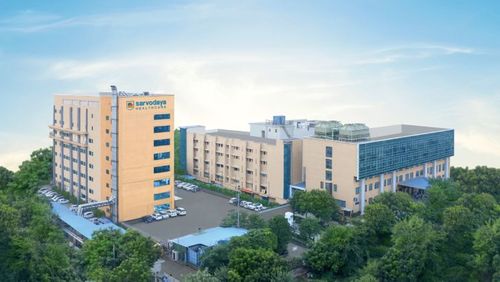
At Sarvodaya Hospital, our Centre for Pulmonology & Sleep Medicine provides lung assessment and biopsy services. Patients seeking a lung biopsy in Delhi NCR can discuss their reports, concerns and next steps with our specialists.
Why Is a Lung Biopsy Required?
Scans can show changes in the lungs, but they may not explain what caused them. Testing a tissue sample can help doctors diagnose the condition.
A biopsy may help investigate:
- A Suspicious Growth: To check whether a lung nodule or mass contains cancer cells.
- Unexplained Lung Changes: To assess certain conditions that cause inflammation or scarring.
- A Possible Infection: When other tests have not provided enough information.
Doctors may recommend a lung biopsy for suspected lung cancer when tissue testing would help guide care. They assess the scan findings and your health before making this decision.
Lung Biopsy Procedure
The test begins with a review of your scans, medical history and current medicines. Your doctor explains the proposed method, preparation and possible risks. Follow the instructions about fasting and medicines, and do not stop blood thinners on your own.
The method depends on where the abnormal tissue is and how it can be reached.
Bronchoscopy Lung Biopsy
During a bronchoscopy lung biopsy, the doctor passes a thin, flexible camera through the nose or mouth into the airways. Small instruments collect tissue through the scope. Throat-numbing medicine and sedation help keep you comfortable.
CT-Guided Needle Biopsy
A radiologist uses CT images to guide a needle through the chest wall into the area being sampled. Local anaesthesia numbs the site. This approach may suit an abnormal area that is difficult to reach through the airways.
Surgical Lung Biopsy
Lung biopsy surgery may be needed when other methods cannot provide a suitable sample. A chest surgeon may use small cuts and a camera, called video-assisted thoracic surgery (VATS). Some patients need an open surgery with a larger cut.
Who Is a Suitable Candidate for a Lung Biopsy?
A biopsy is performed for patients whose lung findings remain unclear after other tests. The doctor considers whether the result is likely to change treatment.
Before proceeding, the team checks breathing capacity, bleeding risk and fitness for the planned test. A pulmonologist for lung biopsy assessment can explain whether sampling, further tests or monitoring is appropriate.
Benefits of a Lung Biopsy
A biopsy can provide information that scans alone cannot offer. Depending on the findings, it may help:
- Clarify the Diagnosis: Examine abnormal tissue more closely.
- Identify Cancer: Check for cancer cells in the sampled area.
- Guide Further Care: Help doctors decide which treatment or tests are needed.
- Avoid a Larger Operation: A minimally invasive lung biopsy may provide enough tissue without open surgery.
Sometimes, the sample is too small, or the result remains unclear. Further testing or another biopsy may then be needed.
Technology and Infrastructure
Sarvodaya Hospital’s pulmonology facilities include bronchoscopy, thoracoscopy, CT-guided lung tests and endobronchial ultrasound (EBUS).
EBUS uses ultrasound from inside the airways to help assess nearby tissue and lymph nodes. Lung function testing also supports respiratory assessment.
When choosing the best hospital for CT-guided lung biopsy, ask about the recommended technique, specialist experience and support for complications.
Post-Test Lifestyle Modifications
Your care team will give instructions based on the biopsy method and your recovery. General advice includes:
- Rest as Advised: Avoid heavy lifting and strenuous exercise until your doctor says it is safe.
- Care for the Biopsy Site: Follow instructions about dressings and bathing.
- Use Medicines as Directed: Ask when to restart any medicines paused for the test.
- Arrange Help After Sedation: Have someone take you home and follow the driving restrictions provided.
- Attend Your Follow-Up: Discuss the biopsy report and next steps with your doctor.
After bronchoscopy, wait until the team confirms that you can swallow safely before eating or drinking.
How is an Abnormal Lung Scan Treated?
An abnormal scan does not automatically mean that a biopsy is needed. Your doctor reviews the size, appearance and location of the finding before advising further tests.
If you are considering a lung biopsy in Faridabad, bring previous scans and reports. Comparing them can help the specialist understand the finding and plan your assessment.
Why Choose Sarvodaya Hospital for a Lung Biopsy?
Our pulmonology services support assessment, diagnosis and ongoing care for lung conditions.
Patients can access:
- Specialist Evaluation: Assessment of lung symptoms and abnormal reports.
- Diagnostic Facilities: Bronchoscopy, EBUS, thoracoscopy and CT-guided tests.
- Coordinated Care: Input from pulmonologists, radiologists and cancer specialists when needed.
- Respiratory Support: Emergency and intensive care services for acute breathing problems.
If you are searching for a lung biopsy test near me, start with a specialist consultation. Ask the advanced lung biopsy hospital which test is available at your chosen branch.
Reviewed & Updated On
Reviewed by Dr. Pankaj Chhabra Director & Head (Unit II) - Pulmonology & Sleep Medicine on 26 July-2026.