
Overview
Bow legs, medically known as Genu Varum, describe a leg alignment in which the knees remain widely apart (like a bow) when the feet and ankles are positioned together. This alignment can be a normal part of early childhood development, particularly in infants and toddlers, and often improves naturally as the child grows. However, persistent or pronounced bowing may sometimes result from nutritional deficiencies, bone disorders, growth abnormalities, or other underlying conditions.
The need for bow legs treatment depends on the child's age, degree of bowing, symptoms, and underlying cause. Some children only need observation, while others may require physiotherapy, medical treatment, bracing, or bow leg correction surgery. Adults with significant deformity may also require specialised orthopaedic assessment.
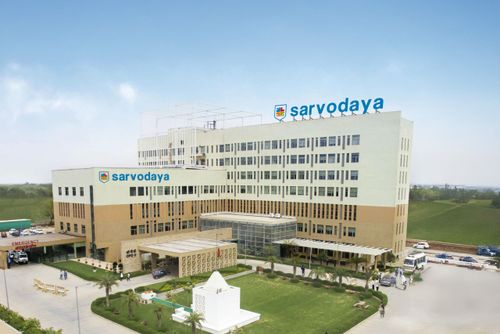
At Sarvodaya Hospital, orthopaedic specialists evaluate leg alignment and growth patterns to develop an appropriate treatment plan for children and adults with Genu Varum.
Symptoms of Bow Legs
- Knees remain widely apart when standing with feet together
- Outward curvature of the lower legs
- Uneven walking pattern
- Difficulty running or walking
- Knee or leg discomfort
- Uneven pressure on the knees
- Difficulty with certain physical activities
- Progressive worsening of leg alignment
Causes of Bow Legs
- Normal Childhood Development
- Blount Disease
- Vitamin D Deficiency
- Bone and Growth Disorders
- Previous Injury
Diagnosis of Bow Legs
A bow legs orthopaedic doctor assesses the child's growth, leg alignment, walking pattern, and medical history to determine whether the bowing is part of normal development or requires treatment.
- Physical Examination: The doctor examines the child's legs, knees, hips, ankles, walking pattern, and overall alignment to assess the severity and symmetry of the deformity.
- Standing X-rays: Weight-bearing X-rays provide detailed information about bone alignment and help measure the angle of deformity when treatment planning is required.
- Growth Assessment: The child's age, height, growth pattern, and developmental history are considered because normal leg alignment changes considerably during childhood.
- Blood Tests: Blood tests may be recommended when nutritional deficiencies or metabolic bone conditions such as vitamin D deficiency are suspected.
- Advanced Orthopaedic Assessment: Specialised imaging and digital measurements can help assess the degree of deformity and monitor changes during growth and treatment.
Treatment Options & Technology for Bow Legs
The appropriate bow legs treatment for children depends mainly on age, severity, cause, and whether the deformity is improving naturally.
- Observation and Monitoring: Children with mild, age-appropriate bowing may simply require regular examinations to monitor leg alignment and ensure that the condition improves with growth.
- Nutritional Treatment: If bowing is associated with vitamin D deficiency or another nutritional problem, correcting the underlying deficiency can support healthy bone development.
- Physiotherapy: Physiotherapy may help improve muscle strength, flexibility, balance, and walking mechanics when functional difficulties accompany abnormal leg alignment.
- Bracing: Selected children with certain growth-related conditions may benefit from prescribed braces that help guide alignment while the bones continue developing.
- Guided Growth Surgery: In growing children with persistent angular deformity, guided growth procedures can gradually correct alignment by temporarily influencing growth around the affected part of the bone.
- Bow Legs Correction Surgery: Severe or persistent deformity may require corrective osteotomy in older ages, in which the bone is carefully realigned to improve the position of the leg and restore mechanical balance.
- Advanced Orthopaedic Technology: Digital weight-bearing X-rays, computer-assisted alignment assessment, growth monitoring, and modern surgical planning tools help specialists accurately assess deformity and plan bow legs surgery when required.
Benefits of Early Bow Legs Treatment
Early assessment does not necessarily mean immediate surgery. It helps identify children who need monitoring or treatment and prevents potentially progressive deformities from being overlooked.
- Identifies Underlying Causes: Early evaluation can reveal nutritional deficiencies, growth abnormalities, or bone disorders that may require specific medical treatment rather than observation alone.
- Supports Normal Development: Monitoring children at appropriate intervals helps specialists determine whether leg alignment is following the expected pattern of natural growth.
- Prevents Progressive Deformity: When bowing is caused by an underlying condition, timely treatment can prevent the deformity from becoming more pronounced as the child grows.
- Improves Leg Alignment: Appropriate treatment can gradually restore more balanced alignment, improving the distribution of forces through the knees and lower limbs.
- Supports Mobility: Correcting significant deformity can improve walking mechanics, physical activity, and comfort, particularly when bow legs are associated with functional limitations.
Prevention & Lifestyle Modifications
Not every case of bow legs can be prevented, particularly when the condition is related to growth or inherited bone disorders. However, healthy habits support normal bone development.
- Ensure Adequate Nutrition: A balanced diet containing calcium, vitamin D, protein, and other essential nutrients supports healthy bones and normal skeletal development.
- Maintain Healthy Physical Activity: Age-appropriate physical activity helps develop strong muscles and supports balance, coordination, and healthy movement patterns.
- Address Vitamin D Deficiency: Children at risk of vitamin D deficiency should receive appropriate medical evaluation and supplementation only as advised by their healthcare professional.
- Attend Growth Check-ups : Regular paediatric and orthopaedic assessments help monitor leg alignment and identify changes that may require further evaluation.
- Avoid Unsupervised Bracing : Braces or corrective devices should only be used when recommended by an orthopaedic specialist because treatment depends on the child's specific condition.
When Should Parents Consult a Doctor?
Parents should seek an orthopaedic evaluation if:
- Bowing appears severe or is getting worse.
- One leg is noticeably more curved than the other.
- Bowing persists beyond the expected age for natural correction.
- The child develops pain or difficulty walking.
- The child has an unusual walking pattern.
- There is a history of bone disease or nutritional deficiency.
- Growth appears slower or different from expected.
- The child's legs remain significantly bowed as they grow.
Pre- and Post-Treatment Care
Before Treatment
- Complete orthopaedic assessment
- Evaluation of growth and development
- Standing X-rays when indicated
- Blood tests if nutritional or metabolic causes are suspected
- Assessment of walking pattern and leg alignment
- Individualised treatment planning
After Treatment
- Follow the specialist's activity recommendations.
- Attend scheduled follow-up appointments.
- Continue physiotherapy when prescribed.
- Maintain adequate nutrition for bone health.
- Follow wound-care instructions after surgery.
- Monitor alignment and recovery during growth.