
Overview
Parkinson’s disease is a progressive neurological disorder that affects movement and coordination. The condition develops due to a gradual loss of dopamine-producing nerve cells in the brain, which are essential for smooth and controlled body movements. Understanding what is Parkinson’s disease helps in recognising symptoms early and starting timely care.
Parkinson’s disease usually develops slowly and may begin with mild symptoms that worsen over time. While it most commonly affects older adults, younger individuals can also develop the condition. Early diagnosis and appropriate treatment play a crucial role in maintaining mobility, independence, and quality of life.
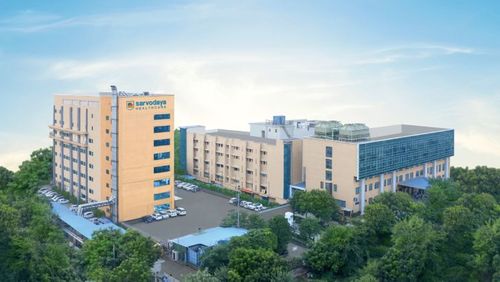
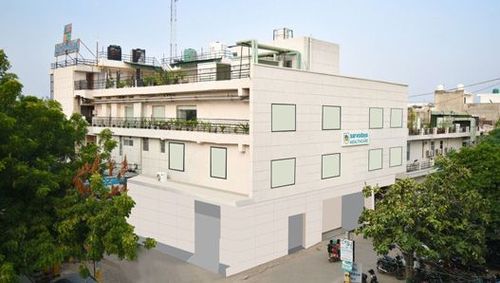
At Sarvodaya Hospital, patients receive expert care at our leading best neurology hospital in Delhi NCR, supported by experienced neurologists and advanced diagnostic facilities.
Symptoms of Parkinson’s Disease
Parkinson’s disease symptoms may vary from person to person and often progress gradually.
- Tremors, usually starting in one hand
- Slowness of movement (bradykinesia)
- Muscle stiffness or rigidity
- Difficulty with balance and coordination
- Shuffling walk or reduced arm swing while walking
- Changes in speech or writing
- Mask-like facial expressions
- Fatigue and sleep disturbances
Causes of Parkinson’s Disease
The exact Parkinson disease causes are not fully understood, but several factors are known to contribute.
- Loss of dopamine-producing nerve cells in the brain
- Genetic mutations in some individuals
- Family history of Parkinson’s disease
- Exposure to environmental toxins
- Age-related neurological changes
- Certain head injuries
Diagnosis of Parkinson’s Disease
Understanding Parkinson's disease meaning enables accurate diagnosis, timely treatment planning, and effective symptom control under guidance of the best neurologist in Delhi NCR.
- Clinical Examination: Clinical examination evaluates tremors, movement slowness, muscle rigidity, posture, balance, reflexes, and coordination to assess Parkinson’s disease severity and functional impact.
- Medical History Review: Medical history review assesses symptom onset, progression pattern, medication response, family history, and associated non-motor symptoms to support accurate Parkinson’s disease diagnosis.
- Neurological Tests: Neurological tests assess motor function, coordination, reflexes, gait, and balance to differentiate Parkinson’s disease from other neurological movement disorders.
- Imaging Tests (MRI/CT Scan): MRI or CT scans are used to rule out strokes, tumours, or other neurological conditions that may cause symptoms similar to Parkinson’s disease.
- Response to Medication: Improvement of symptoms after Parkinson’s medications supports diagnosis, helping confirm dopamine deficiency-related movement disorder and guiding further treatment planning.
Treatment Options & Technology for Parkinson’s Disease
While Parkinson’s disease has no permanent cure, expert-led treatment focuses on symptom control, improved mobility, and better daily functioning under the best neurologist in Faridabad at Sarvodaya Hospital.
- Medications: Medications increase or replace dopamine levels in the brain, helping reduce tremors, stiffness, slowness of movement, and improve daily functional abilities.
- Medication Optimisation: Medication optimisation involves adjusting drug dosages and combinations to maximise symptom control while minimising side effects and treatment-related complications.
- Physiotherapy & Rehabilitation: Physiotherapy and rehabilitation improve mobility, balance, flexibility, posture, and muscle strength, helping patients maintain independence and reduce fall risk.
- Speech & Occupational Therapy: Speech and occupational therapy help manage speech difficulties, swallowing problems, fine motor skills, and daily activity challenges in Parkinson’s disease.
- Advanced Neurological Care: Advanced neurological care is used for complex or advanced Parkinson’s disease cases requiring specialised monitoring, therapy adjustments, or multidisciplinary management.
Prevention & Lifestyle Modifications for Parkinson’s Disease
- Regular Physical Activity and Exercise: Regular physical activity improves muscle strength, balance, coordination, and mobility, helping manage Parkinson’s disease symptoms and slow functional decline.
- Balanced and Nutritious Diet: A balanced, nutritious diet supports overall brain health, energy levels, digestion, and medication effectiveness in patients with Parkinson’s disease.
- Adequate Sleep and Stress Management: Adequate sleep and effective stress management help reduce fatigue, improve symptom control, and support neurological function in Parkinson’s disease.
- Avoid Exposure to Toxins: Avoiding exposure to environmental toxins reduces neurological stress and may help prevent worsening of Parkinson’s disease symptoms.
Pre–Post Treatment Lifestyle Modifications for Parkinson’s Disease
Pre-Treatment Care
- Early neurological consultation when symptoms appear
- Baseline assessment of motor and cognitive function
- Medication review and lifestyle counselling
- Patient and caregiver education
Post-Treatment Care
- Strict adherence to prescribed medications
- Regular physiotherapy and rehabilitation exercises
- Monitoring for medication side effects
- Gradual activity modification to maintain independence
- Regular follow-up monitoring with neurologist